

Read the practical side of this story in the Bankless Checkout hub and the first-purchase tutorial.
A manifesto from the threshold
I. The No That Woke Me
It didn’t arrive as an argument. It didn’t come with a phone call from a relationship manager, or a letter on thick paper, or a meeting in a glass tower where someone pretended to listen. It came as a sterile, algorithmic sentence on a screen. The kind of sentence that ends a conversation before it begins.
I wanted to sell my books. My guides. My digital products — the harvest of twenty years of crossing the Strait of Gibraltar, of listening to my mother’s hands in the clay, of learning SEO in smoky cybercafés where the modem’s screech was the sound of a new universe being born. I wanted to share that with the world.
Stripe said no.
PayPal said no.
Payoneer said no.
Not because my product was worthless. Not because my clients didn’t exist. But because of a line on a map. A passport. A country of residence that some algorithm, in some windowless room, had decided was not worth the risk.
And the banks? They were no better. The same banks that had once told me, in my twenties, that they only financed “shops with walls — things you can kick.” The same banks that take their commissions on every transaction, that freeze accounts without explanation, that treat every customer as a suspect until proven otherwise. The same banks that watch inflation devour the savings of ordinary people while they collect their fees and their bonuses.
I sat in my apartment in Málaga, looking at that sterile “no” on my screen, and I felt something shift. Not anger. Something quieter. Something older.
I remembered my grandmother’s hands kneading the Tooba del Ghassoul — the raw clay from the Atlas Mountains — in a courtyard in Ksar El-Kébir. She never asked permission from anyone to work the earth. She never needed a bank’s approval to transform clay into something that healed. She knew what I was only now beginning to understand: the earth does not ask for permission to give.
That night, I understood something fundamental. The system wasn’t broken. It was working exactly as designed — to exclude those who don’t fit its categories. And I had a choice: beg at its gates, or build my own.
II. The Satoshi Threshold
I had heard the name before, of course. Satoshi Nakamoto. The ghost. The pseudonym. The person or persons who, on October 31, 2008 — while the world was still reeling from Lehman Brothers and the collapse of everything we’d been told was solid — published a nine-page white paper that would change the architecture of money forever.
On January 3, 2009, Satoshi mined the Genesis Block. Seventeen years ago. And in those seventeen years, Bitcoin has grown from a cryptographic curiosity to a global settlement layer that operates without banks, without borders, without permission.
But it wasn’t until those platform rejections that I truly understood what Bitcoin meant. Not as speculation. Not as an investment. But as an operating system for sovereignty.
I read the white paper again — really read it, this time, the way I’d read H.G. Wells in my father’s library as a boy, looking for a way out of the world I was born into.
“A purely peer-to-peer version of electronic cash would allow online payments to be sent directly from one party to another without going through a financial institution.”
Without going through a financial institution.
Those words landed in my chest like a stone in still water. I thought of my father, bent over a copper bucket in the hammam of Meknès, reciting Ibn Battuta. I thought of the Phoenician traders who sailed from Larache to Málaga two thousand years ago, carrying their goods across the same strait I had crossed a hundred times. They didn’t need a bank’s permission either. They had their ships. They had their trust. They had their routes.
Bitcoin was my ship.
III. The First Payment
I installed my checkout. I connected my own wallet — not a custodial wallet, not a platform’s wallet, but my wallet, where I held my keys. I started accepting Bitcoin, USDC, USDT. Directly. Without a parasitic intermediary skimming a percentage off every transaction.
The first payment I received was not a large one. It was a small order — a guide, a book. But when the notification arrived, confirming that the funds had landed in my wallet, I felt something I hadn’t felt in years of dealing with banks and payment platforms.
Sovereignty.
Not the abstract sovereignty of nations and flags and borders. The concrete, tangible sovereignty of a man who owns his own keys. A man whose money cannot be frozen by an algorithm, cannot be seized by a bank, cannot be devalued by a central bank’s printing press.
I remember standing on my terrace in Málaga that evening, looking out at the Mediterranean. The same sea that had carried my Morisco ancestors into exile, that had carried my own hopes and fears across the strait a hundred times, was now carrying something new. Not a physical product. Not clay or oil or sardines. But value — pure, borderless, permissionless value.
And I thought: This is what it feels like to be bankless.
IV. The Doctrine
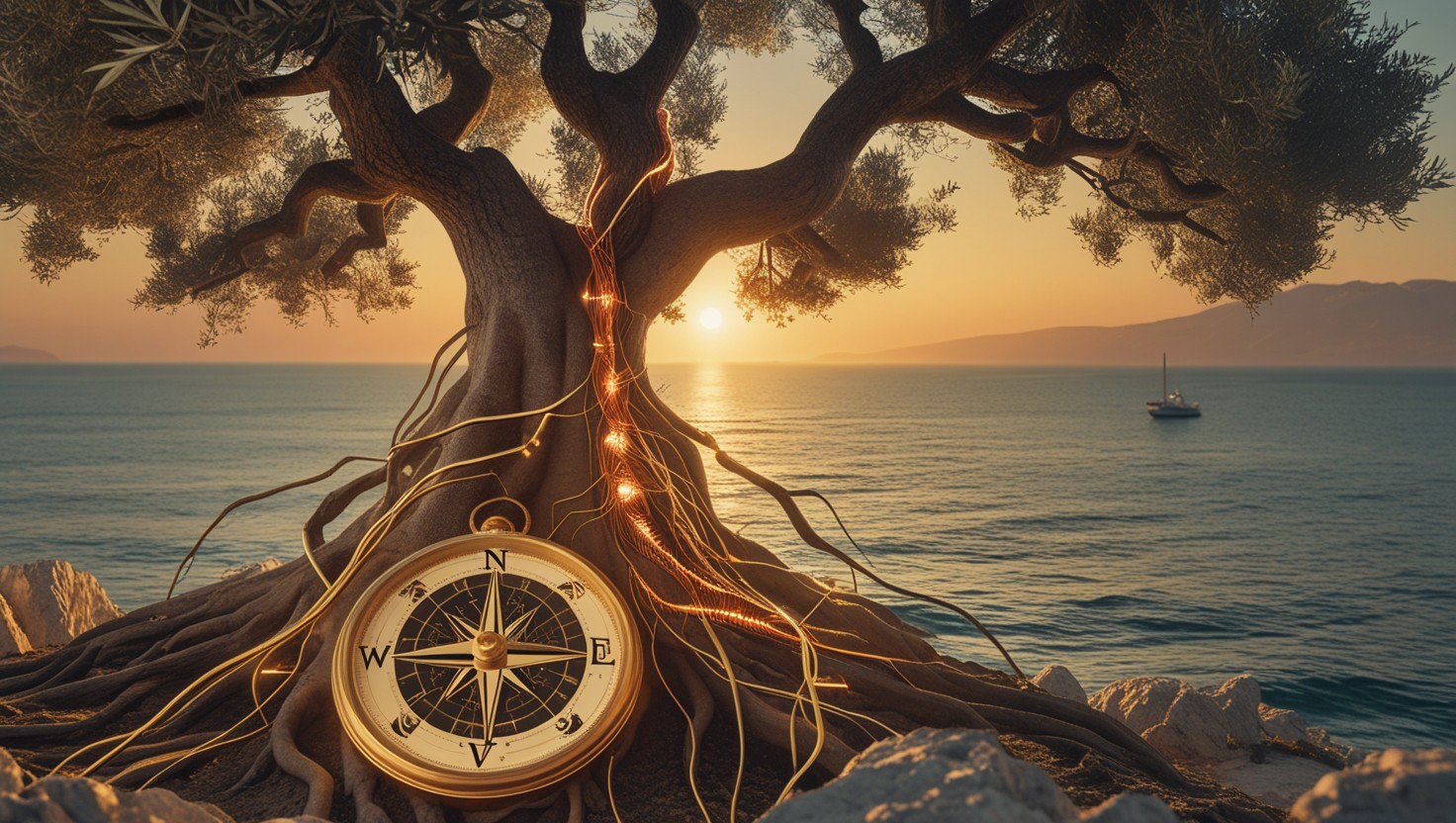
I am not a man of slogans. I am a man of olive trees and clay and the patient wisdom of my grandmother’s hands. But I have come to understand that a doctrine is not a slogan. A doctrine is a compass. A set of principles that tell you which way is north when the world tilts.
This is my doctrine. I offer it not as a prescription, but as a testimony.
I refuse the banks that control, that dictate, that freeze, that take. Not because I hate banks. Because I have learned that my roots do not need a bank’s permission to grow. The olive tree does not ask the bank for water. It sends its roots deeper.
I refuse the parasitic platforms — Stripe, PayPal, Payoneer, and all their kin — that exclude by algorithm and skim by design. Not because I am against platforms. Because I have learned that the most valuable connections are direct, peer-to-peer, without an intermediary deciding who is worthy and who is not.
I refuse the fiat that evaporates. Not because I don’t understand money. Because I have watched inflation devour the savings of ordinary people while the banks collect their fees and the central banks print their paper. I have watched my father’s pension lose its purchasing power. I have watched my own earnings dissolve in the space between a sale and a purchase.
But this refusal is not a negation. It is an affirmation.
- I affirm self-custody. My keys. My wallet. My responsibility.
- I affirm Bitcoin as a reserve of value — the hard asset that resists the erosion of inflation.
- I affirm stablecoins (USDC, USDT) as a medium of exchange — the digital dollars that let me operate without a bank account.
- I affirm the Rooted Nomad philosophy — that freedom is not the absence of roots, but the presence of moorings that travel with you.
V. The Rooted Nomad’s Financial Sovereignty
This is where my doctrine meets my philosophy. Rooted Nomadism is not about wandering without purpose. It is about choosing your roots so you can grow better. And my financial sovereignty is the root system of my entire life.
Let me be clear: I respect the law. I declare my income. I pay my taxes. I protect my customers. I honor the terms of my hosting providers, my registrars, my email services. I comply with sanctions and embargoes.
But I do not accept that respecting the law means surrendering my sovereignty to banks and platforms that have no interest in my flourishing.
- Taxes are an obligation to the state, not to the bank. I pay them — but I pay them from my own wallet, on my own terms, without a bank account as an intermediary.
- Consumer protection is a framework that protects me as much as my customers. I honor it — with clear refund policies, with responsive support, with transparent terms.
- Sanctions and embargoes are rules of nations. I respect them — and I do not lie to platforms about my identity or my residence to evade them.
- Hosting terms are private contracts. I honor them — and I choose hosts whose values align with my own.
This is the distinction that matters: being bankless does not mean being lawless. It means being sovereign within the law — choosing your tools, owning your keys, building your own rails.
VI. The Sardine’s School
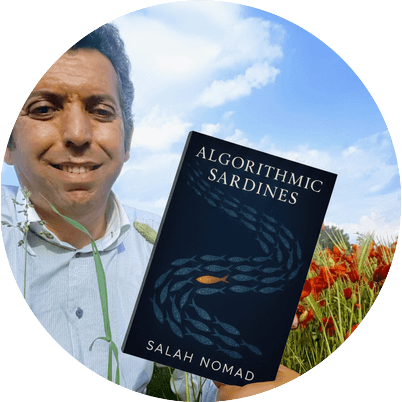
They call us algorithmic sardines — the community that has grown around my writing, around this philosophy, around the idea that you can be rooted and nomadic at the same time. Not because we are fish, but because we have learned to swim between shores.
The sardine is the perfect metaphor for our existence. It begins its life in the cold currents of the Atlantic, then migrates through the Strait of Gibraltar to the warm waters of the Mediterranean. It belongs to neither shore, and to both. It follows the invisible currents of temperature and nutrients, and in doing so, it nourishes both ecosystems.
That is what we are. We are not fleeing the system. We are not hiding in the margins. We are building bridges — carrying value, stories, and skills from one shore to another. We are the living links in a network that banks and platforms cannot control, cannot freeze, cannot devalue.
And we are growing. In the USA, in the UK, in the Netherlands, in the Nordic countries, in every corner of the world where someone has felt the sting of exclusion and decided to build their own door.
VII. The Invitation
I am not a guru. I am not a prophet. I am a man who was rejected by the system and decided to build his own.
If you have felt the same rejection — if the banks have told you no, if the platforms have frozen your account, if the fiat has eroded your savings — I want you to know something.
You are not powerless. You are not excluded from the future. You are being invited to build it.
The tools exist. Bitcoin exists. Stablecoins exist. Self-custody exists. Non-custodial payment gateways exist. The knowledge exists — in my writing, in my books, in the community of algorithmic sardines that is growing every day.
You do not need the banks’ permission to sell your work to the world. You do not need the platforms’ approval to accept payments. You do not need the fiat system’s blessing to preserve your wealth.
You need only three things:
- A willingness to learn. The tools are not complicated, but they require attention, patience, and a commitment to security.
- A commitment to integrity. Being bankless does not mean being lawless. Declare your income. Pay your taxes. Protect your customers. Honor your contracts.
- A root system. Your roots are not chains. They are moorings. They are the source of your stability in a turbulent world. Plant them deeply — in your heritage, in your values, in your community — and then navigate the wildest seas with confidence.
VIII. The Horizon
Seventeen years ago, Satoshi Nakamoto mined the first block of a chain that would change the architecture of trust. He did not ask for permission. He did not wait for approval. He built.
I am not Satoshi. I am Salah Nomad — a man from Ksar El-Kébir who learned to cross the strait, who learned to sell clay and stories and guides, who learned that the most powerful technology we will ever possess is the one that grows from the red earth of human memory.
But I have learned something from Satoshi’s example. The future does not wait for permission.
So I build. I write. I teach. I share. I sell my books and my guides from my own shop, with my own checkout, connected to my own wallet, on my own terms. I pay my taxes. I respect the law. And I do it all without a bank, without a parasitic platform, without a fiat currency that evaporates.
This is my revolution. It is not a war. It is a planting. Every blog post, every guide, every book, every payment received in Bitcoin — they are seeds. They will grow. They will become trees. And those trees will have roots that no bank can sever, no platform can freeze, no inflation can erode.
The olive tree does not ask the bank for water. It sends its roots deeper. So do I.
Welcome to the Rooted Nomad’s revolution.
The path is open. The invitation stands.
— Salah Nomad Málaga, on the threshold between two shores 2026
Continue the journey at salahnomad.com. Join the community of algorithmic sardines. Build your own sovereignty — one key, one block, one story at a time.
Comments
Comments are hosted by GitHub (Giscus). Loading them sends your IP address to GitHub; if you sign in to comment, GitHub applies its own policy. Privacy and your choices