🌍 The Day the Floor Dissolved
March 16, 2020. Ksar El‑Kébir, northern Morocco.
The scent of Rif mountain clay—my livelihood, my identity—hung trapped in locked shipping containers at Tangier’s frozen port. Thirty-seven cancellation emails glowed on my screen like digital epitaphs. In forty-eight hours, the business I’d spent seven years building had simply… vaporized.
I remember the exact weight of the silence. The way my coffee had gone cold, untouched. The particular quality of afternoon light through the window—dust motes suspended, as if the world itself had stopped breathing.
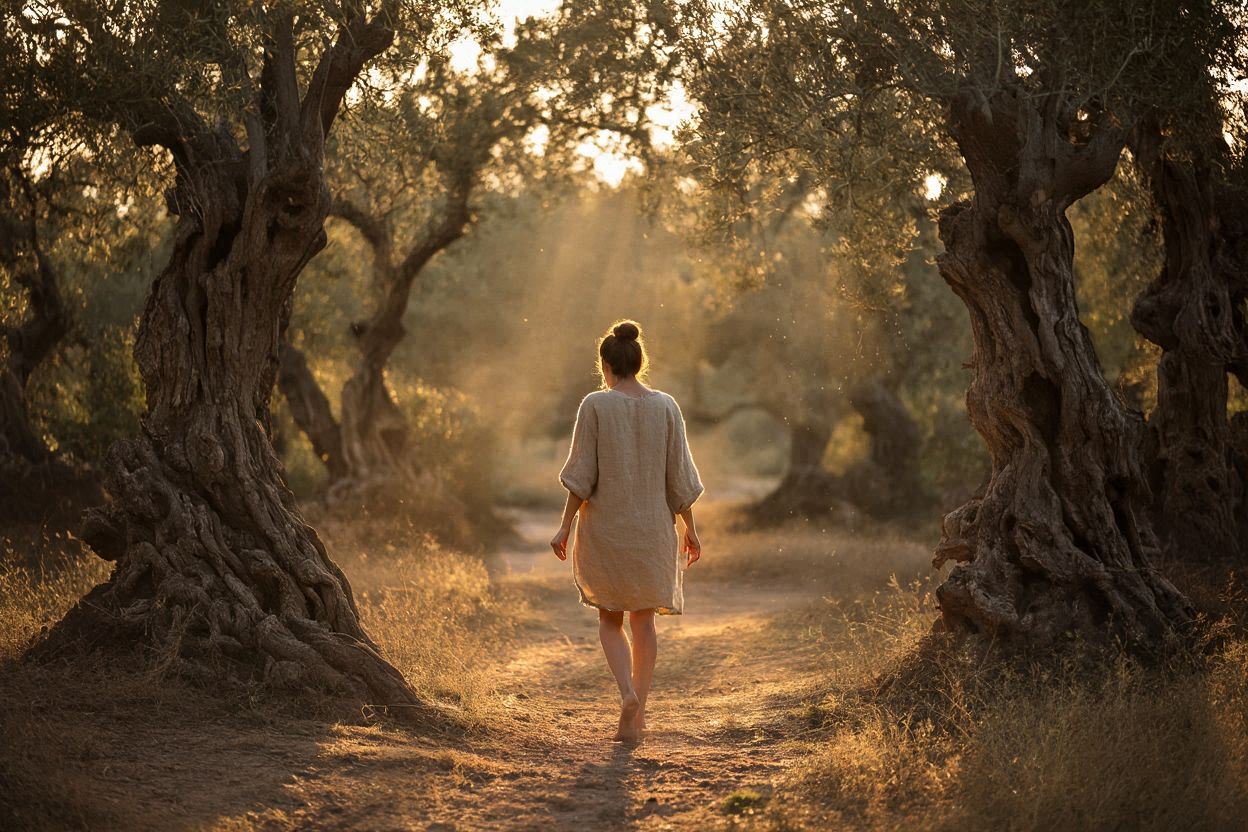
I drove to my family’s olive groves through villages suspended mid-breath. The house smelled of eucalyptus and my grandmother’s clay tagines, of childhood summers and the shortwave radio my father left behind. Outside, the same olive trees that had witnessed Roman legions and Moorish scholars stood silent, their silver leaves whispering secrets in a language I was only beginning to understand.
I had achieved what every digital nomad chases: geographic freedom, passive income streams, the laptop lifestyle that promised liberation from place. But when the floor dissolved, I discovered my roots were shallow—they’d been sunk into a business, not into myself. I was a potted plant with no pot, drifting.
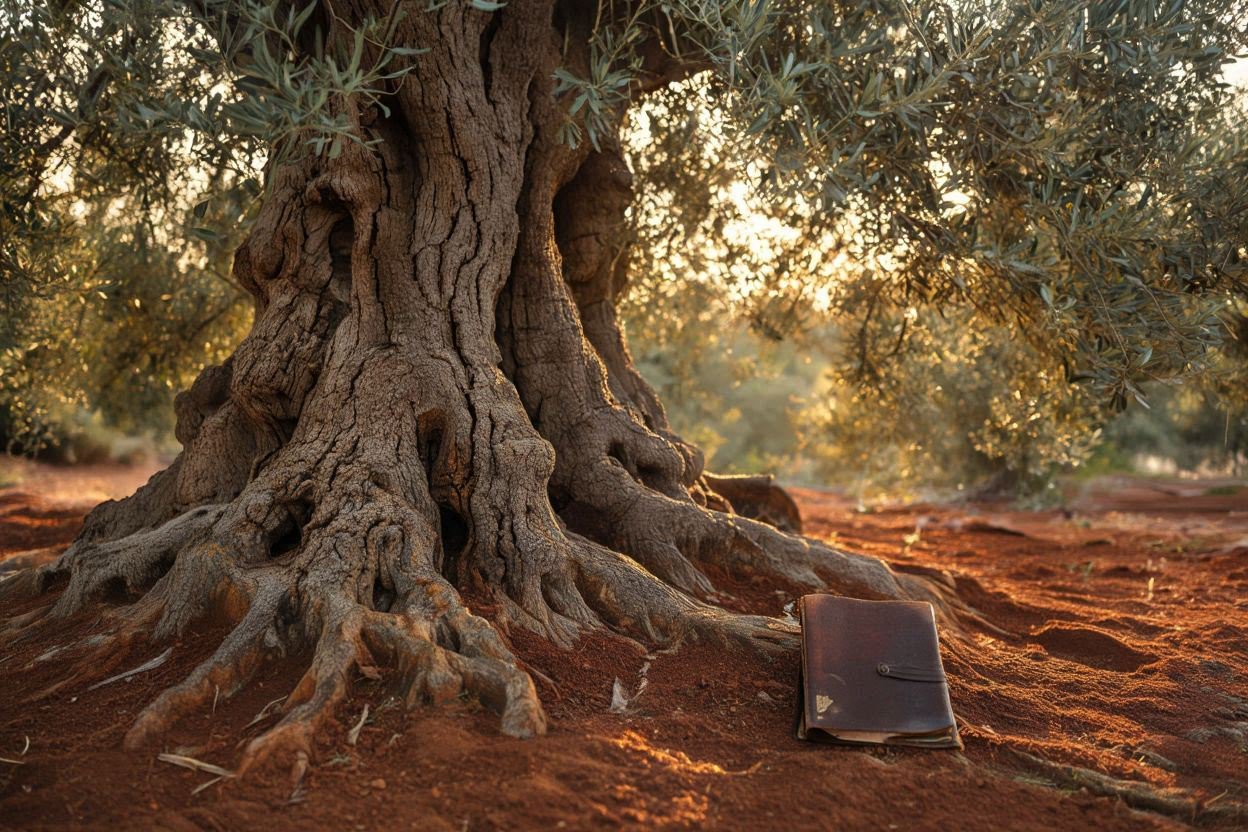
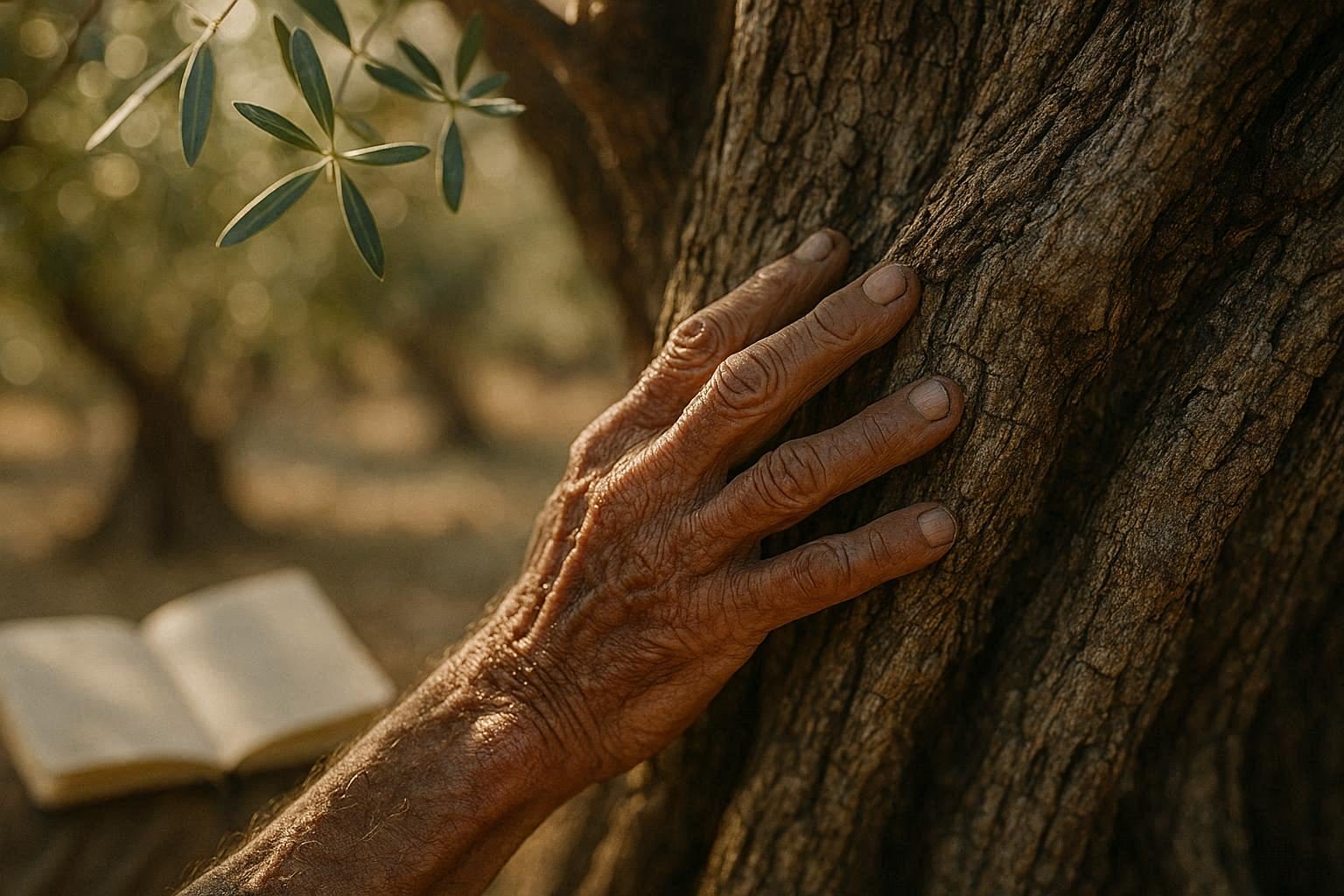
That afternoon, walking barefoot through groves my great-grandfather planted, I pressed my forehead against an 800-year-old tree. Its bark was warm, scarred, ancient—cooled lava etched with centuries of droughts survived and empires fallen. And it whispered something I’ve spent six years learning to translate: “You confuse movement with progress, speed with meaning. You measure wealth in fruits, but resilience grows from roots.”
The tree wasn’t mocking. It was inviting.
Over the following months—through lockdowns, through the slow rebuilding, through therapy and poetry and midnight conversations with that crackling Panasonic radio—a philosophy crystallized. I called it Rooted Nomadism: the art of carrying your home inside you while wandering the world. Not as escape, but as pilgrimage. Not as consumption, but as conversation between soil and sky.
🌿 What Is Rooted Nomadism? (The Living Definition)
Rooted Nomadism is a philosophy and practice of anchored freedom. Unlike traditional digital nomadism, which often treats roots as obstacles to overcome, it holds that true mobility requires immovable inner foundations—roots that travel with you because they’re grown from memory, ritual, purpose, and community rather than geography.
It’s the olive tree paradox: roots deeper than any walls, branches that touch the sky. The Jbala farmers taught me this through their four elemental teachers—Anezzar the rain, Tagra the clay pot, Aberoo the rooster, Asallas the darkness. Resilience isn’t about avoiding storms; it’s about roots so deep that any weather becomes nourishment.
The result? Freedom without drift. Movement without exile. A home that fits in your ribs.
⚖️ The Two Laws of Rooted Nomadism
Law One: The Art of Being — Cultivate roots that travel
Before navigating oceans, we must build ships worthy of voyages. This law is learned by listening to the land, by understanding that our inner landscape is the only true constant in a world of motion.
You must develop four types of portable roots:
| Root Type | Description | Daily Practice |
|---|---|---|
| Memory Roots | Stories, ancestors, personal history—the narrative soil of who you are | Write one “origin memory” weekly; trace one family recipe to its source |
| Ritual Roots | Repeatable ceremonies that create continuity across space | Morning anchor ritual (10 min): tea, grounding, intention-setting |
| Purpose Roots | Core values, north star, the “why” that survives any “where” | Review quarterly, not daily; let it guide decisions, not dictate them |
| Community Roots | People who see you fully—the Human Constellation that navigates with you | 3 deep calls/week, not 30 shallow DMs; quality of witnessing over quantity of contact |
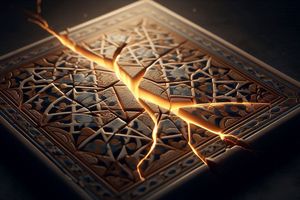
The Zellige Principle teaches us that our beauty lies not in uniformity but in the harmony created from unique, fragmented pieces—with spaces left for light. As the master artisan in Fès told me: “The beauty isn’t in speed, but in the spaces between tiles. Those gaps hold light. Rushed work has no room for light.”
Law Two: The Art of Moving — Navigate, don’t wander
Movement must be intentional, following value currents (where you can contribute and grow) rather than fleeing discomfort or chasing novelty. This is the Algorithmic Sardine philosophy: moving like Mediterranean sardines through the Strait of Gibraltar, not aimlessly, but following nutrient-rich flows that enrich both origin and destination.
Before any move, ask:
- Memory: Does this destination nourish my roots? (Can I connect to history?)
- Ritual: Does it support my practice? (Can I keep my morning anchor?)
- Purpose: Does it align with my north star? (What will I contribute?)
- Community: Does it strengthen my constellation? (Who will I deepen with?)
If three answers are uncertain, you’re not navigating—you’re fleeing.
🏛️ The Four Pillars (What You’ll Find in This Caravan)
Rooted Nomadism rests on four pillars, each explored through frameworks forged in the fire of lived experience:
| Pillar | Core Question | Key Frameworks | Exploration |
|---|---|---|---|
| Practical Philosophy | How do I stay whole when nowhere is home? | The Morisco Compass, Olive Tree Oracle | Week 12, Week 9 |
| Artisan Productivity | How do I compose meaningful work, not manage chaos? | Zellige Blueprint, Baker’s Code | Week 2, Week 8 |
| Resilience & Sovereignty | How do I weather storms that haven’t arrived? | Jbala Resilience Quartet, Olive Grove Economy | Week 3, Week 4 |
| Place & Belonging | How do I read a city like a living text? | Málaga Codex, Canary Melon Compass | Week 5, Week 8 |
Each framework is a tool—a hand‑carved tool, imperfect and intentional—for living this philosophy. They bear the marks of their making, just as the kasria bowl bears the hand of the Loukkos elm from which it was carved.
A note on the kasria — That wooden bowl I mention, carved from Loukkos elm? I still have mine. It sits on my desk in Málaga, holding not couscous but pens and the small stones I collect from each place I root. Some roots are portable. You just have to learn which ones.
📜 The Rooted Nomad Manifesto
I am a rooted nomad, therefore:
I carry my home in my ribs—not in a suitcase. My rituals are my walls, my memory is my roof, my community is my foundation.
I move toward meaning, not away from boredom. If I’m running, I pause and ask what’s chasing me. The Olive Tree Test applies: Would I still feel whole if I stopped today?
I cultivate depth over distance. A single square meter of soil, known intimately through the Art of Seeing, teaches more than a continent skimmed.
I belong to a lineage. My ancestors walked so I could fly; I walk so my descendants can root deeper. This is the Morisco Compass—transforming exile into navigation.
I resist the tyranny of optimization. Efficiency is a tool, not a god. I leave space for the accidental, the slow, the uselessly beautiful—the intentional flaw in the zellige pattern.
I practice the art of return. Not to the same place, but to myself—daily, through tea, through touch, through silence. The Analog API teaches: connection must be earned, not extracted.
I am both olive tree and bird. Rooted enough to survive any storm, winged enough to follow the sun. This is the paradox and the promise.
👐 How to Begin: 3 Portable Rituals
You don’t need a grove or a crisis. You don’t need my story. You need one practice, repeated until it becomes architecture.
Ritual 1: The Arrival Anchor (5 minutes)
Every time you enter a new space—Airbnb, hotel, café, even a video call—pause at the threshold. Touch the doorframe. Whisper: “I am here. I bring my roots. This place is temporary; I am not.”
This is the Baker’s Code applied to space: the sacred silence before the work begins.
Ritual 2: The Root Journal (10 minutes daily)
Each morning, write three things:
- One memory from your lineage (a story, a recipe, a name, a scent)
- One ritual you’ll keep today regardless of location (the mint tea, the barefoot grounding, the Panasonic radio moment)
- One direction you’re moving toward (not destination, but value—what nutrient current are you following?)
Ritual 3: The Olive Tree Test (weekly)
Ask: If I stopped moving today, would I still feel whole? If the answer wavers, your roots need watering. Return to the Law of Being. This is the anti-resolution approach—pruning, not adding; depth, not breadth.
What if I feel ridiculous touching doorframes?
❓ Frequently Asked Questions
How is this different from mindfulness or stoicism?
Can I practice this if I'm not a nomad?
What's the first book or resource?
🫒 Join the Rooted Nomad Caravan
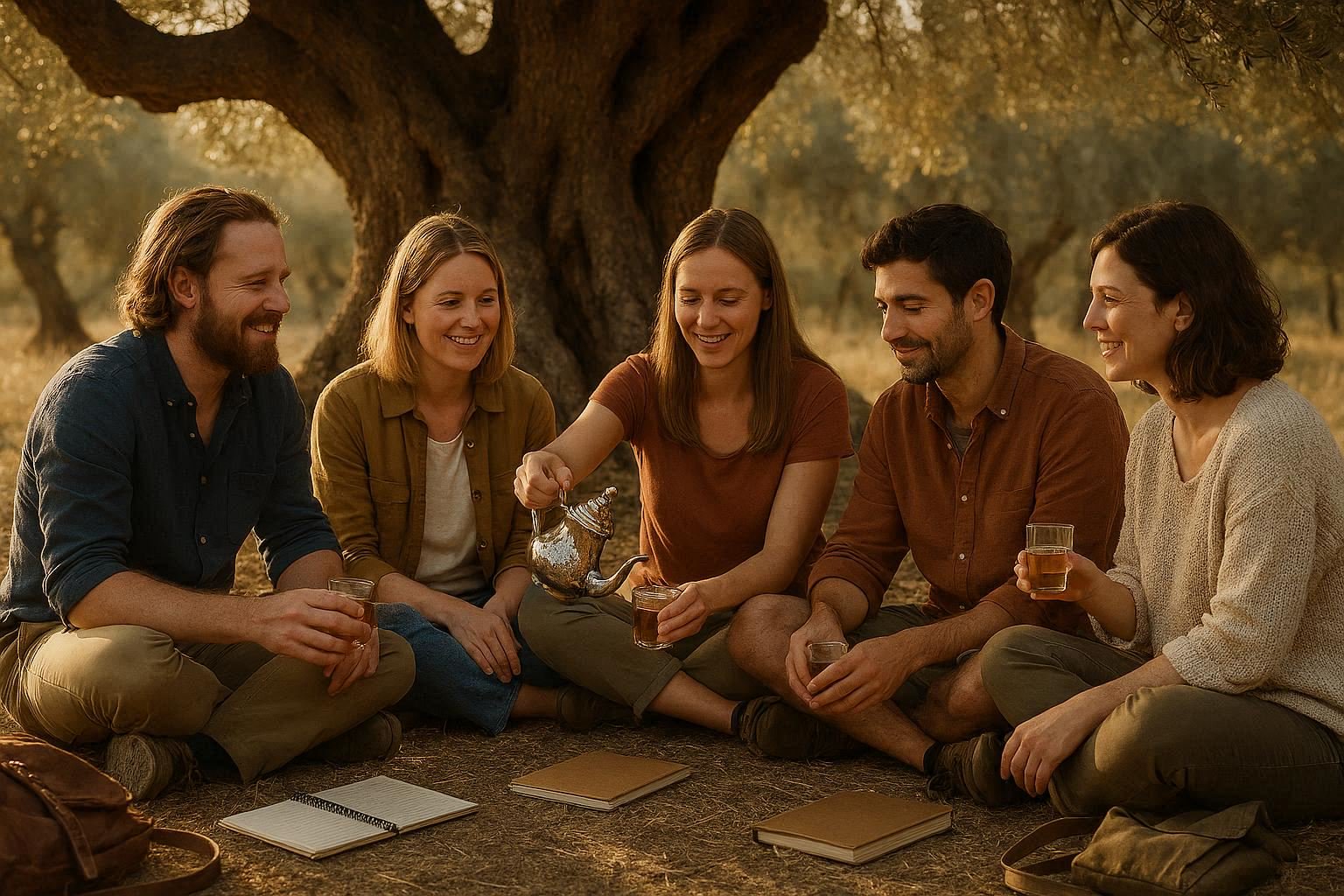
You’re not meant to wander alone. This philosophy grows stronger in company, like the mycorrhizal networks beneath the olive grove—underground economies of mutual support.
Reflective:
What’s one root you’ve neglected—memory, ritual, purpose, or community? Name it. This is the pruning cut that feeds three dormant branches.
Active:
- Day 1–2: Practice the Arrival Anchor in every new space. Notice how the threshold becomes a ritual, not just a passage.
- Day 3–4: Keep the Root Journal each morning. Let your handwriting be imperfect—this is the Weaver’s Prompt applied to self.
- Day 5–6: Take the Olive Tree Test—adjust one thing. Prune one commitment that drains without nourishing.
- Day 7: Share your experience with #RootedNomad and tag one friend who needs this. The Hammam Principle teaches: vulnerability shared becomes connection multiplied.
Bonus: Download the free Rooted Nomad Starter Kit (one‑page ritual guide + journal template + the Jbala Resilience meditation).
“We don’t inherit the earth from our ancestors; we borrow it from our descendants.”
— Amazigh Proverb (my grandmother Fatima’s version, whispered over mint tea)
🌐 Continue the Journey
This manifesto is just the first seed. In the coming weeks:
- Week 2: The Zellige Blueprint – Compose your work like a mosaic artisan, with spaces for light.
- Week 3: Jbala Resilience Quartet – Weather any storm with mountain wisdom: rain, clay pot, rooster, darkness.
- Week 4: Olive Grove Economy – Build assets that outlive you, not income that evaporates.
- Week 5: Málaga Codex – Read a city like a living text, finding home in motion.
Explore the Rooted Nomad Glossary for definitions of every term you’ll encounter—each entry a small kasria bowl holding concentrated meaning.
What’s one root you’re ready to grow today? Tell me in the comments—or better, share a photo with #RootedNomad. The grove expands one tree at a time.

Comments