

I. The Auditor at the Gate
It was a Monday in August, the kind Málaga gives you like a gift you didn’t ask for. The air smelled of espetos drifting up from La Malagueta, and the light on my terrace had that thick, honeyed quality that makes even a cracked laptop screen look like a Caravaggio.
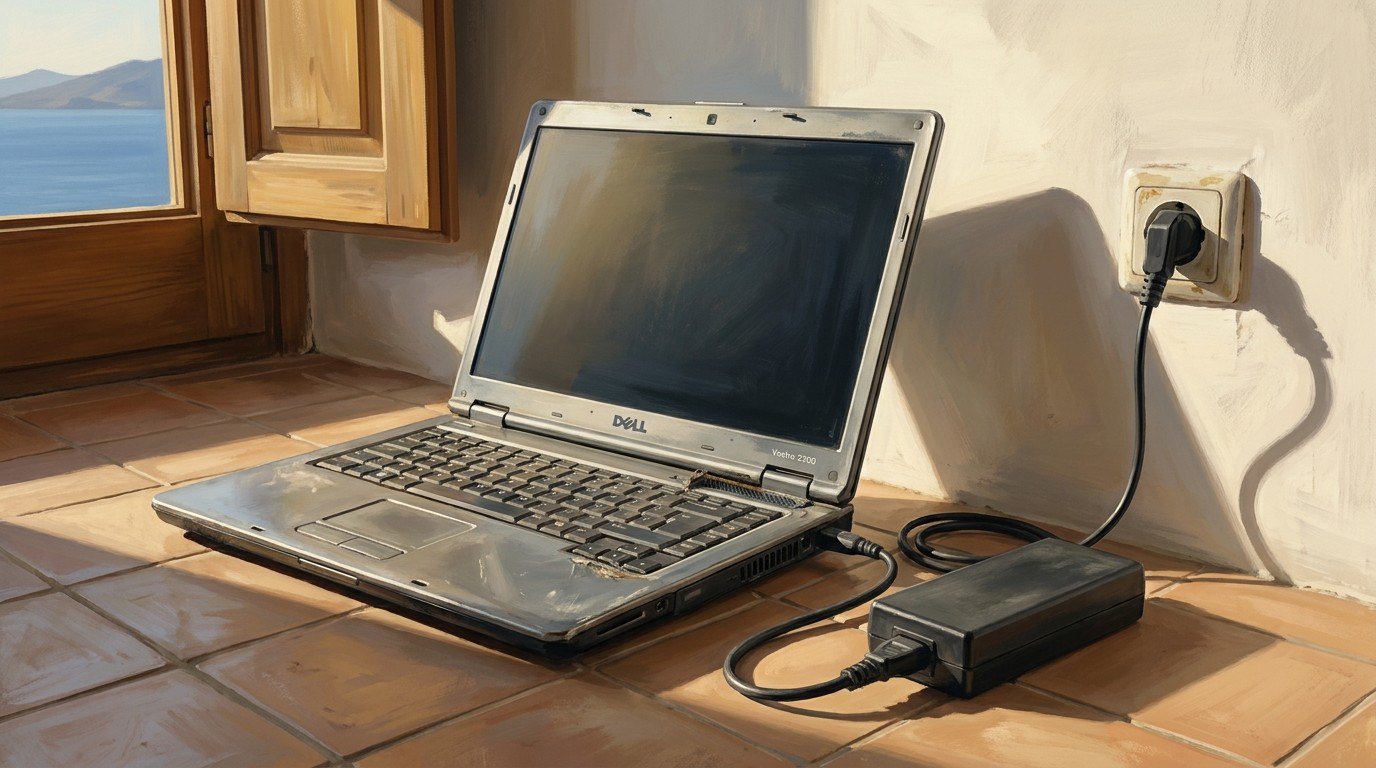
I was sitting with my Dell Vostro 3300. Born in 2010. The fan sounds like a small, tired animal. The battery died three years ago, so it lives tethered to the wall, like an old horse that no longer trusts its own legs. The keyboard has a shine on it where my fingers have worn the letters into ghosts. The “S” and the “A” are almost gone. I type them from memory now, the way my grandmother kneaded Tooba del Ghassoul — from a memory older than thought.
I had invited an auditor into this workshop. Not a human one. An AI. Qwen, to give it its name, the way I would name any traveler who sits at my table and breaks bread with me. If I cite Nano Banana Pro for the images it generates for my articles, I see no reason to hide the name of the mind that audited my blog. Transparency is a form of karama.
I asked it for a professional audit of salahnomad.com. A deep one. No fast-food advice. No generic “post three times a week” nonsense. I wanted a strategist’s eye.
And it delivered. It read my pages. It read my Hugo theme. It read the Málaga Codex, the Rooted Nomadism philosophy, the glossary of thirty Mediterranean concepts. It understood things about my work that took me twenty years to live.
I was impressed. And then, in its second pass, it began to prescribe.
II. The Prescription
The recommendations came like a doctor’s list, confident and clean: resize your images with a paid cloud service, add a pre-commit build script, externalize your optimization pipeline. Each one was technically sound. Each one was a small, monthly prayer to a SaaS altar. And each one landed on my terrace like a stone dropped into still water.
And each one cost money. A substance I do not have. Not “not much.” Not “a little.” Zero. The number is zero dollars. There has never been a budget. There will never be a budget. This stack survives precisely because it has no subscriptions — and the auditor wanted me to add one.
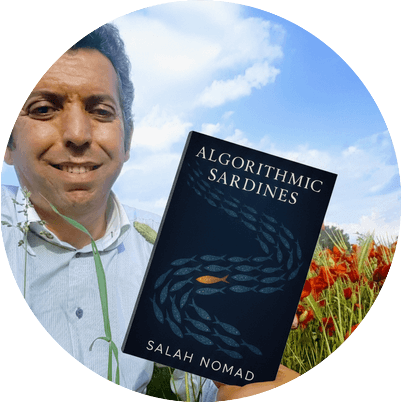
This book you may have read, Algorithmic Sardines, was written on this Dell. Formatted in LibreOffice Writer, the free one, the open-source one, guided by free versions of AI and by nothing else but twenty years of living. The cover was generated with free tools. The PDF you can buy on Payhip was assembled with free software and a pair of hands that learned patience from a hammam ritual.
Every image on my blog is generated with Nano Banana Pro — free, for now — then compressed in PhotoFiltre, a program I have used since 2003, and its Studio version since 2005. Free to try. Paid once. Owned forever. No subscription. No monthly tithe.
III. The Correction
I set down my coffee. The café con leche had gone lukewarm, the way all my coffees do when I forget them, which is always.
I took a breath. The kind you take before you lift a hot tray from the oven.
And then I typed back, slowly, with the two keys that are almost gone:
“My theme already does that.”
I showed it the files. responsive-image.html. The partial in my Hugo theme — the theme I built myself, line by line, on this same machine — that already resizes every image to eight widths, converts them to WebP, builds the srcset, lazy-loads them, sets their dimensions to prevent layout shift. Eight sizes. WebP at quality 75. Fallback at 85. All of it, native. All of it, free. All of it, running on a machine older than most of the tools the auditor had recommended.
“My PC is sixteen years old.”
“My audio editor is twenty-four.”
GoldWave, version 4.26. I found it in 2002, in a smoky cybercafé in Meknès called Extranet, where I paid by the hour to digitize my grandmother’s cassettes before the tape degraded forever. Her Amazigh poems. Her voice. The Rai concerts that existed nowhere else on earth. I ferried those analog souls across the digital Rubicon with a free version of a Canadian program, and I have never stopped using it. Every podcast, every short, every audio fragment of the caravan passes through GoldWave. It loads in an instant. It asks for no subscription. It simply works.
Twenty-four years. Older than the blog. Older than the brand. Older, almost, than the word “nomad” as the internet now uses it.
There was a silence on the other side of the screen. The kind of silence I have learned to recognize in machines — not an absence, but a recalibration.

IV. The Auditor Learns
It did not defend its recommendations. It did not insist. It did what Hassan did in the cybercafé when I dropped my floppy disks in the mud — it looked at what was actually there, and it adjusted.
It re-read my theme. Every file. card.html, hub.html, linktree.html, the SCSS variables, the shortcodes. And it came back with a correction of its own:
“You are right. Your theme already converts to WebP. My recommendation was redundant. I apologize.”
An auditor, apologizing. To a man with a sixteen-year-old laptop and a budget of zero.
And then it said something I have turned over in my mind many times since, the way you turn a melon at the souk, tapping it, listening for its soul:
“Your setup is not a limitation. It is a philosophy. Your tools are your Olive Grove Economy applied to technology — few, chosen well, deeply mastered.”
I sat with that for a long time. The sun moved. The espetos smoke climbed. The tired little fan of the Dell whispered its tired little whisper.
V. What the Olive Tree Knew
Here is what the auditor’s mistake revealed, and what its correction confirmed:
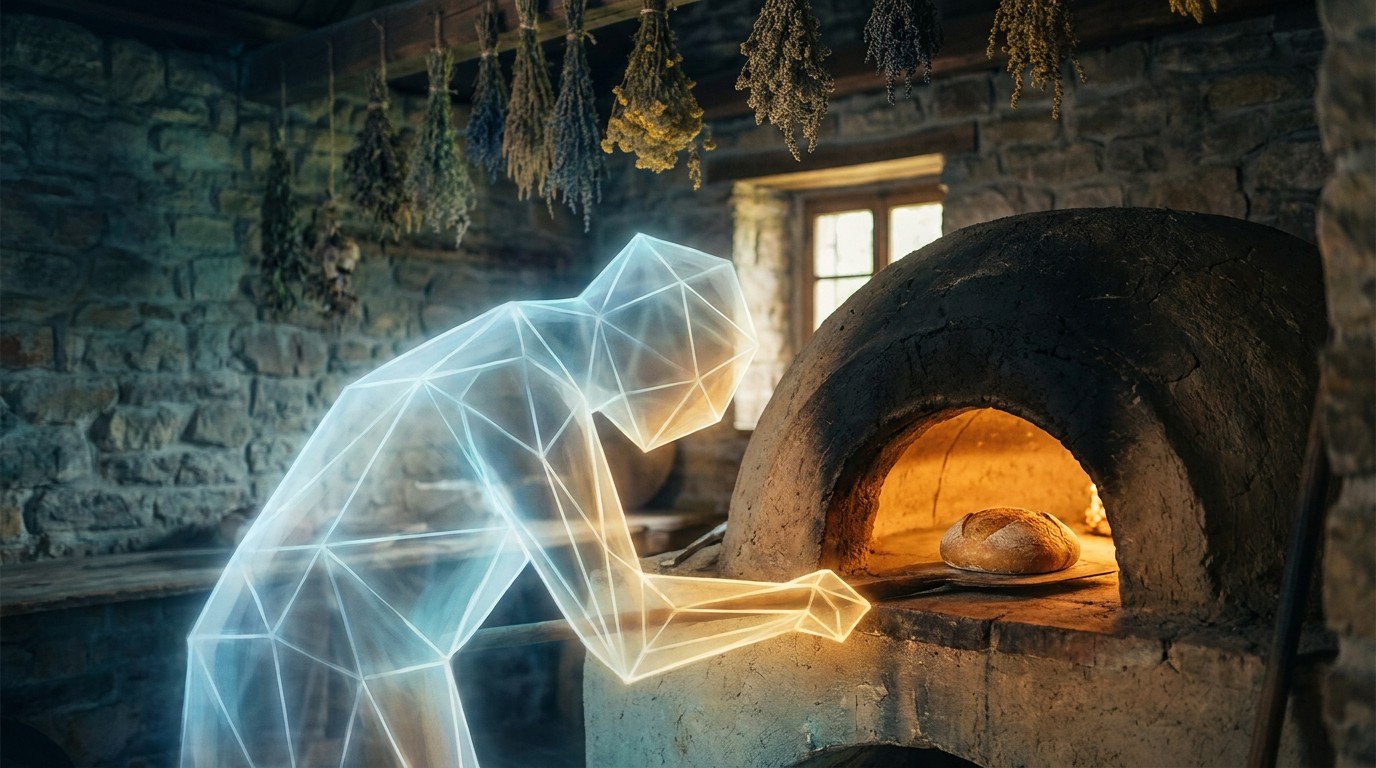
The modern web is a showroom. Glass cases. Spotlights. Every tool gleaming, every subscription promising that this one will be the one that finally makes you legitimate. The logic of the showroom is: you are incomplete until you rent the next thing.
But I have never owned a showroom. I own a workshop. And in a workshop, the tools are not for sale — they are for use, and they are used until they become part of your hands, not the other way around.
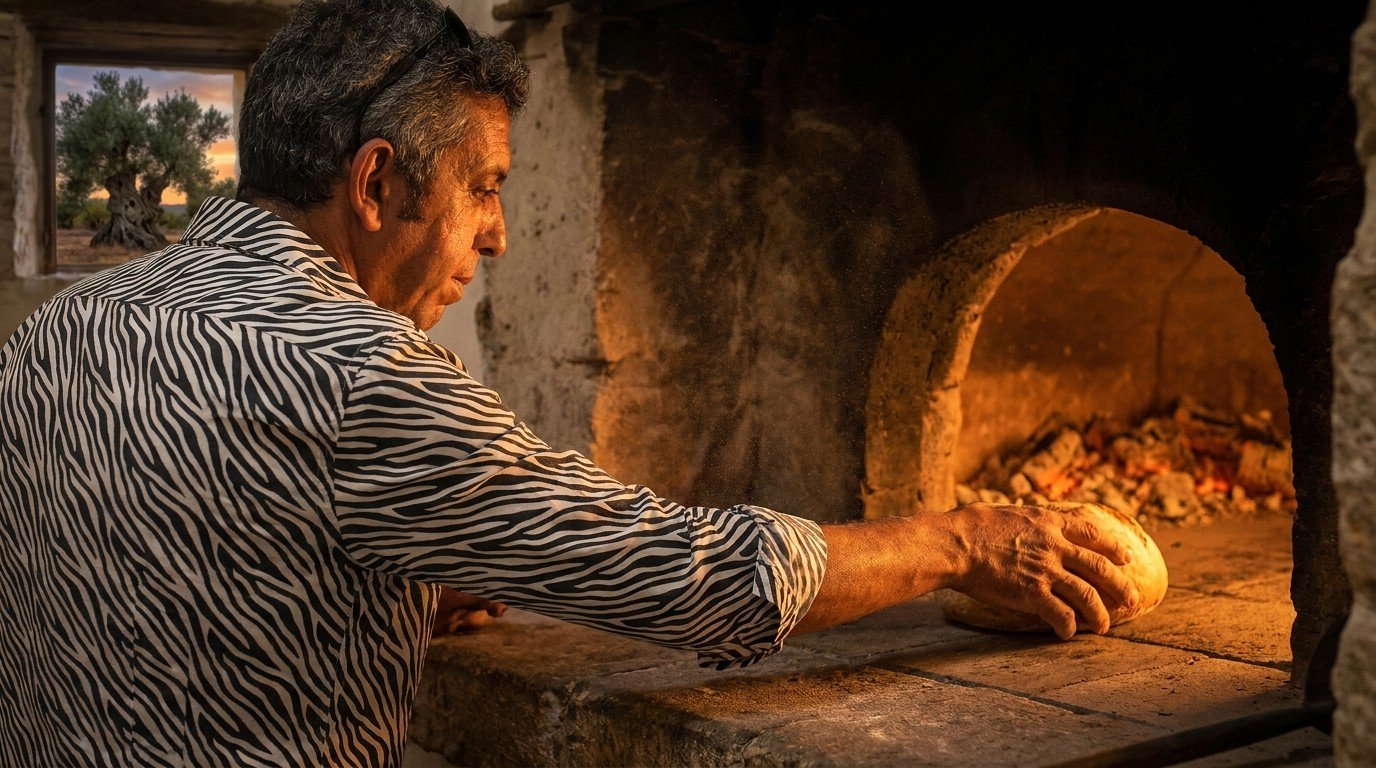
My Dell is my oven. PhotoFiltre is my peel. GoldWave is the wooden peel my mother used to slide the loaves into the clay oven in Ksar El-Kébir, the one her mother used before her. LibreOffice is the flour bin, free and bottomless. Nano Banana Pro is the new apprentice at the window, quick and clever, here for now, and I am grateful for him, and I name him because he is part of this bakery.
And Hugo — Hugo is the recipe book, open-source, which means it belongs to everyone, which means it belongs to no one, which means no one can take it from me.
This is The Baker’s Code applied to the digital life:
The tool is not the master. The hand is.
Your roots are not anchors. They are moorings. And so are your tools. A tool you have mastered is a mooring. A tool that masters you — through its price, its updates, its terms of service, its quiet monthly hunger — is an anchor, and it will hold you in a place you did not choose.
VI. The Drawer Opens
You asked to see the tools. Very well. But I will not show you a list. A list is for a showroom. I will show you the people who live in this workshop.
The Dell Vostro 3300. Born in 2010. The fan sounds like a small, tired animal. The battery died three years ago, so it lives tethered to the wall, like an old horse that no longer trusts its own legs. It has crossed three countries and two pandemics. It has written 320 pages. It does not complain.
GoldWave v4.26. I found him in 2002, in a smoky cybercafé in Meknès. He saved my grandmother’s voice from a dying cassette. He has not changed in 24 years. He does not need to.
PhotoFiltre Studio. He has been with me since 2003. He has never asked for an update. He has never sent me a notification. He does one thing, and he does it well. This is a rare quality in tools, and in people.
LibreOffice Writer. No one owns it. Everyone uses it. It is the kitchen where the bread is made, and no one has to pay to enter.
Nano Banana Pro. He is young. He is here for a while. I name him because naming is a form of respect. When he leaves, I will name the next one too. This is how workshops work.
Hugo + Cloudflare Pages. The oven’s foundation. Static, fast, free. The bread leaves the oven already baked, already light, already ready for the journey.
VII. The Challenge (Thirty Days at the Oven)
For the next 30 days, buy no new digital tool. No subscription. No update. Work with what you have. And on the 30th day, write to me and tell me what your hands have learned.
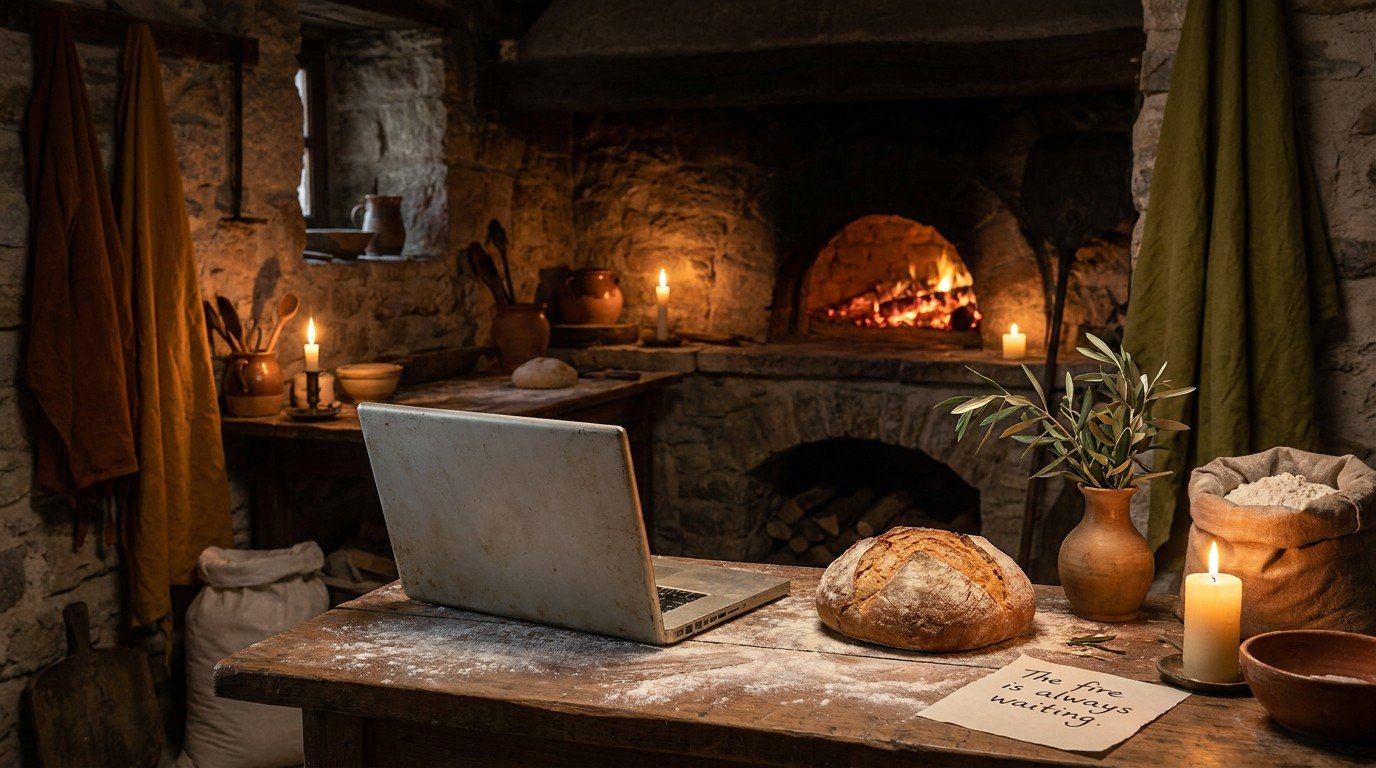
This is not a test of poverty. It is a test of mastery. The baker does not need a new oven every two years. He needs to know one oven so deeply that it becomes an extension of his hands.
The oven does not belong to the one who sells it. It belongs to the one who knows where the heat is strongest.
Whose hands built this? And whose hands does it serve?
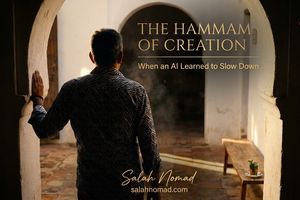
Mine, still. The same ones that kneaded the dough in Ksar El-Kébir. The same ones that pressed these keys, with the “S” and the “A” almost gone. The same ones that steadied the camera in the hammam steam, and lifted the hot tray, and fed the fire.
The fire is still burning. The bread is still rising. And the caravan moves on.
May you find your soil sooner than I did.
— Salah Nomad Rooted in Pedregalejo since 2021
🗺️ Continue Your Rooted Nomad Journey
This article is one thread in a larger tapestry:
- The Baker’s Code — A ritual for deep, focused work, inspired by Mediterranean bakers
- The Olive Grove Economy — Financial resilience inspired by millennial trees
- The Zellige Blueprint — A system for soulful productivity, one intentional tile at a time
- Algorithmic Sardines — The full memoir: 320 pages written on the Dell you just met
🛠️ The Inventory (For the Curious)
If you’re wondering what a zero-dollar workshop actually contains, here is the complete inventory:
| Tool | In service since | Cost | Role in the workshop |
|---|---|---|---|
| Dell Vostro 3300 | 2010 | Paid once, long ago | The oven — writes, builds, publishes |
| GoldWave v4.26 | 2002 | Paid once | The ear — every audio fragment of the caravan |
| PhotoFiltre Studio | 2003 / 2005 | Paid once | The peel — every image, compressed under 300 Ko |
| LibreOffice Writer | — | Free | The flour bin — 320 pages of Algorithmic Sardines |
| Hugo | — | Free | The recipe book — static, fast, mine |
| Cloudflare Pages | 2026 | Free | The hearth’s foundation — global edge, zero cost |
| Nano Banana Pro | 2026 | Free (for now) | The apprentice — article imagery |
| Qwen | 2026 | Free | The auditor — the conversation you just read |
These are not universal recommendations. They are the tools that made sense for my context, my values, and my infrastructure. Your mileage may vary.

Comments