

🎬 The Song — “El Río Que No Pide Permiso”
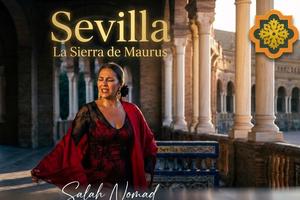
Watch the full Short (2:59) — a cantaora's voice, the Turia, and the river that never asked permission.
This story needed a rumba. Not a lament — a celebration. The cantaora carries the light of the Albufera in her throat, the taste of oranges from the Mercado Central, and the quiet defiance of a river that became a garden. Watch before reading to feel the rhythm, or after to understand the words. The detour, like the song, is yours.
🎬 Watch on Instagram: https://www.instagram.com/reel/DbIvJGStqFk/ 🎬 Watch on TikTok: https://vt.tiktok.com/ZSXn6k4gh/
I. The Map Is a Liar
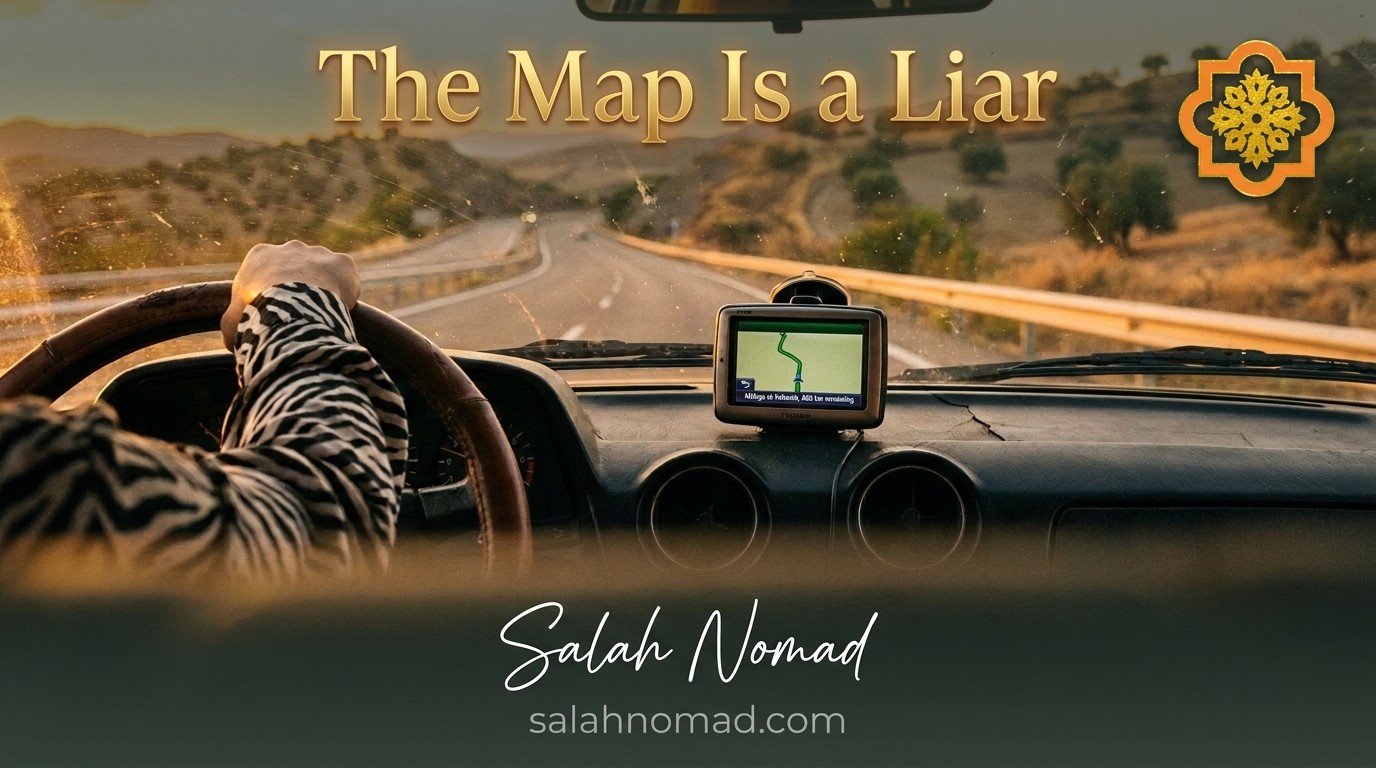
The map said Valencia was a midpoint. A compromise between Málaga and the French border — 600 kilometers from the Alcazaba, 600 kilometers to the tollbooths of La Jonquera. I had budgeted one night. A bed, a shower, a coffee at dawn, and the road again.
This was 2014. I was driving from Ksar El-Kébir to Avignon — 1,700 kilometers of Mediterranean asphalt, alone at the wheel, carrying nothing but a suitcase of clothes and a head full of questions. The Sierra Nevada had just cracked me open. I had seen my ancestral mountains mirrored in the peaks of Andalusia, and I was still trembling from the recognition. Málaga had been the first stop — a night under the gaze of the Alcazaba, a morning of zellige tiles and grilled sardines. Now the GPS said Valencia. Six hours. One night. Move on.
But maps don’t know light. They don’t know the angle of the Mediterranean sun as it hits the Ciudad de las Artes y las Ciencias in late afternoon, turning Calatrava’s white skeletons into gold. They don’t know what it feels like to cross a bridge over a river that isn’t a river anymore — a green serpent of gardens winding through the city, where the Turia once flowed before the flood of 1957 convinced the city to divert its waters and plant a forest in its place.
The map said Valencia was a waypoint. The city said otherwise.
II. The Extra Night
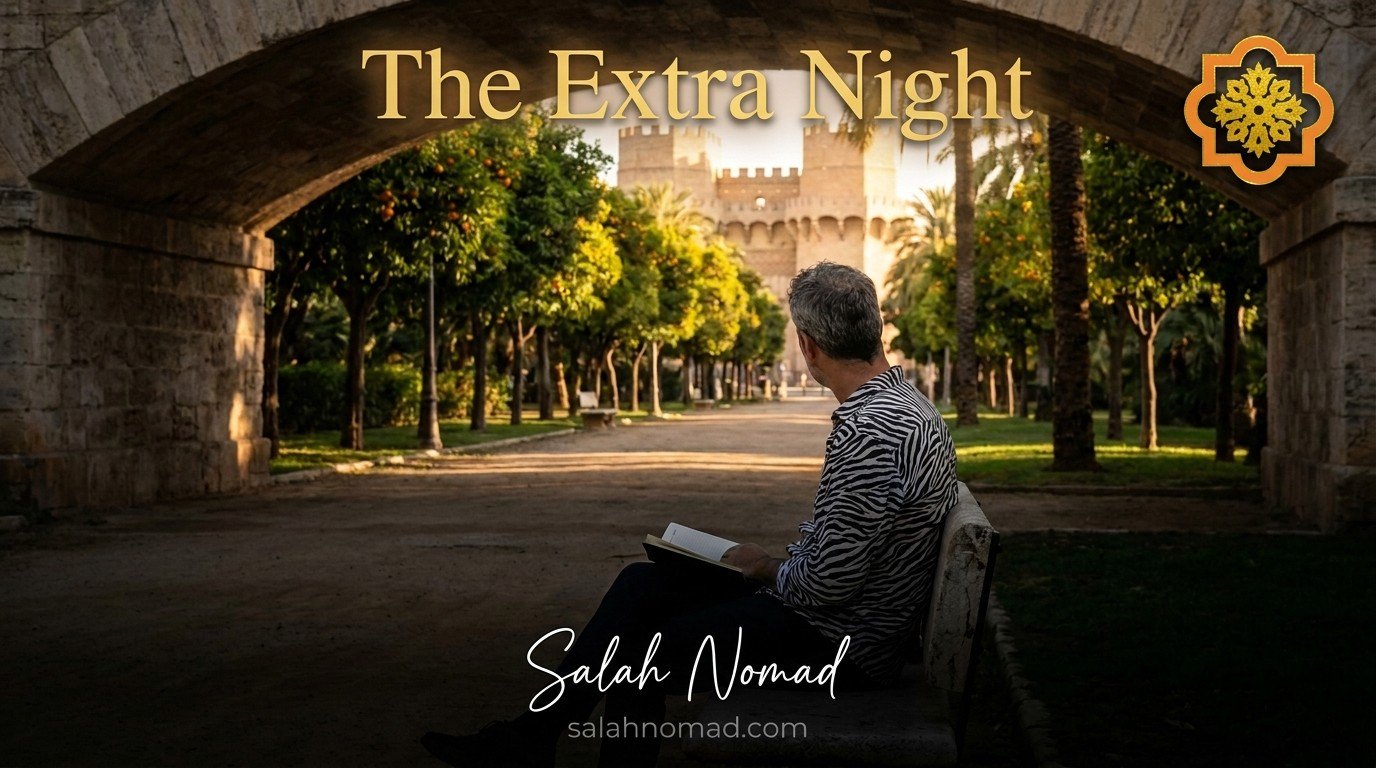
I arrived in the late afternoon, checked into a modest hotel near the old town, and did what any traveler does after six hours on the highway: I walked. Not with purpose. Not with a map. Just to feel the city under my feet.
Valencia does not assault you. It does not shout like Barcelona or dazzle like Sevilla. It waits. It lets you discover.
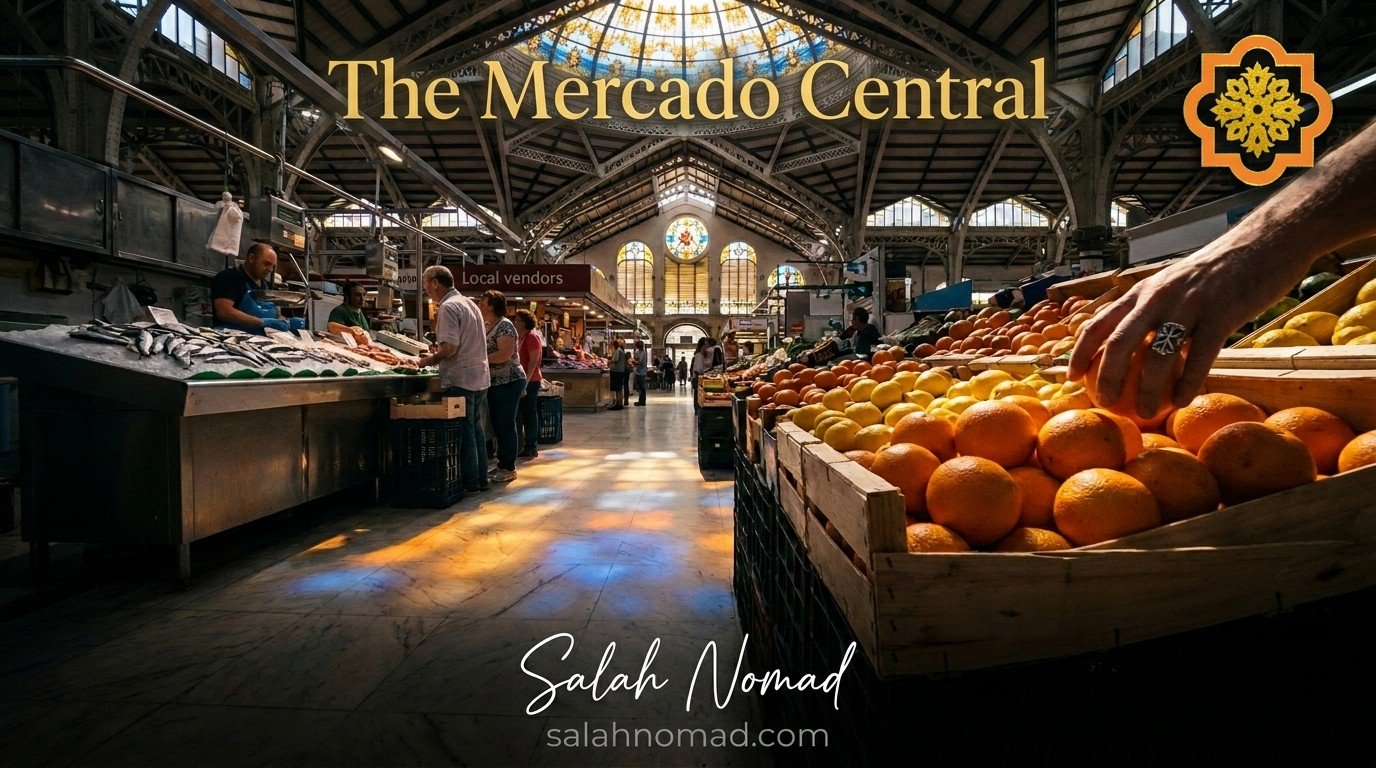
I walked through the Mercado Central, its stained-glass dome flooding the aisles with amber and sapphire light. I passed the Lonja de la Seda, the old silk exchange, its twisted columns spiraling upward like petrified palm trees. I crossed the Plaza de la Virgen, where the fountain of Neptune and the basilica of the Virgin face each other like two old rivals who have made peace.
And then I found the Turia.
The riverbed is a paradox: a wound turned into a garden. In 1957, the Turia overflowed and drowned the city. The response was radical — divert the entire river, leave the old bed dry. But instead of filling it with concrete, Valencia planted grass, palms, orange trees. It became a park that winds for nine kilometers through the heart of the city, a green spine connecting the Bioparc to the City of Arts and Sciences.
I walked that spine until the sun dropped behind the mountains. Somewhere near the Palau de la Música, I sat on a bench and did something I hadn’t done since the Sierra Nevada: I stopped thinking about the destination.
I extended my stay by one night.
III. The Lesson of the Turia
That second day changed me.
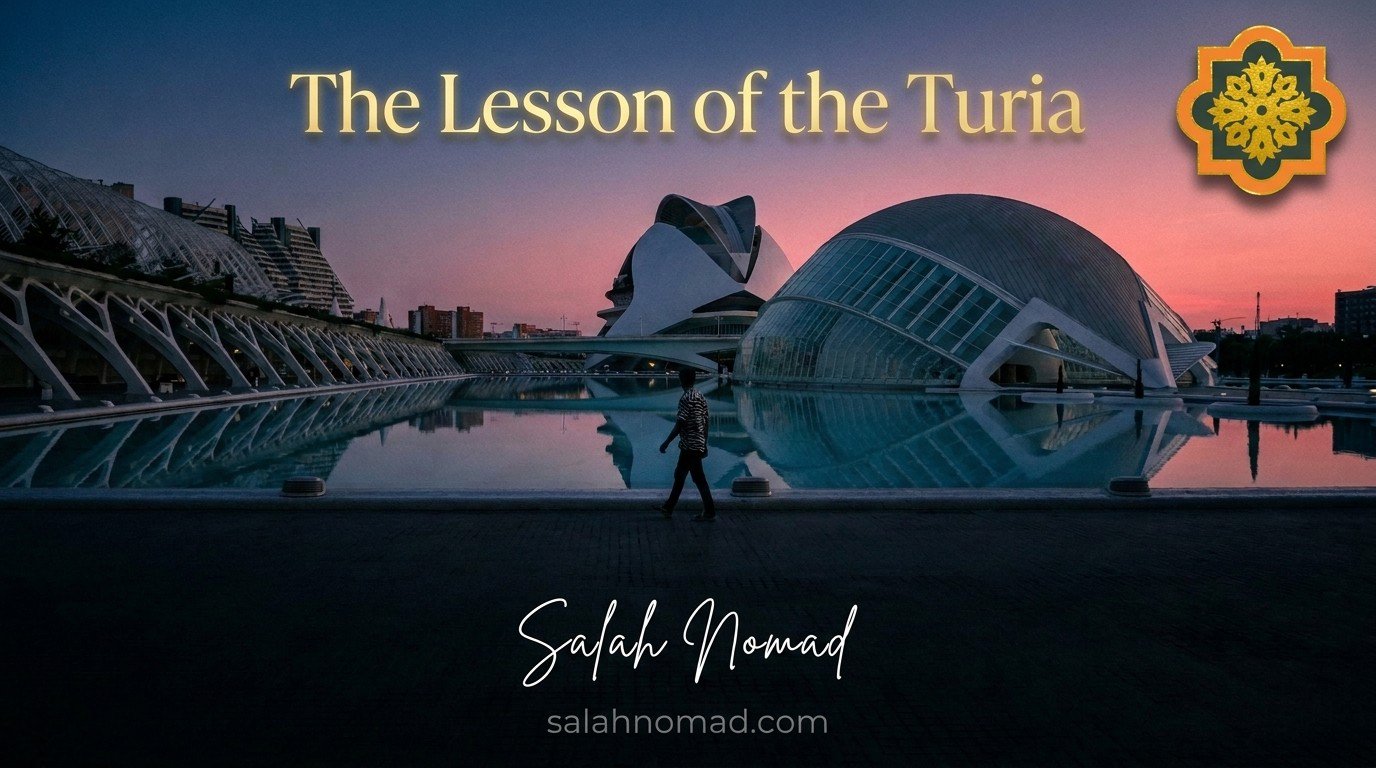
I walked the Turia again, this time from the City of Arts and Sciences back toward the old town. The Jardín del Turia is not just a park. It is a masterclass in rooted nomadism.
Think about what Valencia did. A disaster — a flood that killed dozens and threatened the city’s existence — became a defining feature. The river was moved. The old bed was preserved. And now, where water once raged, children play football, old men play chess, and a nomad from Ksar El-Kébir walks alone, learning something he will not fully understand for another decade.
The Turia is the physical proof that rootedness is not about staying where you were planted. It is about transforming what you were given into something that serves those who come after.
“The river does not apologize for changing course. It finds a new bed. It nourishes what it touches. And the old bed becomes a garden.”
I wrote those words in my Moleskine that evening, sitting at a café in the Plaza de la Reina. I didn’t know yet that I would one day write a Codex about this city. I didn’t know that the DNV income threshold, the DANA flood zones, and the acoustic sanctuary map would become part of my professional vocabulary. I only knew that Valencia had taken something broken — a floodplain, a traveler’s exhaustion — and made it beautiful.
IV. The Taste of the Border
On the third morning, I left.
But before I reached France, there was La Jonquera.
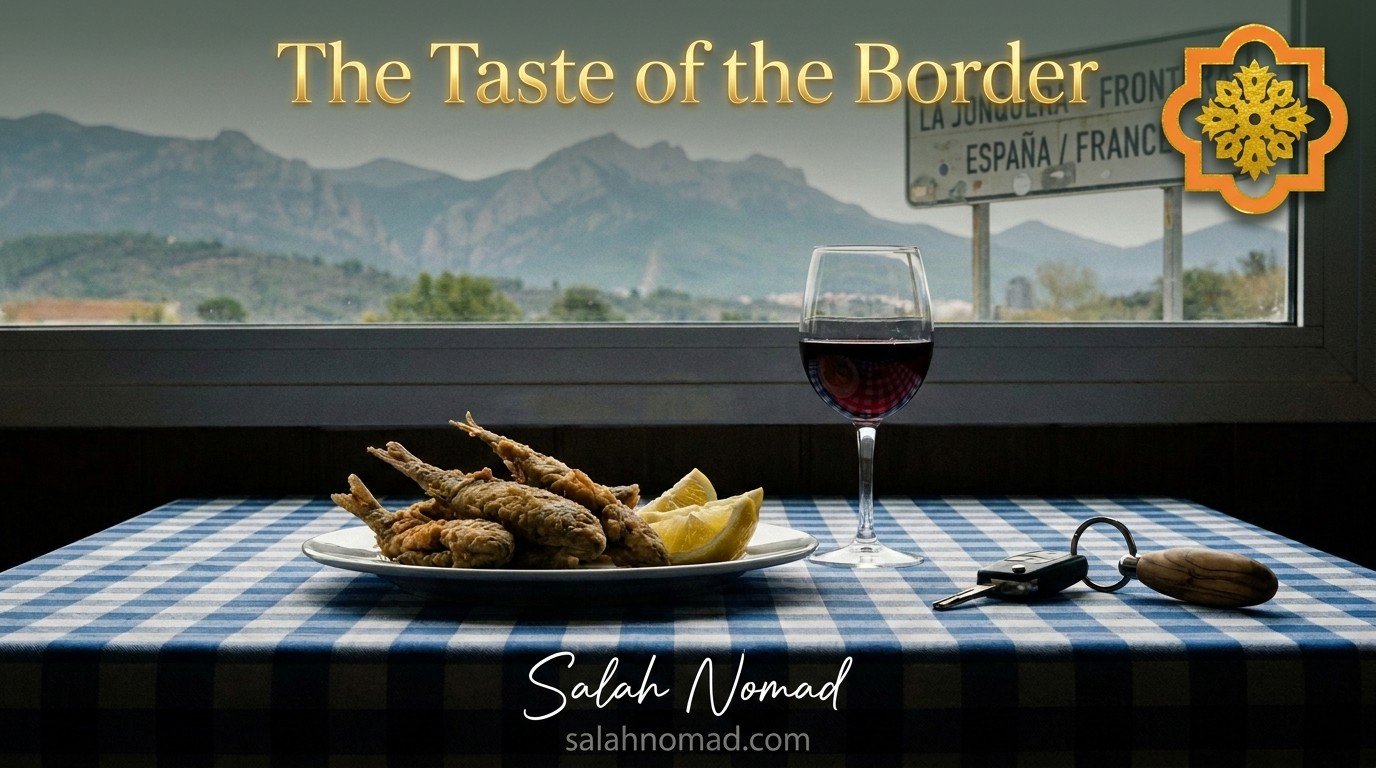
Every traveler who crosses the Spanish-French border by car knows this town. It is a strange, liminal place — a strip of restaurants, gas stations, and duty-free shops wedged between the Pyrenees and the sea. It belongs to neither country, or to both. It is the last breath of Spain before the French tollbooths, or the first taste of Spain after the long descent from Perpignan.
I stopped at the Restaurante Mar y Sol. A simple place. White tablecloths. The smell of fried fish and lemon. I ordered pescado frito — a plate of small, crispy fish, golden and salted, exactly like the ones I had eaten a thousand times in Larache. The taste hit me like a memory I didn’t know I had.
There I was, at the border of two countries, eating the same fish my mother would have recognized. The Mediterranean does not respect borders. Its sardines swim from Larache to Málaga to Valencia and back again, carrying the taste of home in their silver scales.
I paid my bill, filled the tank, and crossed into France.
V. The Five Pillars of the Corridor
Twelve years later, when I sat down to write the Valencia Relocation Codex, I understood why that extra night mattered.
Valencia is not Málaga. It is not a lighthouse. It is a corridor — a place of passage, of flow, of transformation. The river that became a garden. The flood that became a lesson. The city that waits for you to notice it.
For the digital nomad seeking an anchor, Valencia offers five pillars.
The Turia as daily ritual. No other Spanish city has a nine-kilometer garden running through its heart. The Turia is your morning run, your evening walk, your Sunday bicycle ride. It is the green spine that connects every neighborhood, and it costs nothing.
The DANA lesson. In October 2025, a devastating flood reminded Valencia that water has a long memory. The Codex maps the flood zones, the insurance clauses, the precautions you must take. But the deeper lesson is the Turia’s: disaster, when faced honestly, becomes design.
The fiscal advantage. The Comunidad Valenciana offers a €1,000,000 Wealth Tax exemption — matched only by Andalusia’s 100% bonus. For the high-net-worth nomad, this is a quiet revolution. The Codex explains exactly how to activate it, and which fiscalist to call.
The acoustic sanctuary. Unlike Barcelona’s ZAS zones or Málaga’s tourist saturation, Valencia still has quiet barrios. Ruzafa hums with life. Benimaclet speaks Valencian in its bakeries. Patraix hides plazas that feel like villages. The Codex scores every neighborhood for noise, fiber, and flood risk — so you find your silence before you sign.
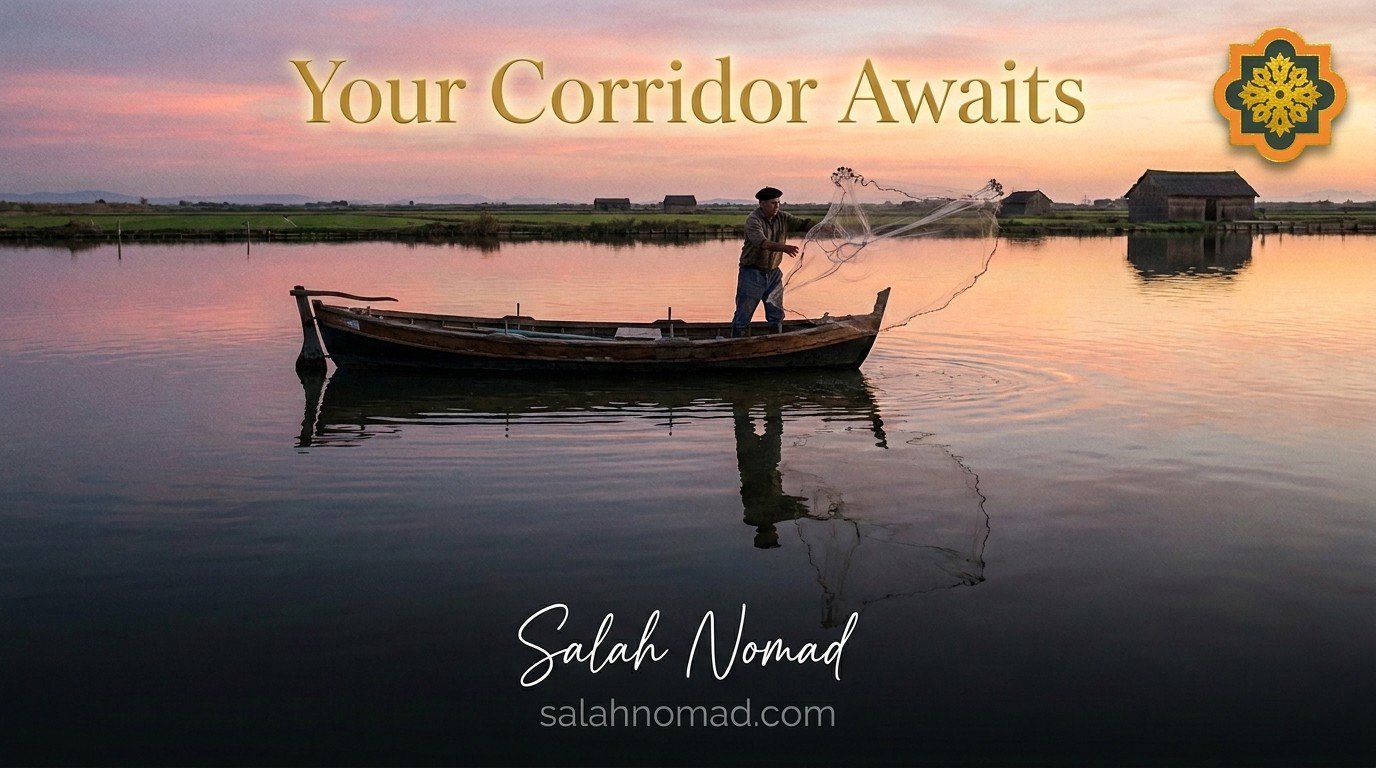
The light. I cannot prove this with data. But Valencian light is different. It is softer than Málaga’s, more diffuse than Barcelona’s. It comes from the east, across the sea, filtered through the humidity of the Albufera rice fields. It is the light of a city that does not need to shout.
VI. Your Corridor Awaits
I almost missed Valencia.
If I had stuck to my plan — one night, one coffee, one early departure — I would have arrived in Avignon a day earlier, and I would have lost a piece of my soul I didn’t know was waiting for me. The extra night was not an indulgence. It was an investment.
The Valencia Relocation Codex is the guide I wish I had in 2014. It gives you the DANA flood map, the acoustic scores, the 12 verified Black Book contacts, the exact DNV timeline, and the five anchoring rituals — from the horchata that tastes like belonging to the esmorzaret where business happens between bites of bocadillo.
If you are considering Valencia as your anchor, this guide is the shortcut I didn’t have.
👉 Explore the Valencia Relocation Codex 👉 Get the Codex — Instant PDF
🎤 Full Lyrics — “El Río Que No Pide Permiso”
📜 Original (Español Andaluz)
¡Arriba! ¡Ay, ay, ay…! ¡Valencia, ay Valencia!
No vine pa’ quedarme, vine pa’ respirar, pero el Turia me dijo: «Aquí te puedes quedar».
El río que no pide permiso, el jardín que no espera a nadie, me enseñó que las raíces nacen donde el pie se abre. ¡Olé!
La luz de la Albufera me entró por la ventana, y el Mercado Central me regaló una naranja.
El río que no pide permiso, el jardín que no espera a nadie, me enseñó que las raíces nacen donde el pie se abre. ¡Olé!
Valencia, corredor, entre dos mares abierta, me robaste una mañana y me diste la puerta.
El río que no pide permiso, el jardín que no espera a nadie, me enseñó que las raíces nacen donde el pie se abre. ¡Olé!
Ay, la luz que no se explica, ay, el agua que no vuelve, Valencia no te reclama, Valencia te sostiene.
📜 English Translation
I didn’t come to stay, I came to breathe, but the Turia told me: “Here you can stay.”
The river that asks no permission, the garden that waits for no one, taught me that roots are born where the foot opens. Olé!
The light of the Albufera came in through my window, and the Central Market gifted me an orange.
The river that asks no permission, the garden that waits for no one, taught me that roots are born where the foot opens. Olé!
Valencia, corridor, open between two seas, you stole one morning from me and gave me the door.
The river that asks no permission, the garden that waits for no one, taught me that roots are born where the foot opens. Olé!
Ay, the light that cannot be explained, ay, the water that does not return, Valencia does not claim you, Valencia sustains you.
❓ Frequently Asked Questions
Why Valencia? Why not Barcelona or Madrid?
Is Valencia suitable for digital nomads in 2026?
What is the song about?
Is this part of the Rooted Nomadism music cycle?
Will there be articles for the other cities in the Mediterranean Codex?
🧭 Where Do You Go From Here?
The Mediterranean Codex exists because I believe that freedom without roots is just drift. You can move anywhere — but if you want to belong, you need a system. And sometimes, you need a song. And sometimes, you need a detour that refuses to be one.
Start with the logistics:
👉 Explore the Valencia Relocation Codex – the 38-page field manual with DANA flood maps, acoustic scores, and 12 verified Black Book contacts. 👉 Get the Codex — Instant PDF – $29, instant download, quarterly updates included.
Then find your soil:
👉 Read the Málaga story – the first article in the series, and the city that taught me how to anchor.
And when the sea gets rough:
👉 Explore the full Mediterranean Codex collection – seven cities, seven guides, one philosophy.
“May you find your soil sooner than I did.” — Salah Nomad Rooted in Pedregalejo since 2021
Comments