

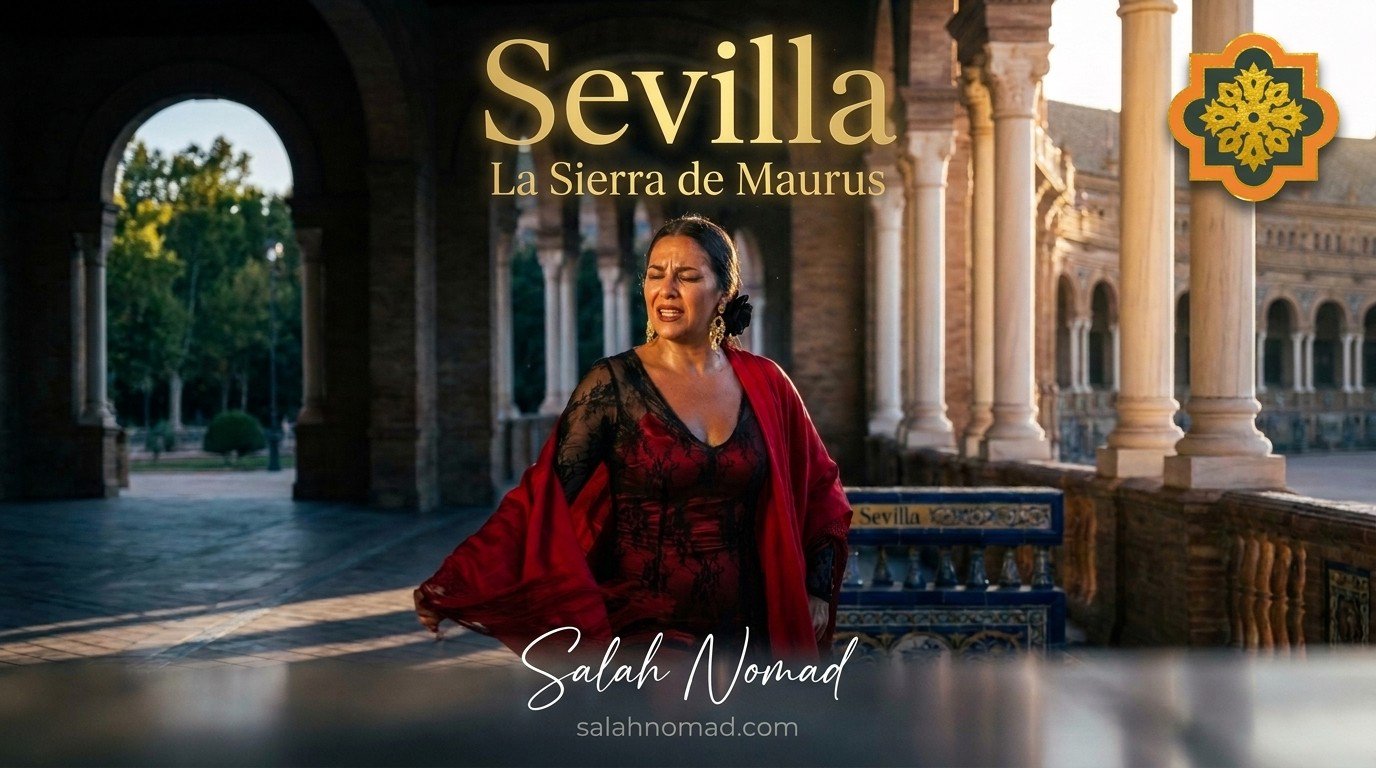
🎬 The Song — “La Sierra de Maurus”
Listen to 'La Sierra de Maurus' — a modern rumba about mountains that spoke Maurus and a city that forges every root.
Seville demanded a different palo. A modern rumba, stripped of fiesta but sharp as flint. The cantaora carries a Voz Afillá, the memory of limestone, and the quiet understanding that some cities don’t welcome you. They forge you.
🎬 Watch on Instagram: https://www.instagram.com/reel/DbRXdtHtj9H/ 🎬 Watch on TikTok: https://vt.tiktok.com/ZSXEP9Ex3/
I. Why Did a 9:00 AM Bus from Málaga Rewire My Understanding of Exile?
The Alsa bus pulled out of Málaga’s Estación de Autobuses at nine in the morning. July. The station smelled of diesel and churros. I’d bought the ticket the night before — €25, no return booked. Not because I was spontaneous. Because I was tired. Four days of paperwork, two nights of broken sleep, and the creeping sense that if I didn’t leave the coast for a weekend, the coast would start to feel like a cage.
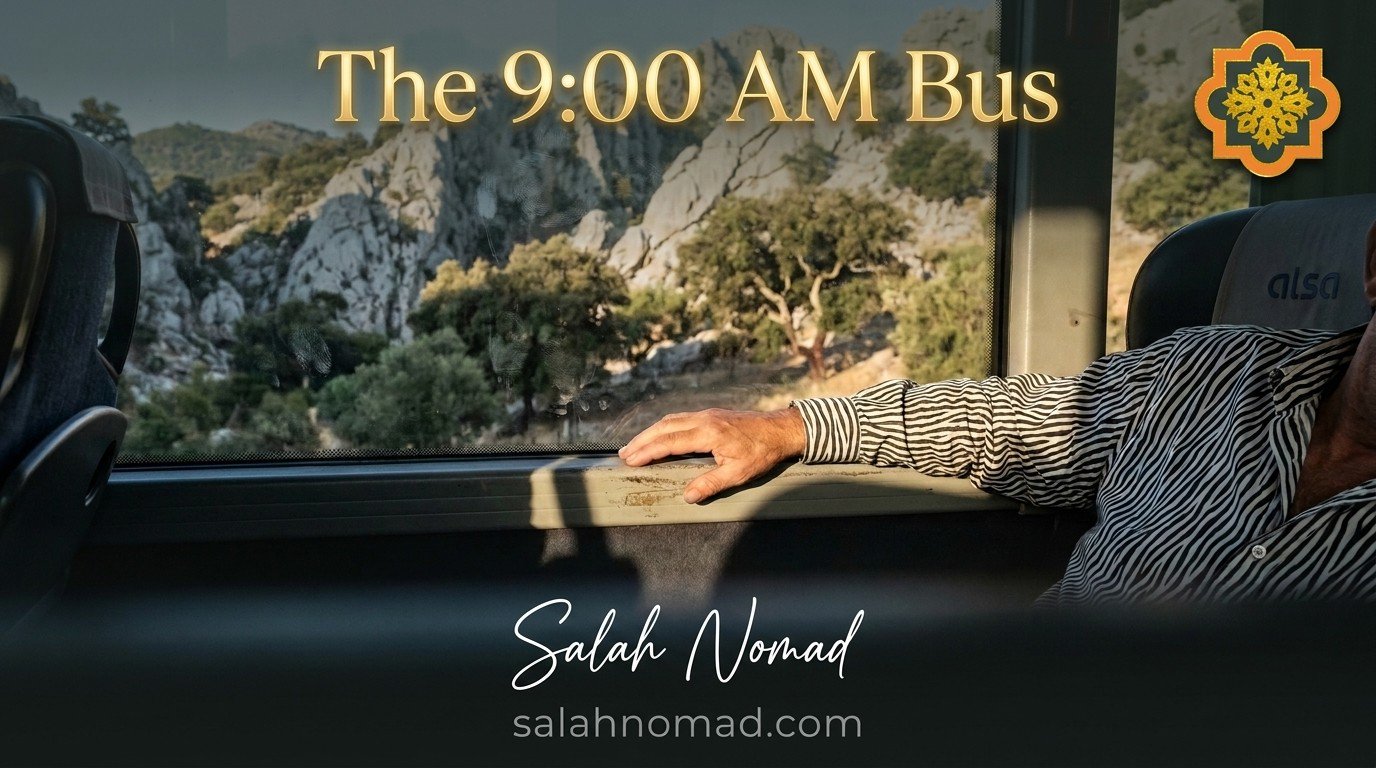
I took a window seat halfway down the aisle. The air conditioning coughed. Outside, Málaga thinned out — last white apartment blocks, last palm trees, last glimpse of the Alboran Sea. Then the road tilted upward, and the landscape changed texture entirely.
Scrubland. Ravines. Cork oaks. And then — mountains. Not one single chain, but a scattered family of massifs, each one older and more eroded than the last. The Sierra Sur. Grazalema. Las Nieves. Limestone ridges catching the morning light at an angle that made every fissure look like a scar.
I wasn’t prepared for what happened next.
My body recognized them before my mind did. The shapes of the slopes. The way the rock fractured. The colour of the earth between the trees — that specific grey-ochre that only exists where limestone has been weathering for millennia. I’d seen it all before. Not on a postcard. Not in a documentary. In the mountains behind my hometown, Ksar El‑Kébir, in northern Morocco.
The Jbala.
I pressed my forehead against the window and stared until my eyes burned.
II. What Did the Mountains Between Málaga and Seville Reveal About My Ancestors?
The Jbala mountains aren’t famous. They don’t appear on tourist itineraries. They’re a fold of the Rif, green and wet and stubborn, populated by a tribe that still speaks a dialect laced with Spanish words from the 17th century. Nevera. Chincla. Words that crossed the Strait and never went back.
My father’s family comes from those mountains. My grandfather. My great-grandfathers. All of them Jbala, all of them carrying the unspoken knowledge that their ancestors had come from somewhere else. Al-Andalus. The lost peninsula. The land on the other side of the sea.
I grew up hearing fragments of this story, but no one ever told me why the Moriscos — the Muslims forced to convert, then expelled from Spain between 1609 and 1614 — had chosen the Jbala. Why those mountains specifically. Why not Fez, or Tétouan, or anywhere else in Morocco with more wealth, more trade, more opportunity?
The bus answered that question.
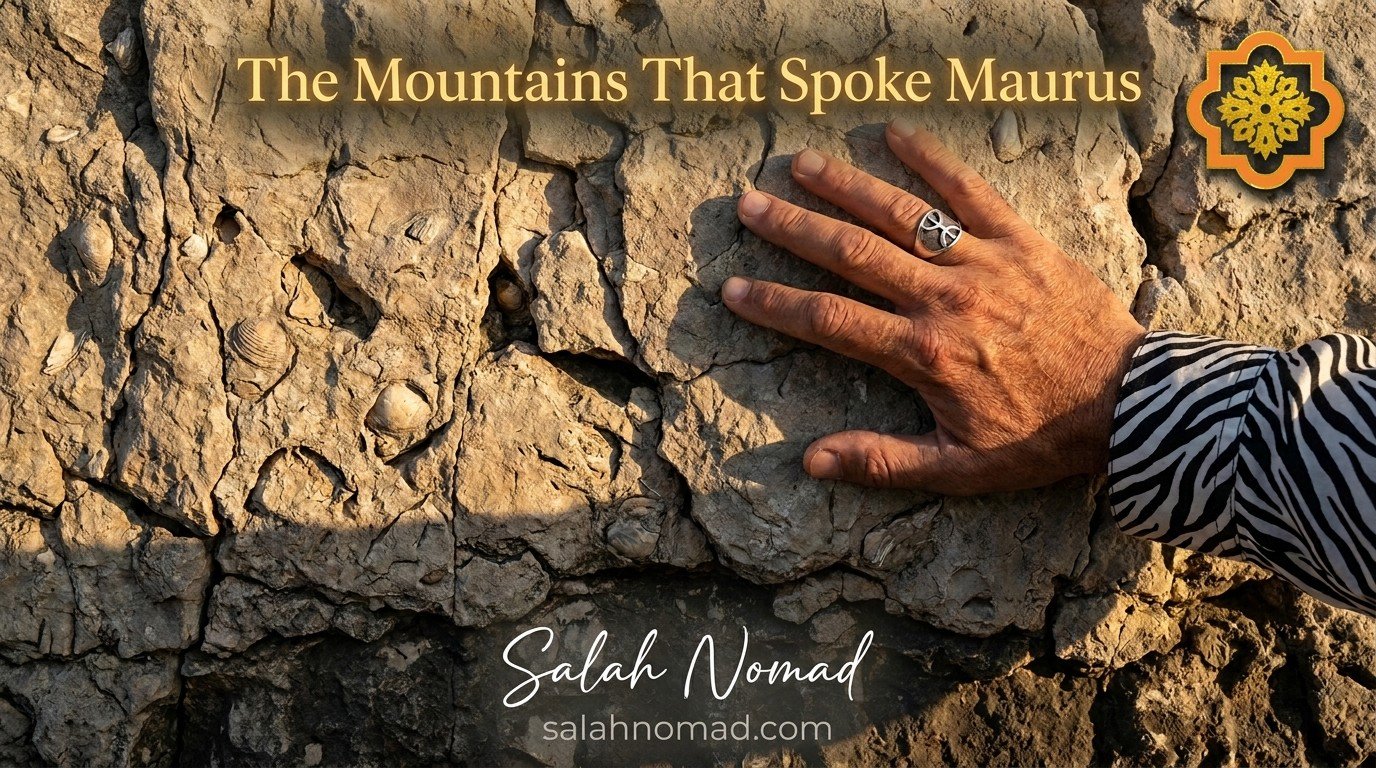
The Sierra Sur, Grazalema, and Las Nieves are geological twins of the Jbala. Same limestone bedrock. Same karst formations, carved by the same acidic rainwater. Same cork oaks — Quercus suber — whose bark regenerates after harvesting. Same wild olives, Olea europaea sylvestris, gnarled and unproductive and indestructible. Same thyme. Same rosemary. Same light hitting the slopes at a 45-degree angle on a July morning.
My ancestors didn’t flee. They didn’t scatter. They searched. They walked or sailed or were marched along the Mediterranean coast until they found an ecosystem that remembered them. A place where their olive cuttings would root, where their irrigation channels would function, where their goats would find the same forage. They weren’t refugees. They were botanists of exile. They transplanted an entire world.
The mountains between Málaga and Seville are the reason I exist.
III. Why Was Seville Never My Destination — But Their Departure Point?
The bus pulled into Sevilla’s Plaza de Armas station at 11:45 AM. The doors opened, and the heat stepped in like a creditor. 42 degrees Celsius. Dry. Silent. The kind of heat that doesn’t invite debate.
I walked out of the station and Seville refused to acknowledge me. No welcome sign. No tourist smile. The city sat there like an old cathedral, massive and indifferent, waiting for me to prove I could handle it.
I walked to the Plaza de España. The canals shimmered in the furnace light. I walked past the cathedral, past the Alcázar, across the Guadalquivir into Triana. The whole time, I wasn’t sightseeing. I was tracking something I couldn’t name.
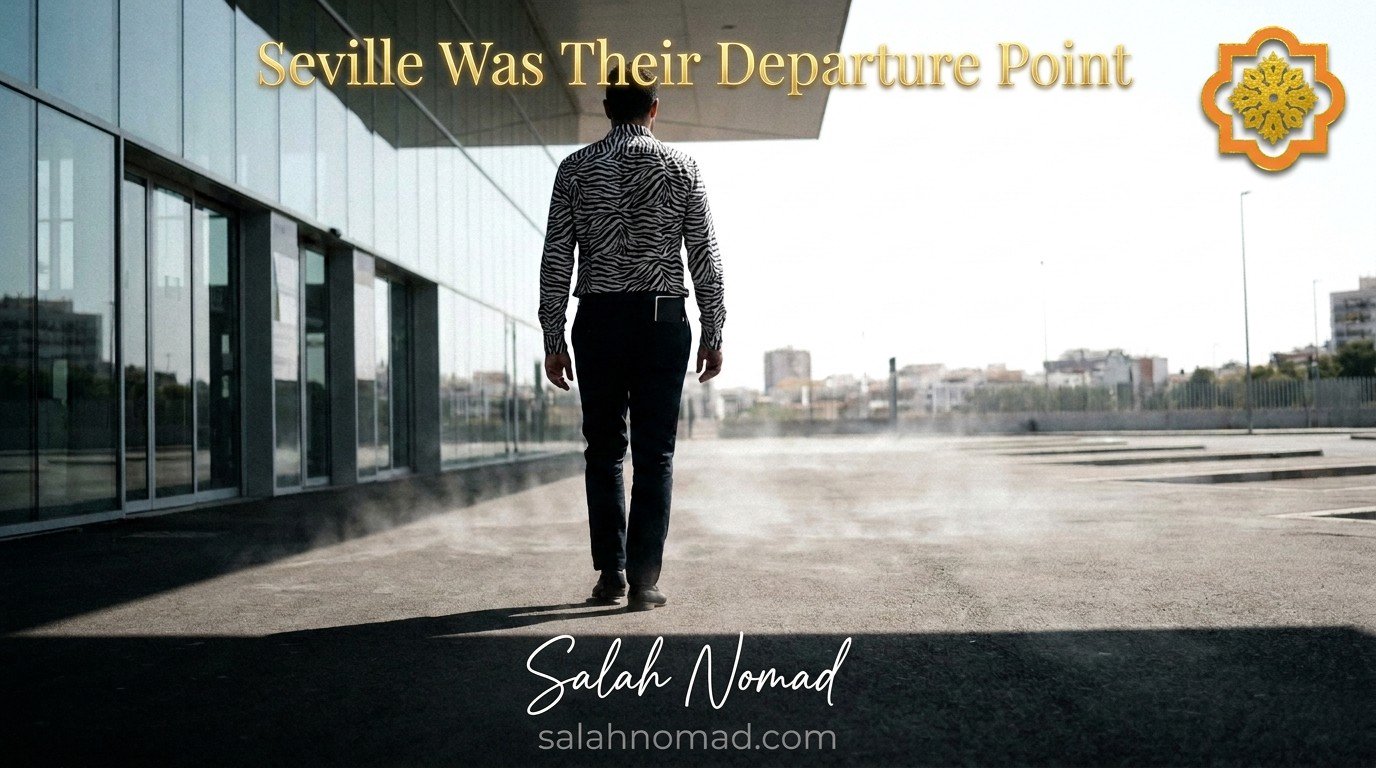
Seville was not my destination. Seville was their departure point.
Four hundred years ago, my ancestors had stood in this city, or one like it, and looked at these same bell towers, these same orange trees, this same river sliding brown and slow toward the Atlantic. They’d boarded ships. They’d carried cuttings. Seeds. Memories. They’d turned their backs on everything familiar and sailed into a future that didn’t want them.
And I, five centuries later, had just taken a €25 bus to stand where they’d stood. Not to reclaim anything. Not to demand apologies. Just to close a loop that history had left open.
I sat on a bench in the Plaza del Salvador. I ordered a café solo. I didn’t write anything in my notebook. Some things need to settle before they become words.
IV. How Does Seville’s Heat Forge Those Who Choose to Stay?
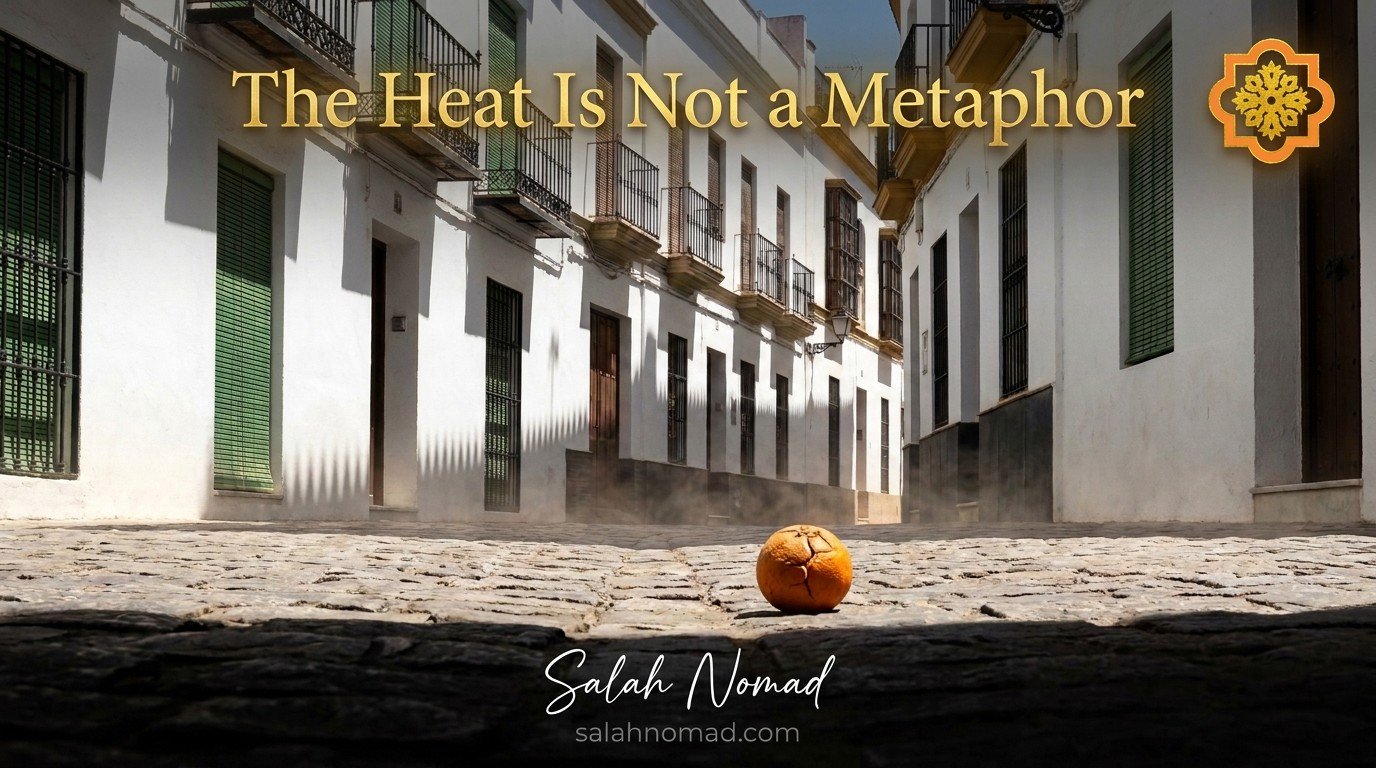
Seville in July is not a city. It’s a kiln.
The heat isn’t an inconvenience. It’s the city’s operating system. Narrow streets trap it. Stone walls store it. The cobblestones radiate it back at midnight. There are barrios — beautiful, historic, photogenic — that become unlivable between June and September. Tourists collapse on the cathedral steps. Digital nomads sign leases in April and break them in August, €2,000 poorer and physically defeated.
But there are also places where the heat is manageable. Triana, with its wider streets and proximity to the river. Nervión, modern and ventilated. Certain corners of the old town where the afternoon shadow falls just long enough to create a pocket of survival.
The Seville Relocation Codex maps all of this. Thermal scores. Acoustic scores. Fiber availability. It doesn’t romanticize the city. It tells you which streets will destroy your sleep during Feria and which barrios will trap the heat until 2 AM. It gives you the exact data you need to choose a home instead of a trap.
Seville doesn’t negotiate. It decides. If you survive August, you belong. If you don’t, you were never meant to stay.
V. What Does the Rumba “La Sierra de Maurus” Sound Like — and What Story Does It Tell?
For Seville, the soleá was too mournful. The bulería too wild. This story needed a modern rumba — a melody you can carry in your pocket, but with a voice rough enough to strip paint. A voice that sounds like it’s been shouting at the sun.
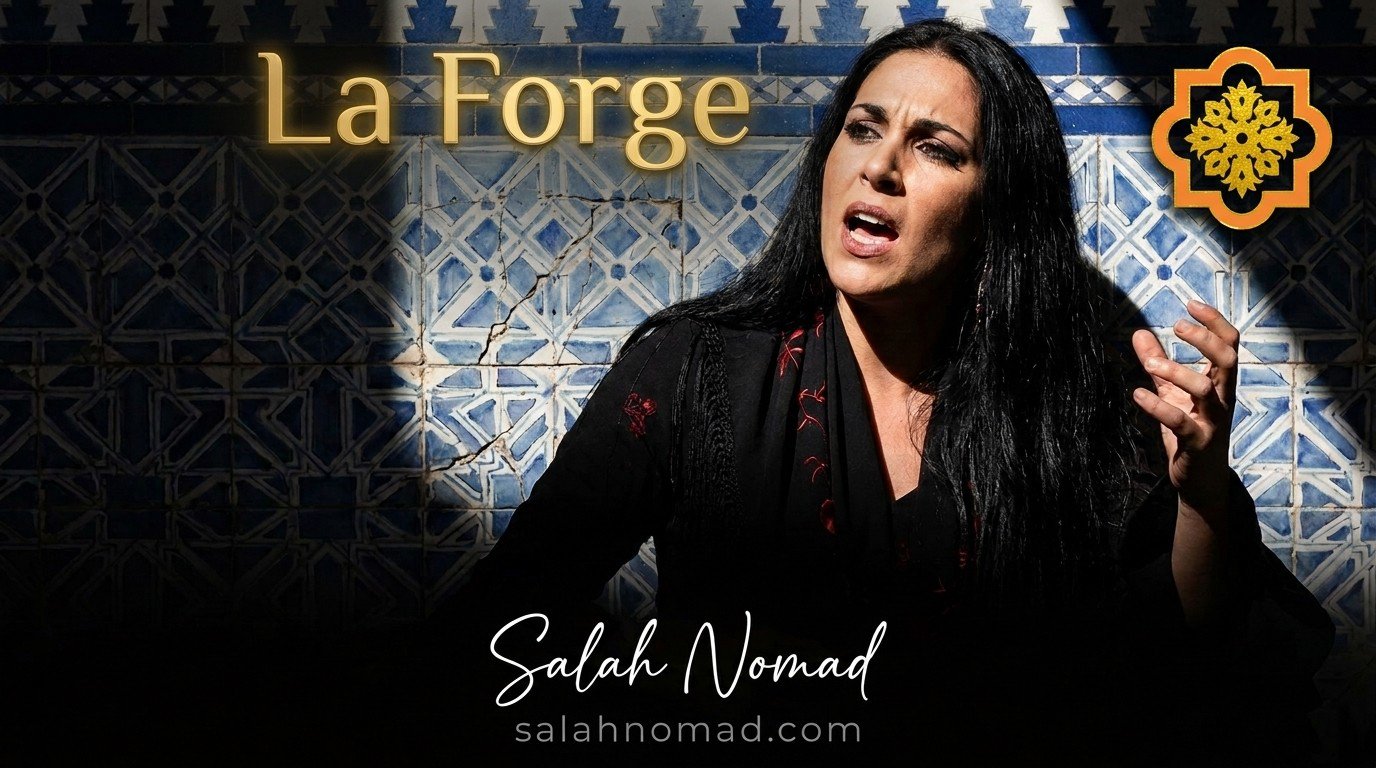
La Sierra de Maurus opens with a guitar that hooks you before the first word. No sweetness. Just a crisp, rhythmic attack. The cantaora steps in with a Voz Afillá — that deep, raspy, broken-in quality that no conservatory can teach. She sings in Andalusian Spanish, but the mountains she invokes speak Maurus, the ancient language of the Mauri, the tongue my ancestors carried across the Strait.
The chorus lands like a decision: “La sierra me habló en maurus, sin palabras, sin frontera.” The mountains spoke to me without words, without borders. Seville gave me life. Seville awaits me.
🎤 Full Lyrics — “La Sierra de Maurus”
📜 Original (Español Andaluz)
[INTRO] (Solo de guitarra seca, ataque nervioso en rasgueo) (Palmas secas y chasquidos de dedos sincronizados) « ¡Ay, Sevilla! »
[VERSO 1] La sierra me habló en maurus, sin palabras, sin frontera, un susurro de los tiempos que mi sangre desespera. Me dijo: «Tú no has vuelto, tú nunca te fuiste», que el destino de los moros en la piedra se escribe. (Jaleo : ¡Olé!)
[ESTRIBILLO / CHORUS] ¡La sierra me habló en maurus, sin palabras, sin frontera! ¡Me quemó como la fragua, me dolió de tal manera! ¡La sierra me habló en maurus, sin palabras, sin frontera! ¡Sevilla me dio la vida, Sevilla me la espera!
[VERSO 2] Mis abuelos no lloraron, se quedaron en la orilla, plantando sueños de oliva bajo el sol de esta Sevilla. Cada aceituna que cae, es un reloj que volvía, marcando el paso del tiempo, la luz de la profecía.
[PUENTE / BRIDGE] El Guadalquivir no pregunta por el nombre, el calor de la tarde no perdona a ningún hombre. Triana me dio su cante, Sevilla su memoria, Salah Nomad escribe con fuego su historia.
[ESTRIBILLO / CHORUS] ¡La sierra me habló en maurus, sin palabras, sin frontera! ¡Me quemó como la fragua, me dolió de tal manera! ¡La sierra me habló en maurus, sin palabras, sin frontera! ¡Sevilla me dio la vida, Sevilla me la espera!
[OUTRO] Sevilla forja, Sevilla quema, Sevilla sabe lo que el mar se lleva. Sevilla forja, Sevilla quema, ¡Sevilla rompe todas mis cadenas!
[ENDING] (Arrêt brutal de la guitare, silence) « Salah Nomad. » (Dernier coup sec sur le bois de la guitare : GOLPE)
📜 English Translation
[INTRO] (Dry guitar solo, nervous rasgueo attack) (Dry palmas and synchronized finger snaps) « Ay, Sevilla! »
[VERSE 1] The mountains spoke to me in Maurus, without words, without border, a whisper from the ages that my blood despairs. It told me: “You have not returned, you never left,” that the destiny of the Moors in stone is written. (Jaleo: Olé!)
[CHORUS] The mountains spoke to me in Maurus, without words, without border! It burned me like the forge, it hurt me in such a way! The mountains spoke to me in Maurus, without words, without border! Seville gave me life, Seville awaits me!
[VERSE 2] My grandparents did not weep, they stayed on the shore, planting olive dreams under the sun of this Seville. Every olive that falls is a clock that turned back, marking the passage of time, the light of the prophecy.
[BRIDGE] The Guadalquivir does not ask for the name, the afternoon heat does not forgive any man. Triana gave me its song, Seville its memory, Salah Nomad writes his story with fire.
[CHORUS] The mountains spoke to me in Maurus, without words, without border! It burned me like the forge, it hurt me in such a way! The mountains spoke to me in Maurus, without words, without border! Seville gave me life, Seville awaits me!
[OUTRO] Seville forges, Seville burns, Seville knows what the sea takes away. Seville forges, Seville burns, Seville breaks all my chains!
[ENDING] (Final dry golpe) « Salah Nomad. »
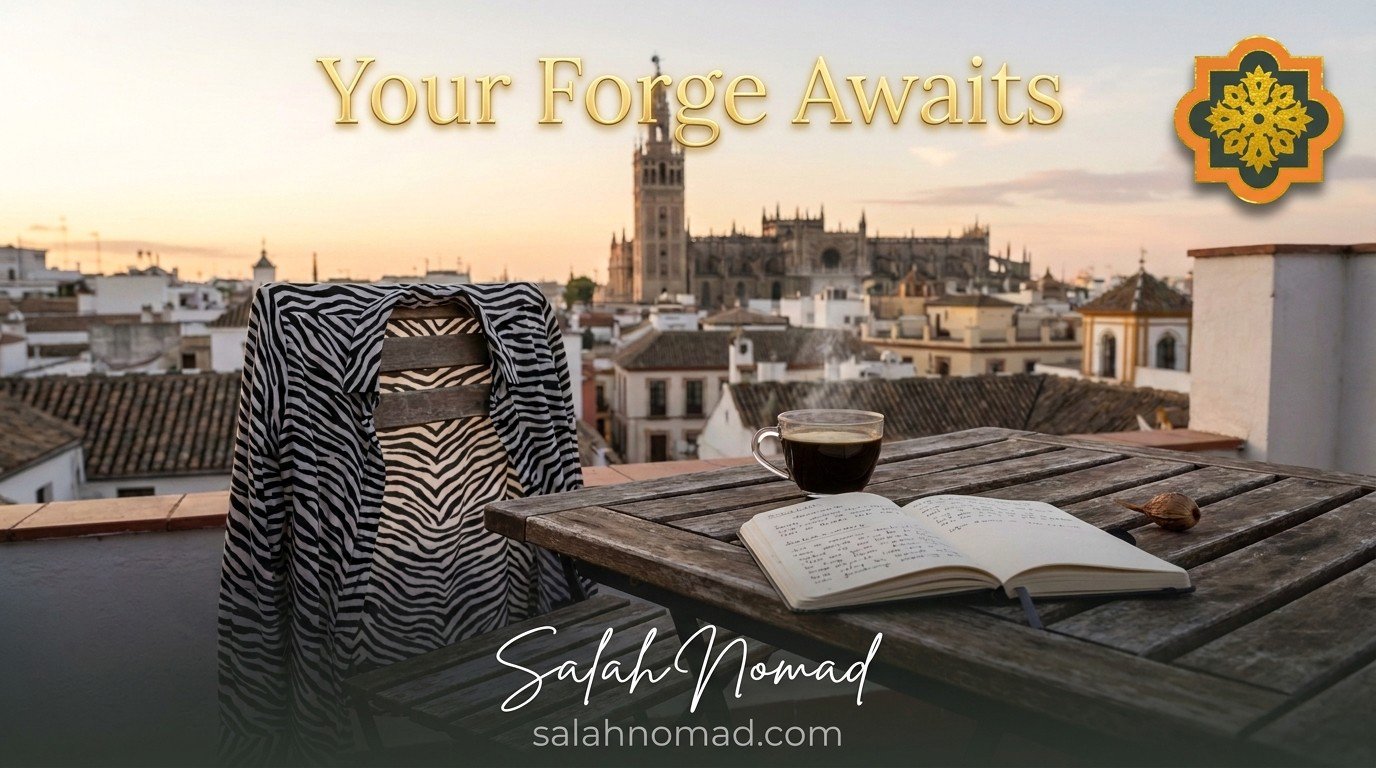
VI. Is Your Own Forge Waiting in Seville?
I nearly didn’t go.
That bus ticket was a last-minute decision, bought with the same carelessness I use to order a second coffee. I wanted silence. A weekend away from Málaga. Nothing more.
But the mountains between those two cities had been waiting. The limestone was patient. The wild olives had been holding their ground for five centuries, knowing — geologically, botanically, silently — that someone would eventually come back and read the landscape for what it was.
Seville is not a place you visit. It’s a place that decides whether you’re ready to stay. If you pass the test, you earn something Barcelona and Madrid can’t offer: a belonging that doesn’t require your permission.
The Seville Relocation Codex contains everything I know — the Thermal Sanctuary Map, the acoustic scores, the 27 verified Black Book contacts, the DNV timeline, and five anchoring rituals.
📖 The Full Journey: Algorithmic Sardines
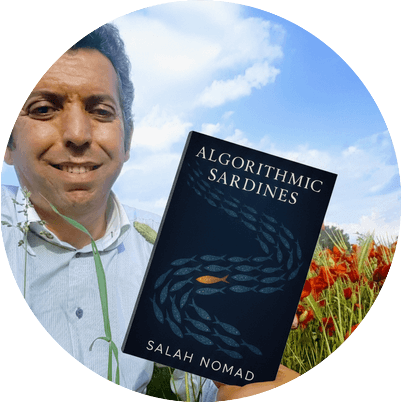
The story of my ancestors — the Moriscos who transplanted an entire world — is only one chapter of a much longer journey. From the olive groves of Ksar El‑Kébir to the digital shores of Málaga, from a Panasonic shortwave radio to the cybercafés of Meknès, from a love broken by visa papers to a philosophy forged in the heat of Seville. Algorithmic Sardines is the memoir that explains why roots matter more than routes.
👉 Get Algorithmic Sardines — Instant PDF
“May you find your soil sooner than I did.” — Salah Nomad Rooted in Pedregalejo since 2021
Comments