

🎬 The Song — “Málaga”
Before you read the story, hear the sound. This rumba was born on a terrace in Pedregalejo, with the Alcazaba on the hill and the Mediterranean on the horizon. The cantaora sings of what the zellige tiles whispered, what the sardine taught, and what the olive tree remembers. Watch, then read. Or read, then listen. The choice, like the city, is yours.
I. The Detour That Became a Destination
I did not plan to stop in Málaga.
It was 2014. I was driving from Ksar El-Kébir to Avignon — a straight line north, or so I thought. But the Sierra Nevada had just done something irreversible to me. Those mountains were a mirror of the Jbala highlands where I was born: the same cork oaks, the same wild thyme crushed underfoot, the same honeyed light falling on olive groves at dusk. My ancestors, expelled from Andalusia five centuries ago, had not scattered like dust. They had searched for an ecosystem that remembered their bones.
I couldn’t keep driving as if nothing had happened. The road demanded a detour.
Málaga was a short drive south — ancient, Phoenician, a port that had watched Carthaginians, Romans, and Moors rise and fall. I arrived without expectations. I left with a sentence that would become the foundation of everything I have built since.
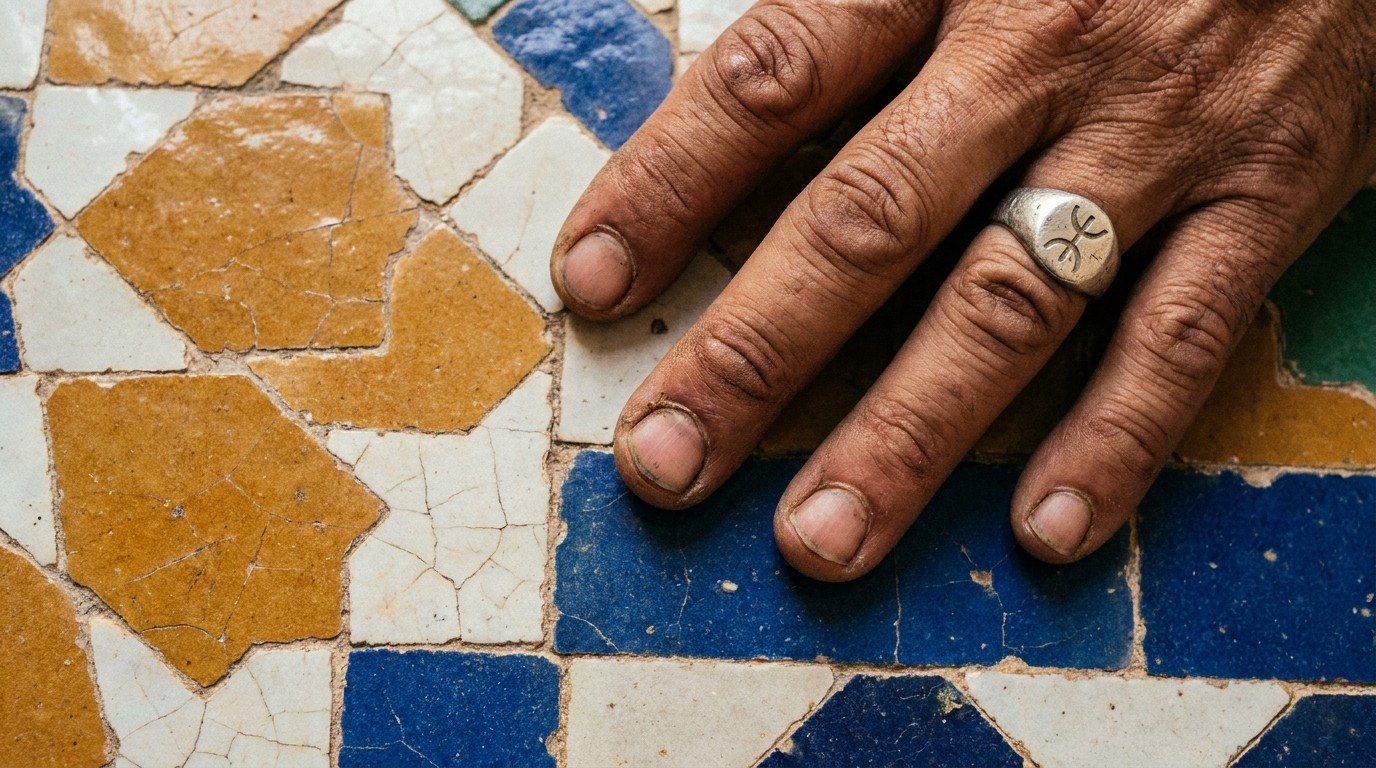
I walked up to the Alcazaba first. The great Moorish fortress crowns the city like a stone diadem, its walls drinking the afternoon sun. In a quiet courtyard, my fingers found the zellige tiles — geometric mosaics of ochre, cobalt, and ivory. I stopped breathing.
They were identical to the tiles in my grandmother’s house in Ksar El-Kébir.
Not similar. Not reminiscent. Identical. The same mathematical poetry, the same artisanal DNA, the same hands — separated by five centuries and fourteen kilometers of sea — had laid these patterns. Here was the undeniable signature of my past, set into the walls of a city I had never visited.
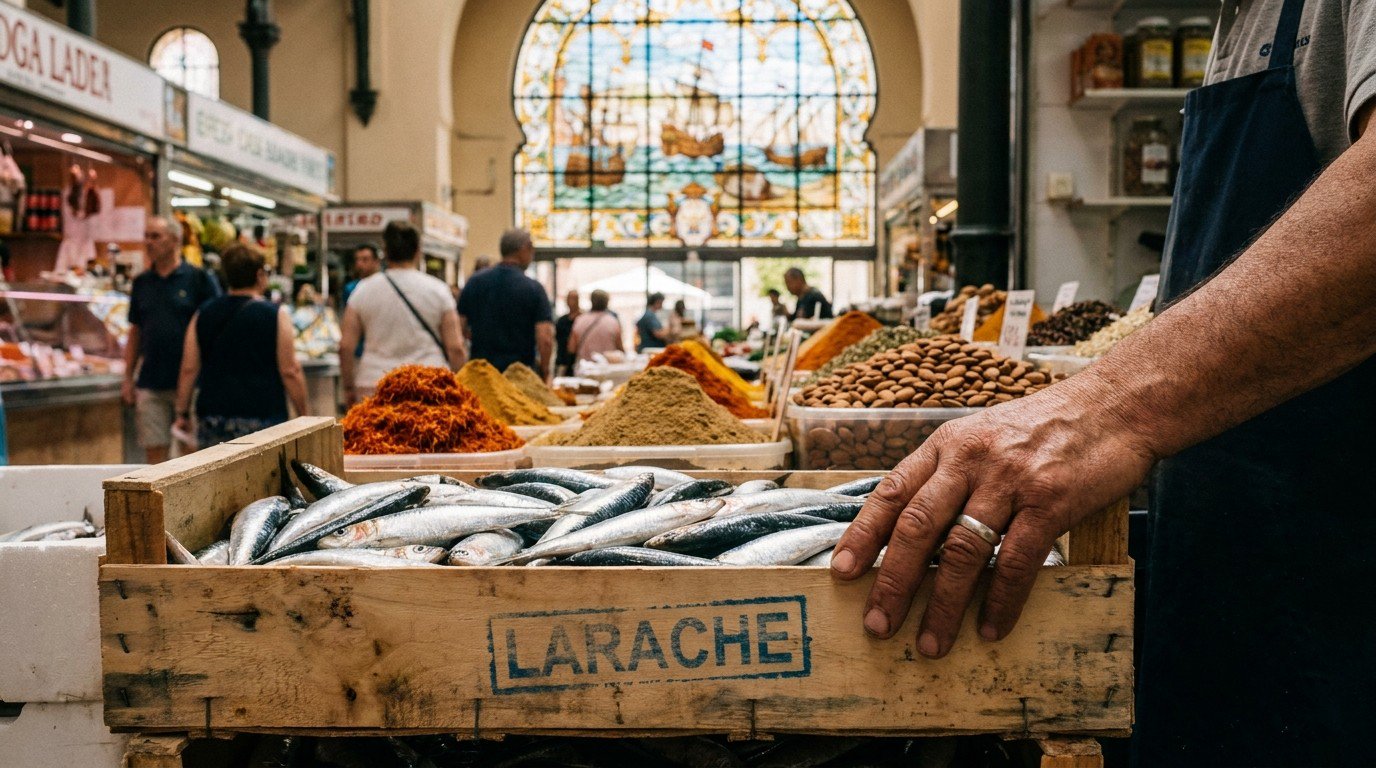
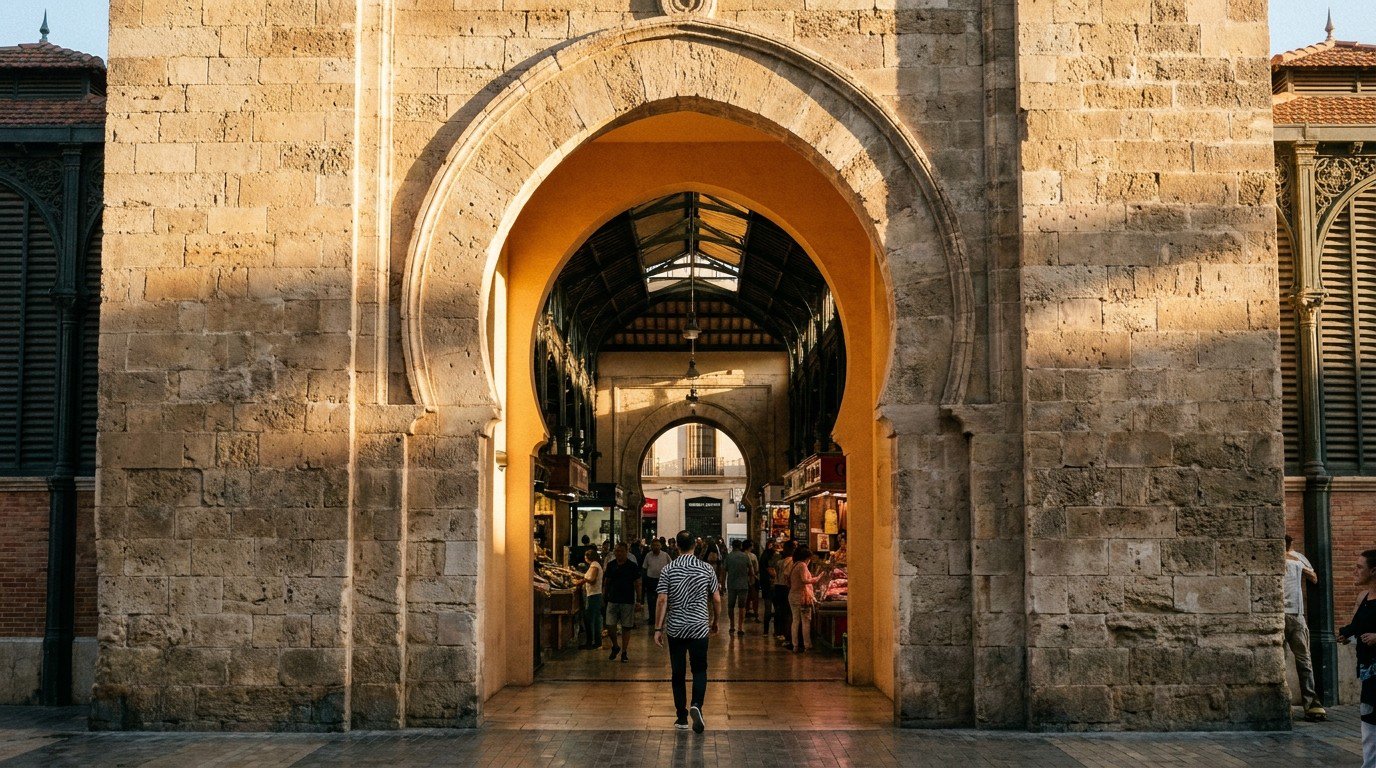
I descended into the Atarazanas Market. The scent hit me first — saffron, cumin, almonds roasting in coarse salt. Vendors shouted in Andalusian Spanish, a cadence that felt like a dialect of my own Darija. The market’s entrance was a magnificent 14th-century Moorish arch, framing the chaos like a living museum. This was the souk of my childhood, reborn under a different sun.
Then I walked into Soho. Street art exploded on historic facades. Glass-fronted offices housed digital startups. In the cafés, a dozen languages swirled — Swedish, German, English — young entrepreneurs discussing code, venture capital, user experience. This was my present, my professional world, the digital life I had built.
Standing at a crossroads in Soho, the Alcazaba visible on the hill above me, it all fused together. The Moorish artisan, the souk merchant, the digital strategist — they were not competing identities. They were different octaves of being Mediterranean.
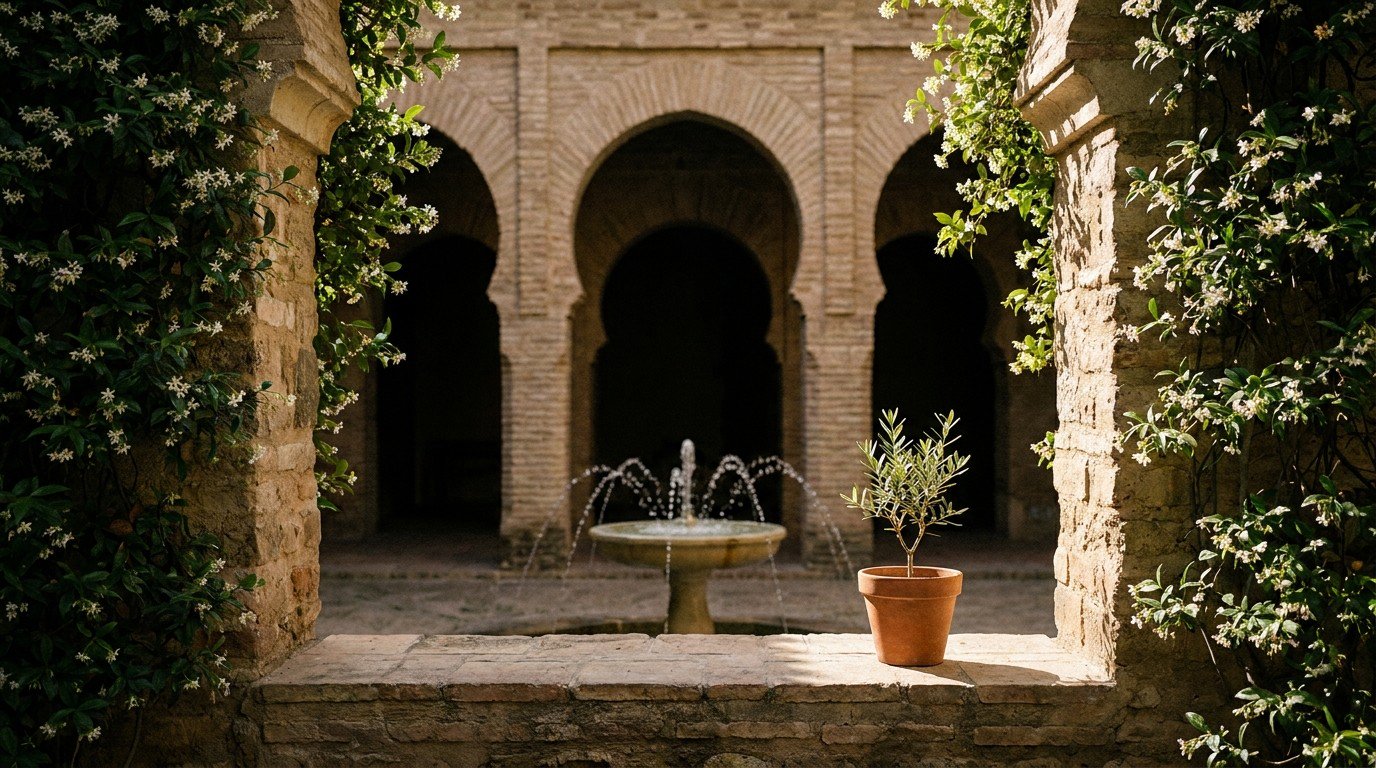
I found a café in the Plaza de la Merced, under the bronze gaze of Picasso. I opened my notebook and wrote:
“Nomadism is not wandering. It’s the art of choosing where to plant your roots so you can grow better.”
That sentence became Article 1 of my Rooted Nomad Manifesto. Before I left Málaga, I stood once more before Picasso’s statue and made a silent vow. I will return. Not as a visitor. As a resident. I will give this place the one thing it truly deserves: time.
II. The Sardine That Taught Me How to Navigate
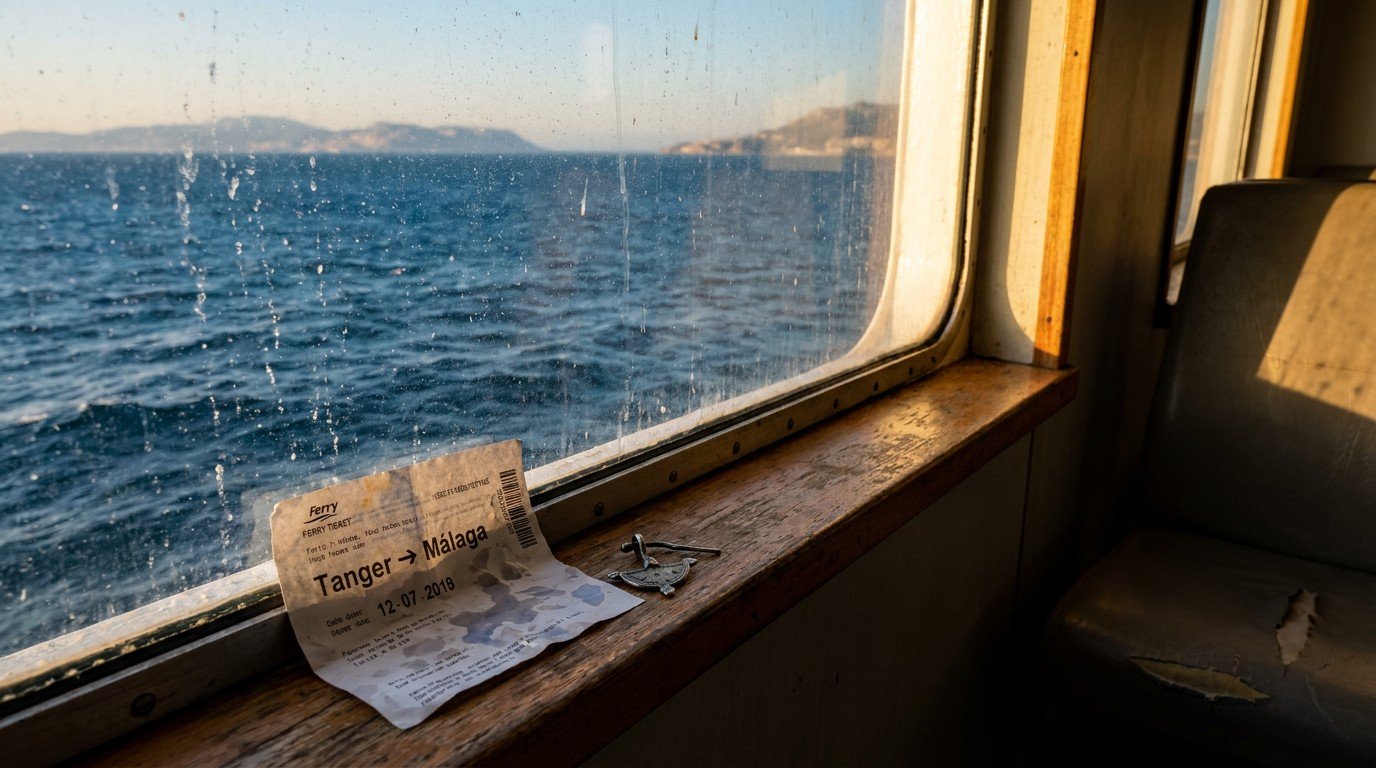
Between 2016 and 2018, the ferry between Tangier and Málaga became my Mediterranean subway. I was no longer a man from one shore visiting another. I had become a citizen of the strait itself — that fourteen-kilometer seam where the Atlantic and the Mediterranean exchange their salt.
My totem announced itself on a beach in Málaga.
I was at a chiringuito on the Playa de la Malagueta, laptop open, watching an espetero slide fresh sardines onto a cane skewer. He roasted them over glowing embers of olive wood, the smoke curling into the evening air. The ritual was identical to the one I had watched a thousand times in Larache, the old Phoenician port thirty kilometers from my hometown.
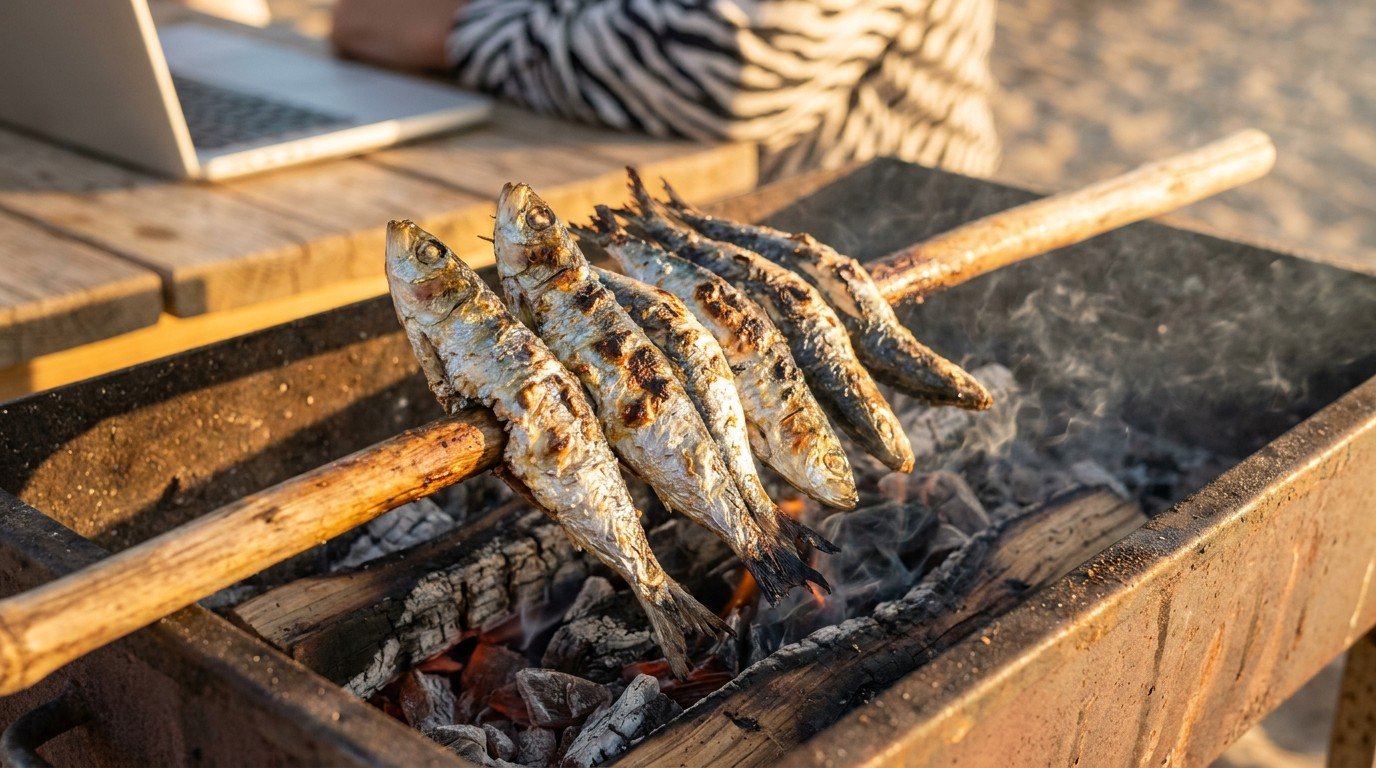
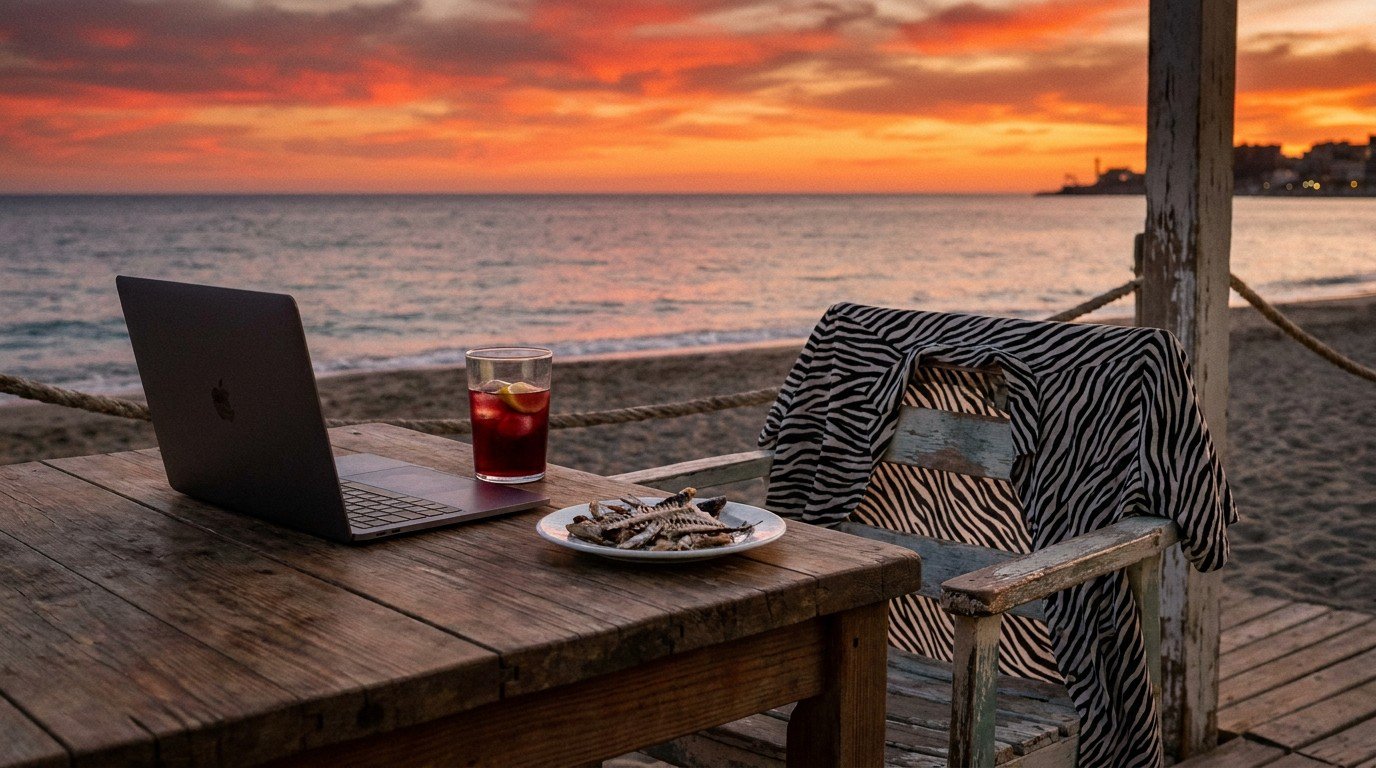
When I bit into the first sardine — crispy, salt-kissed skin, smoky flesh — the fourteen kilometers of water vanished.
The flavor was identical. Not similar. The same.
In that moment, I understood that the sardine belonged to neither shore. Its very existence was the journey between them — a life lived in the nutrient-rich currents of the strait, nourishing both ecosystems without ever choosing one. It followed invisible algorithms of temperature and current, and in doing so, it became the perfect symbol of my own existence.
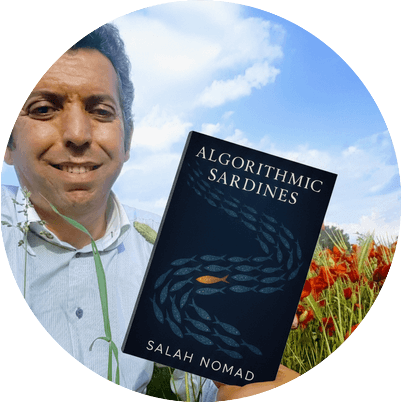
I was that sardine. An algorithmic sardine. Carrying ideas from my European life to my Moroccan roots, and bringing the textured stories of my heritage back to a European audience. My constant movement between two shores was not rootlessness. It was purpose.
Most digital nomads chase destinations. The sardine taught me to follow currents instead.
III. The Five Pillars of an Anchor
Choosing Málaga as my European anchor was not an accident of geography. I needed an ecosystem that could nourish every facet of my hybrid identity. Málaga offered me five pillars.
Fiber optics. The city had laid down a digital infrastructure as vital to my work as the Loukkos River had been to my ancestors. High-speed cables ran like invisible waterways beneath ancient streets, irrigating coworking spaces housed in restored 18th-century casonas. I could code beside a Moorish fountain, look up, and watch a hummingbird among the bougainvillea.
Hybrid community. Málaga is a melting pot where a Swedish founder and a local flamenco guitarist can debate the nature of duende. I shared coffee with German data scientists, British novelists, and Malagueño olive oil producers whose families had pressed the same groves for five centuries. Here, my bilingual soul — half algorithm, half amulet — was not a curiosity. It was a bridge.
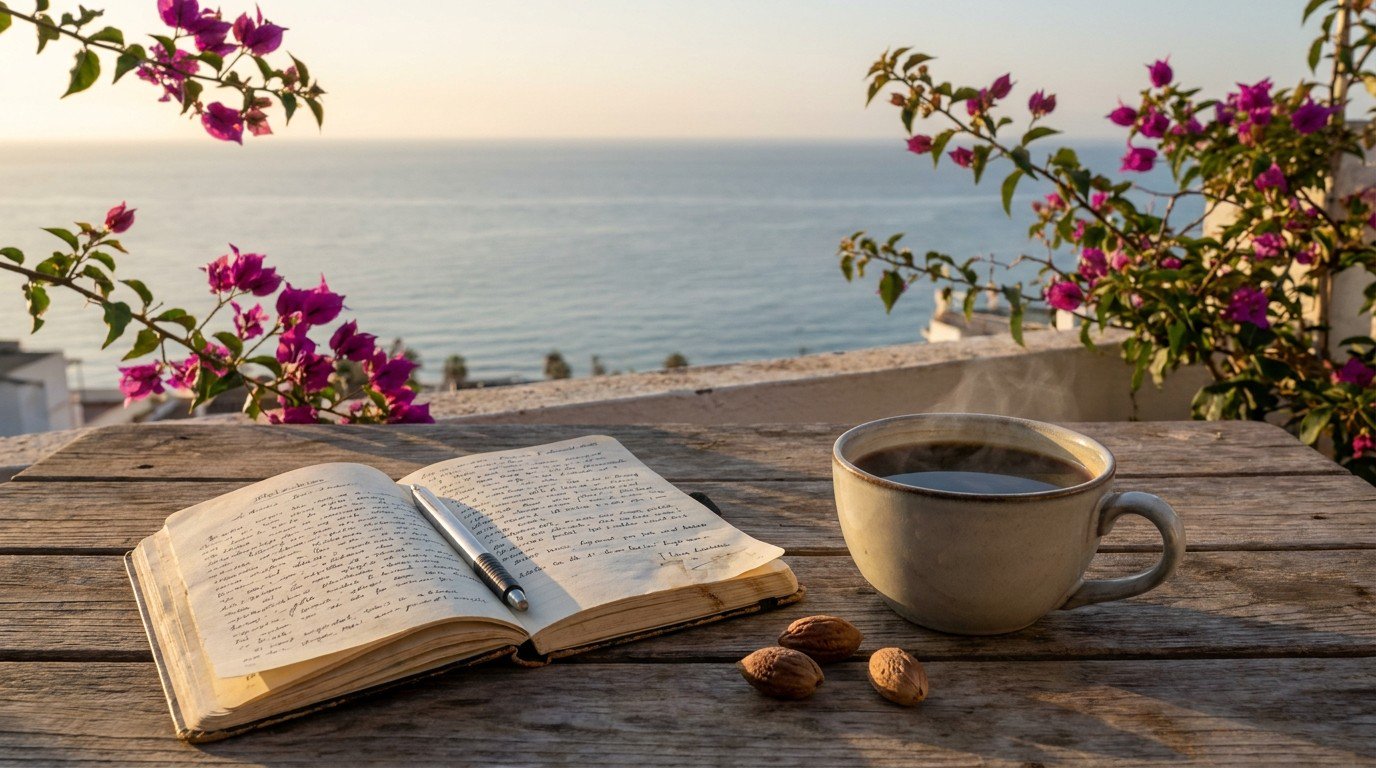
Organic balance. My most productive hours were at dawn, writing on my terrace facing the sea. But I also learned the sacred pause: a ten-minute walk to the beach, shoes off, feet in the sand, the rhythmic crash of waves resetting my nervous system. The Mediterranean was not a luxury. It was the counterbalance to the abstraction of digital work.
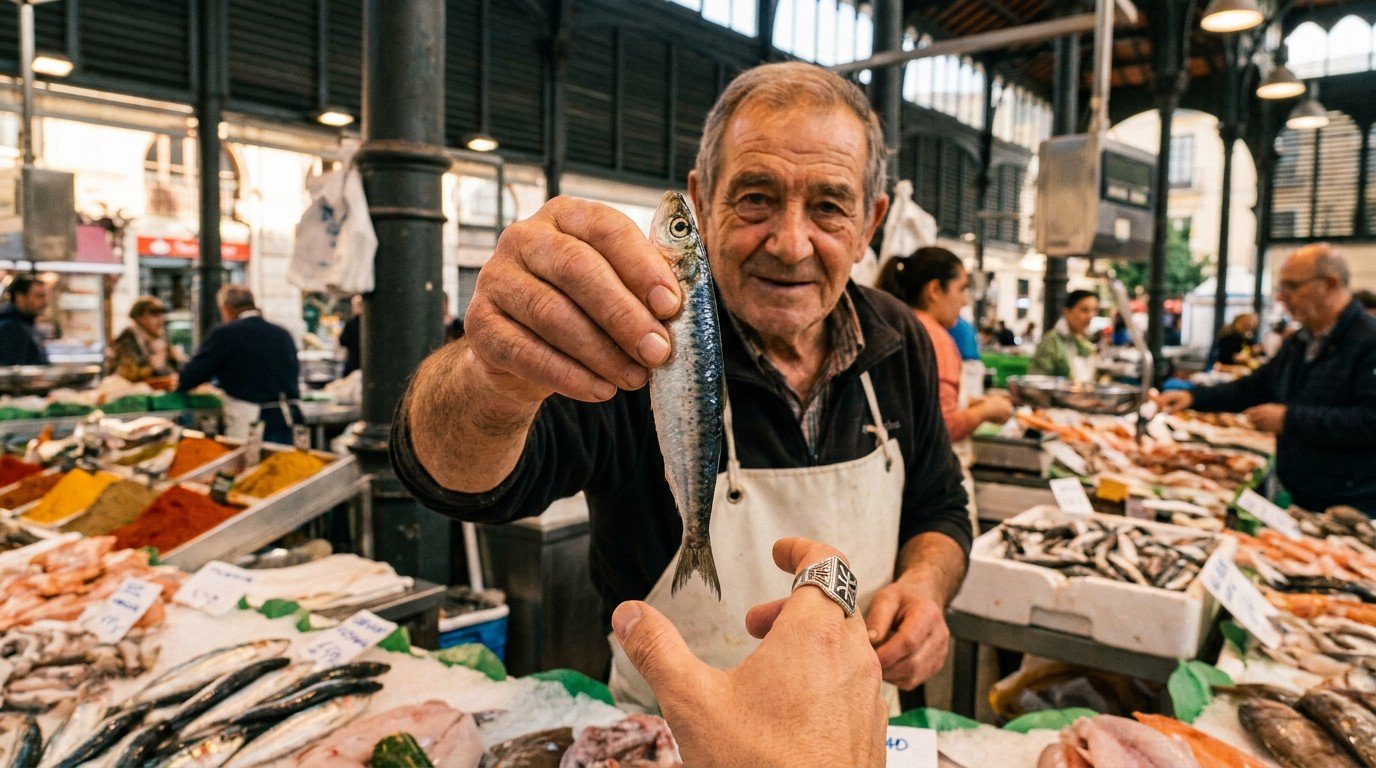
Memory-sardines. Every week at the Atarazanas Market, I found crates of fresh sardines stamped with the faded blue ink of my hometown’s port: Larache. A fishmonger once traced their journey with a calloused finger: “They dance back and forth. Caught off your coast, smoked here in Málaga, and sometimes the best smoked ones are sold back in the souks of Ksar El-Kébir as a Spanish delicacy.” Each silver scale was a pixel in my existential map.
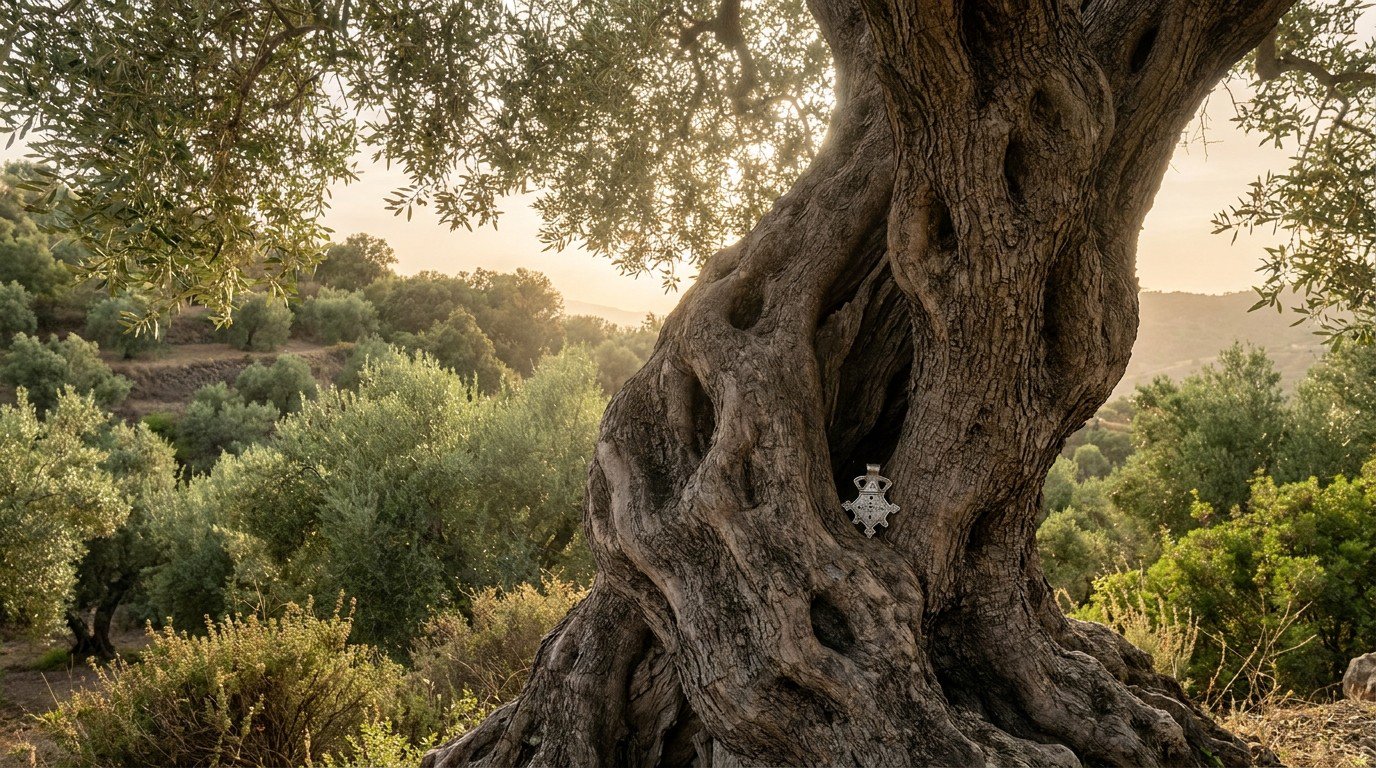
Millennial olive trees. In the rugged hills of the Axarquía, I discovered a landscape of ancient groves — trunks gnarled and twisted by centuries of wind, bark as fissured as a topographical map. Sitting against one of these titans, I felt a connection I can only describe in a single sentence: my ancestors had passed through here. These trees were the living witnesses, the silent anchors that connected my Andalusian present to my Moroccan past.
I had found my synthesis.
IV. The Great Silence and the Return
In late 2019, the world began to shift.
I was researching the history of espetos when a strange alert appeared on my SEO monitoring tool — a sudden spike in searches for terms I had never seen before, originating from a single city in China. The daily ballet of ferries across the strait began to slow. My fishermen friends spoke of new port restrictions. I felt the world was about to change.
The pandemic forced me to completely reinvent myself. Trapped in Ksar El-Kébir, my physical products became useless inventory in silent warehouses. But in that forced stillness, I opened my laptop and registered salahnomad.com. I began to write — not as a strategy, but as an act of survival.
The blog became my phoenix. Emails arrived from Singapore, Buenos Aires, Toronto. I had lost a network of commercial clients, but I was building a community of souls. They recognized me not by my products, but by the story in my eyes and the paradox woven into my zebra-striped shirt.
When the ferries resumed in September 2022, I returned to Málaga. The city was faithful, yet changed. Some storefronts on Calle Larios were shuttered. Familiar faces were absent. But the espeteros were still on the beach, the olive trees were still on the hills, and the Alcazaba was still whispering from above.
The lockdown had not been a punishment. It had been a purification. It forced me to shed the non-essential and find my voice. Málaga welcomed me back — not as the man who had left, but as someone who had learned to root himself in the storm.
V. The Market as Mirror
Last week, I walked through the Atarazanas Market again.
The same saffron, the same cumin, the same joyful chaos. The same Moorish arch framing it all. But I was not the same man who had stumbled through these aisles in 2014, wide-eyed and newly arrived. Twelve years of living between two shores had changed the way I saw the market — and myself.
The vendors who once saw a tourist now greet me by name. The fishmonger who explained the sardine’s journey has become a friend. The market has become a mirror: it reflects back the man I have become, not the man I was.
Málaga taught me that rootedness is not about staying in one place forever. It is about choosing a place deeply enough that it begins to choose you back. The zellige of the Alcazaba, the smoke of the espetos, the fiber optics under the cobblestones, the olive trees on the hills — they are no longer a landscape I observe. They are the fabric of a life I have woven, thread by thread, over twelve years.
VI. Your Anchor Awaits
I have spent four years living in Málaga, making every mistake a newcomer can make — signing the wrong contracts, choosing the wrong neighborhoods, navigating the bureaucracy without a map. I have also spent those years compiling everything I learned into a single, field-tested document.
The Málaga Relocation Codex is not a tourist guide. It is a 30-page operational manual: the real 2026 rents per barrio, the acoustic risk scores that save your sleep and your Zoom calls, the three immigration lawyers I trust, and the exact first-week schedule — from landing at AGP to holding your empadronamiento certificate.
If you are considering Málaga as your anchor, this guide is the shortcut I wish I had.
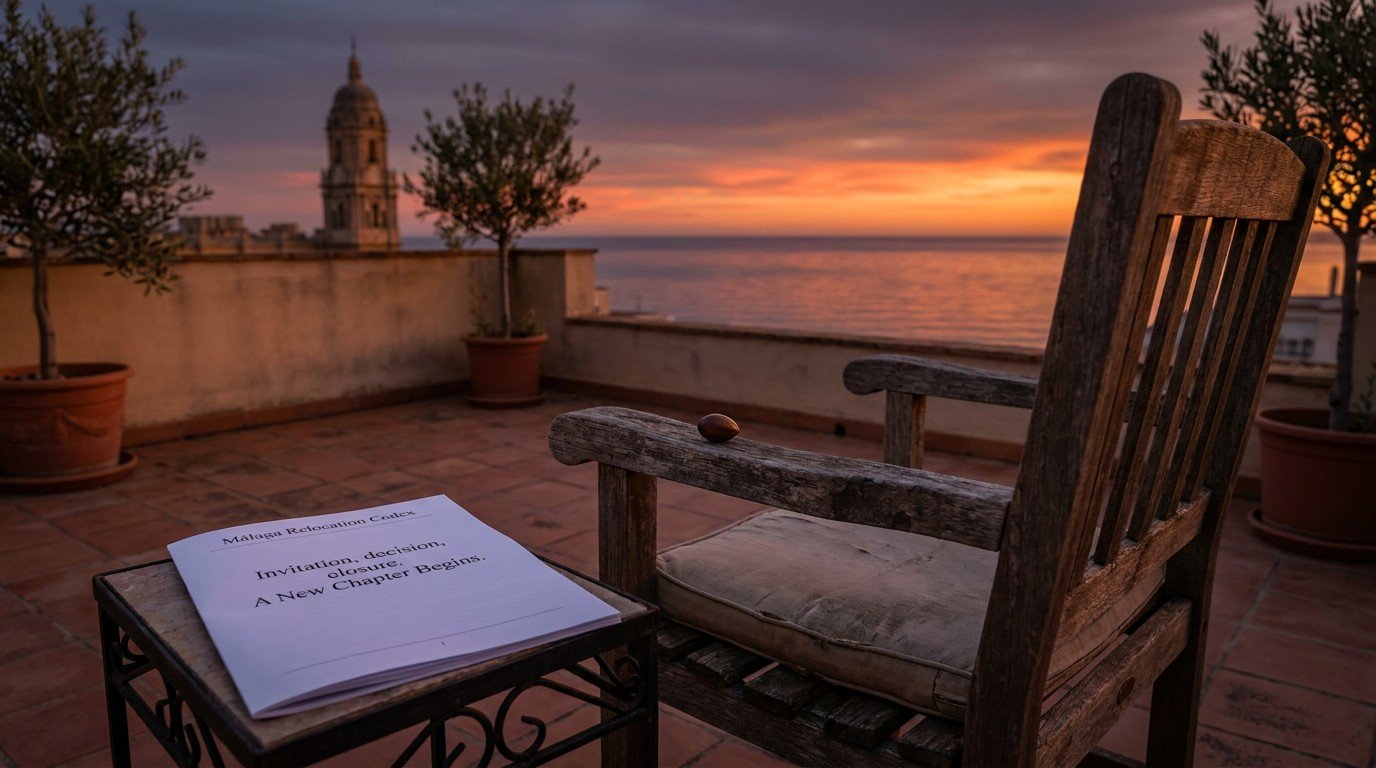
👉 Get the Málaga Relocation Codex — $29
“May you find your soil sooner than I did.” — Salah Nomad Rooted in Pedregalejo since 2021
Comments