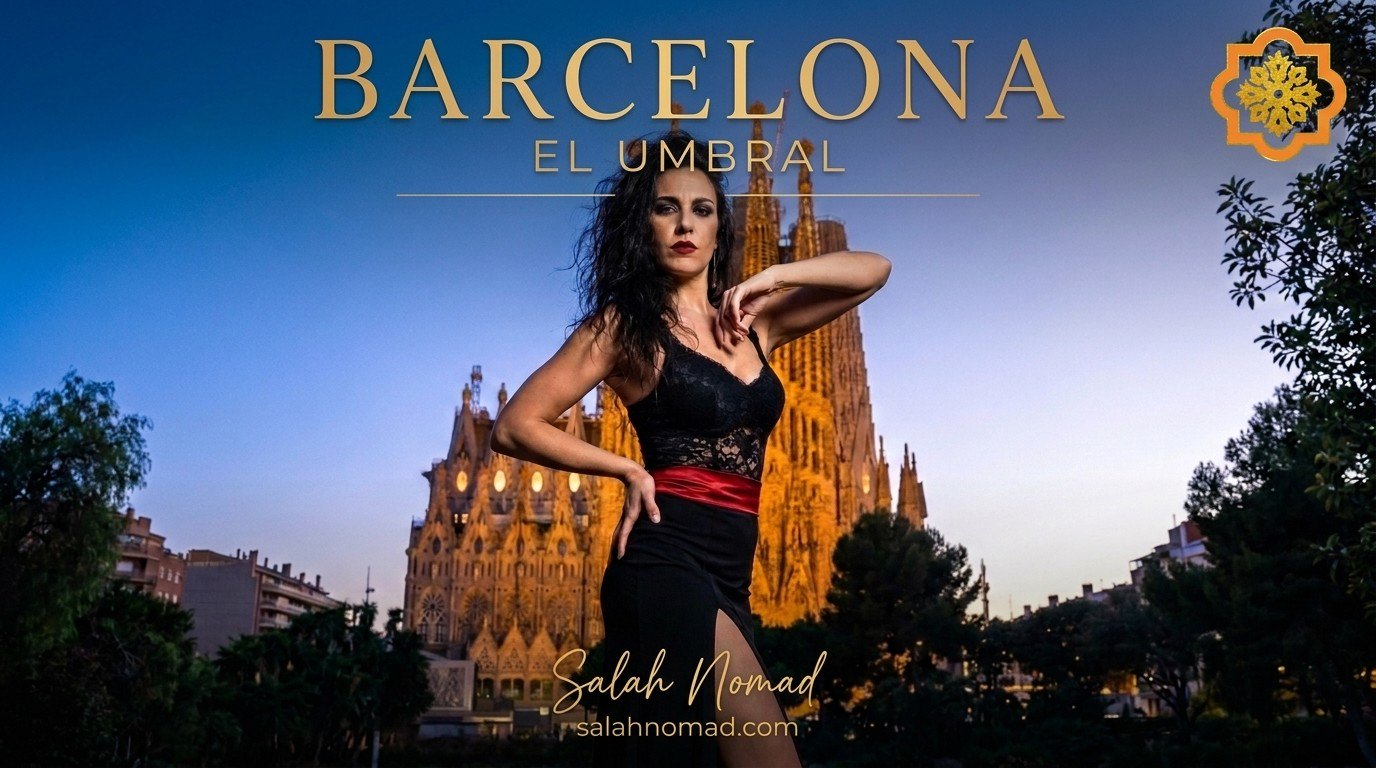
🎬 The Song — “El Umbral”
Barcelona does not hold. It opens a door and waits. This rumba catalana carries salt, smoke, and the memory of every departure that was also an arrival.
🎬 Watch on Instagram: https://www.instagram.com/reel/DbcOflVicYZ/ 🎬 Watch on TikTok: https://vt.tiktok.com/ZS4j7KkLk/
I. Café Zurich, 9:15 AM
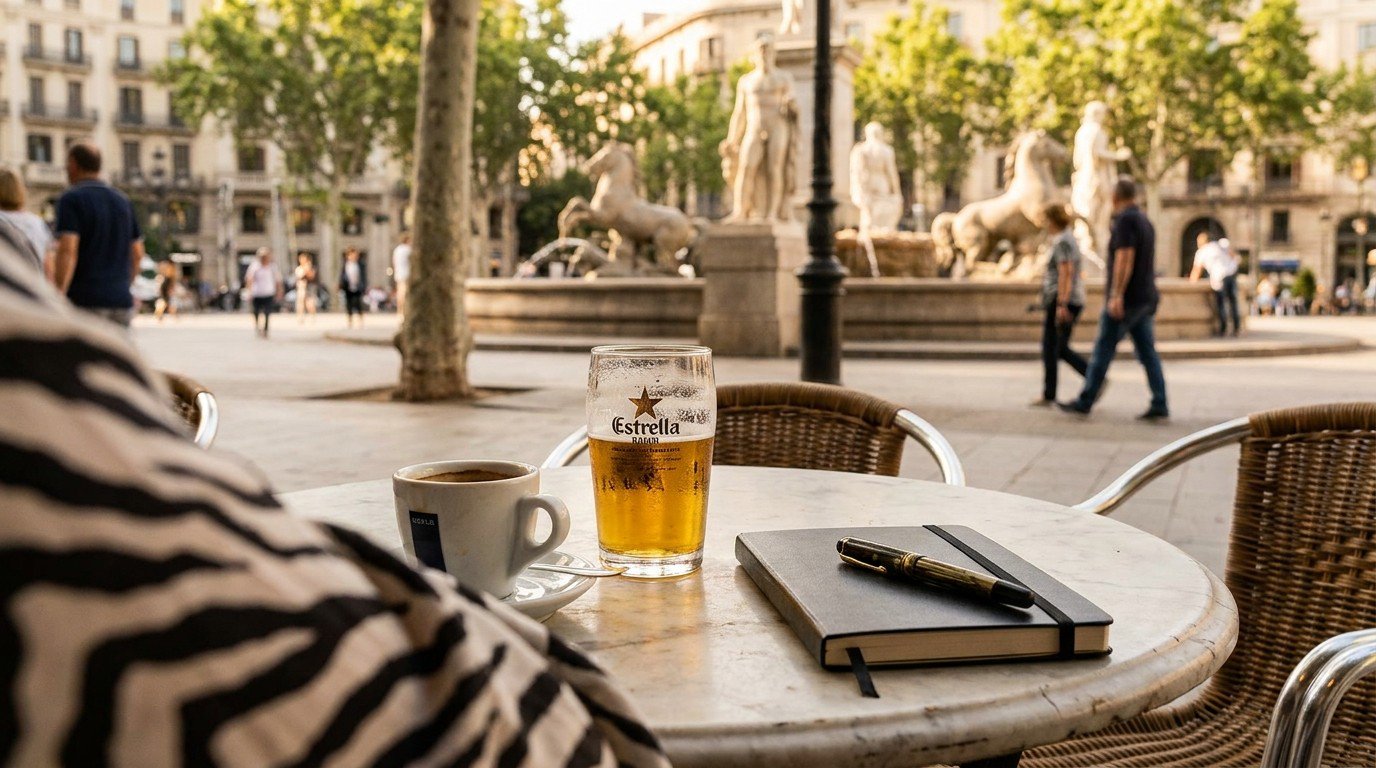
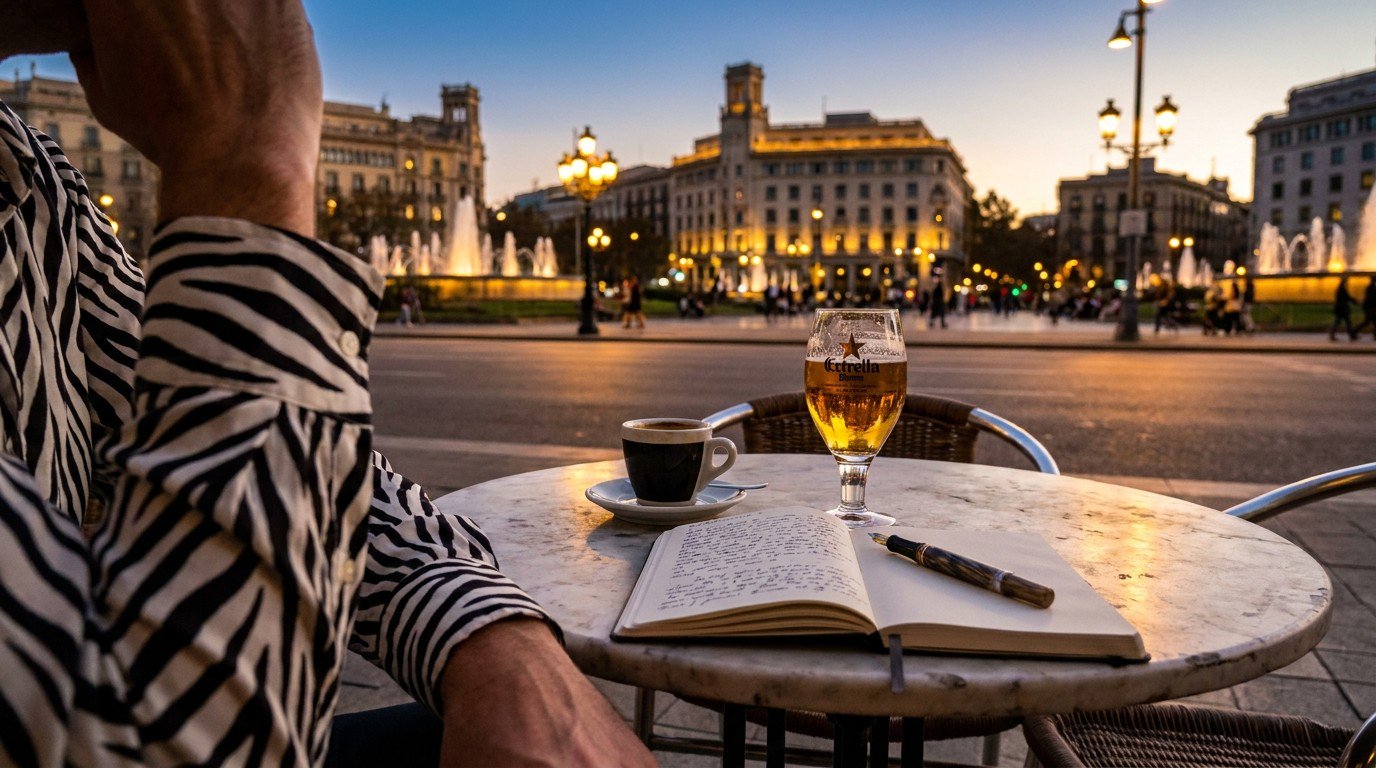
The first time I understood Barcelona, I was not looking at it. I was sitting at a marble-topped table on the terrace of Café Zurich, Plaça Catalunya, watching the city stream past without watching me back.
A café solo in a small white cup. A glass of Estrella, half-finished, condensation pooling on the marble. My Moleskine sat unopened. I had arrived with the intention of writing something — notes for a business plan, perhaps, or a reflection on the trade show I had just escaped — but the square had other ideas. The fountains. The neoclassical statues of horses rearing against nothing. The plane trees holding their ground between the old town and the grid of the Eixample. The pigeons, indifferent to everything. The old man three tables away reading La Vanguardia with the slow deliberation of someone who had been reading it here for forty years.
Plaça Catalunya is not a monument. It is a vestibule. It connects the Gothic Quarter to the modern city, the port to the mountains, the locals to the tourists, the pigeons to the statues. Nobody lingers on Plaça Catalunya the way they linger on the Piazza San Marco or the Place des Vosges. It is a place you cross. And that is precisely why it became my fixed point.
I returned to that same table, at that same café, every time Barcelona summoned me. Morning coffee. Evening beer. The city changed around it — new shopfronts on Portal de l’Àngel, new faces on the Rambla, new crises, new recoveries — but the Zurich remained. Not out of nostalgia. Out of function. A nomad needs a threshold, not a home. The Zurich was my threshold. From that marble table, I could watch Barcelona without asking it to watch me back.
II. The Mosaic Underfoot
After the coffee, I walked.
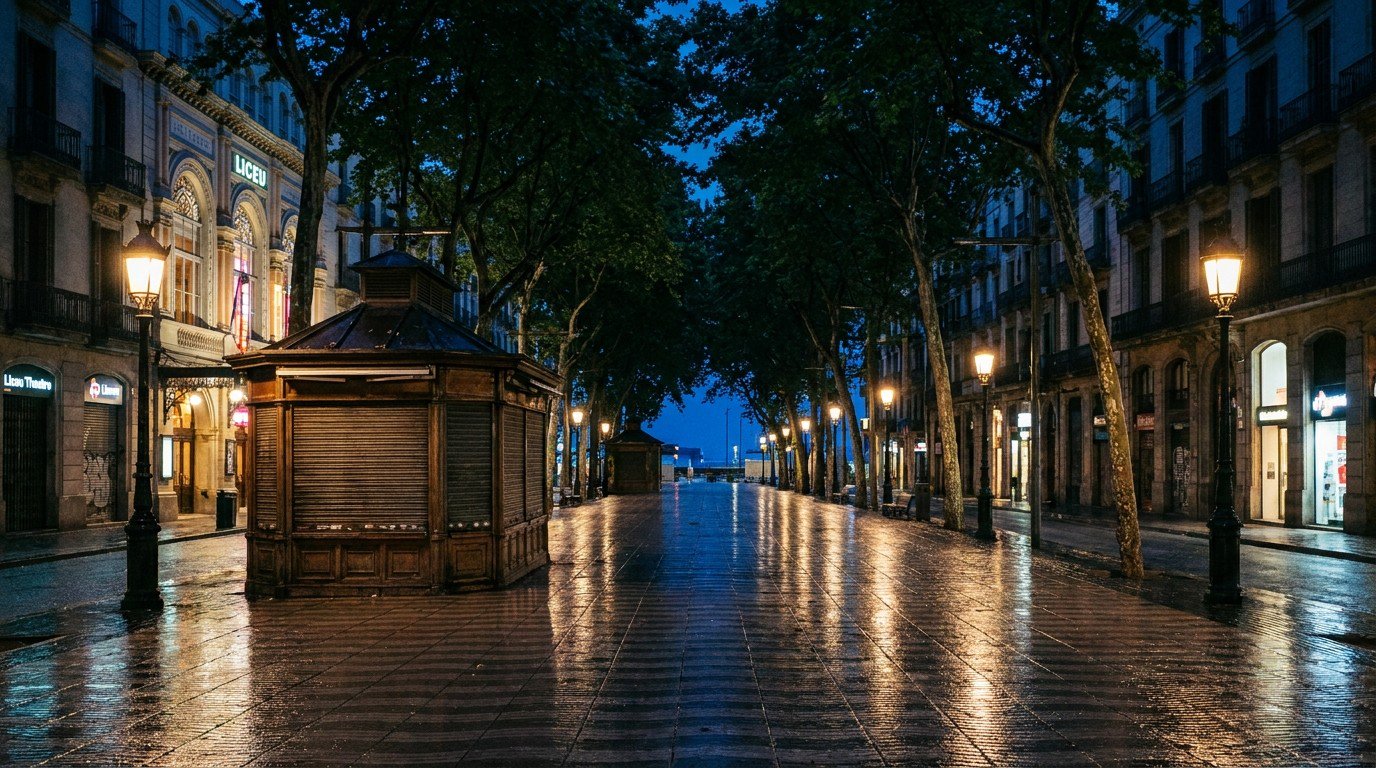
Every time. It became ritual. The Zurich, then down La Rambla, past the flower kiosks and the human statues sprayed gold, past the Liceu opera house with its ghosts, past the crowds that thickened and thinned in waves. I walked not toward anything, just along the current.
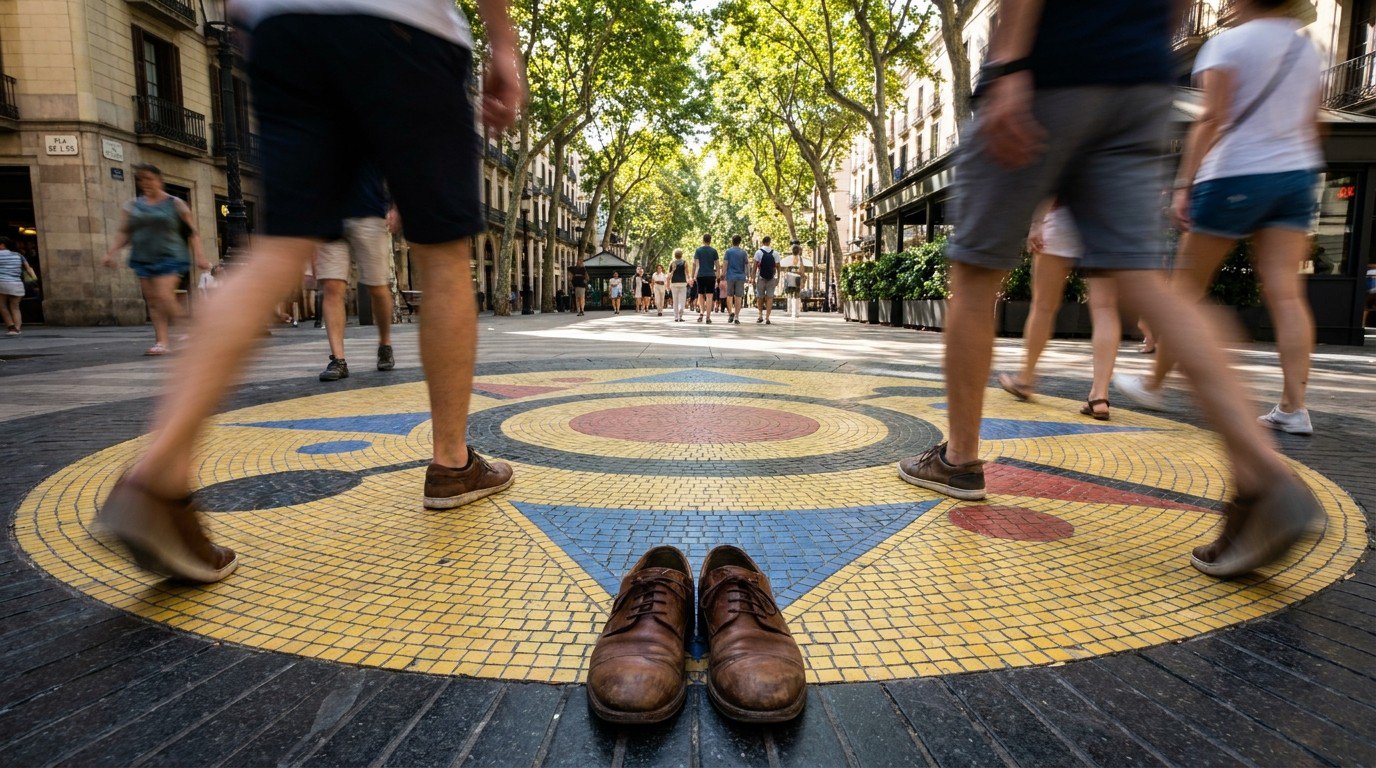
At the Pla de l’Os, halfway down, there is a pavement mosaic by Joan Miró. A great circular work of stone and color — primary yellows, blues, reds — embedded in the pedestrian artery. Thousands of people walk over it every day. Almost none of them look down. The Miró pavement is the most public artwork in Barcelona and the least seen. It is a secret hidden in plain sight, a signature that refuses to demand attention.
I stopped, as I always stopped. Stood at the edge of the circle. Watched the legs and shoes and wheels roll over the colors. The mosaic did not care. It had been absorbing footfalls since 1976, and it would absorb them long after I was gone.
This, I thought, is Barcelona’s theology. Not a cathedral. Not a basilica. A pavement. An artwork you walk on. A city that places its genius underfoot and trusts you to notice, or not.
III. The Clay, the Fira, and the Italian Who Forgot
April 2012. In-Cosmetics at the Fira de Barcelona.
I walked into the exhibition hall carrying a worn leather satchel. Inside: hand-stamped sachets of Ritual Hammam clay, amber vials of argan oil, bundles of wild thyme. My grandmother’s recipes. My father’s earth.
Around me stood Estée Lauder’s white marble pavilion. L’Oréal’s Parisian fortress. Shiseido’s Japanese precision. I had no booth, no brochures, no iPad presentations. My business cards had been printed at a cybercafé in Meknès and the ink was slightly smudged.
The impostor syndrome arrived fully formed. My chest tightened. The banker’s words from Meknès echoed across the hall: “We finance shops with walls, Mr. Salah. Things you can kick. Not digital mirages.”
Then I looked again at the choreography of commerce — buyers with bored eyes, sellers reciting scripts — and something shifted. Everyone here was performing. In a hall filled with copies, I was perhaps the only original.
I approached an Italian buyer named Marco. Silver hair. Impeccably tailored. The expression of a man courted by everyone and sold by no one.
“Excuse me,” I said, my voice deliberately soft. “Have you ever touched the Atlas Mountains?”
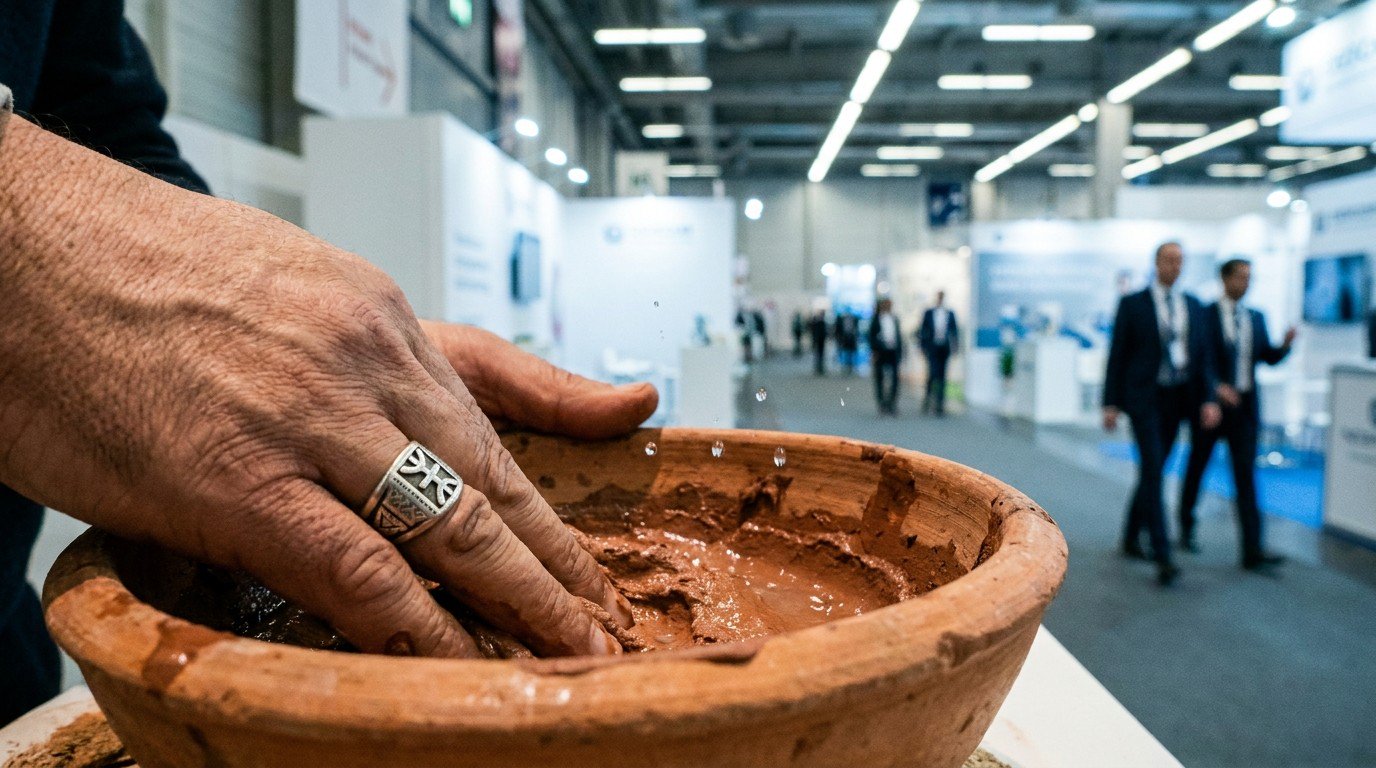
I reached into my satchel. Not for a pitch. For a ritual. A terra-cotta bowl. A piece of raw Ghassoul clay, deep reddish-brown. A vial of rosewater from the Valley of Roses.
I crumbled the clay into the bowl. The sound was soft, earthy — a counterpoint to the electronic hum of the trade show. Three drops of rosewater. The clay hissed. The air between us changed register. Sterile exhibition atmosphere gave way to something older: Moroccan gardens after a storm, mountains exhaling at dawn.
“This is how my grandmother began every hammam ritual,” I said. “She taught me to listen to the clay as it awakens. It’s not a chemical reaction. It’s a conversation.”
I held out the bowl. “May I show you what this feels like?”
Marco extended his hand without hesitation. A man who had spent twenty-five years in the beauty industry — every product, every pitch, every PowerPoint — and he offered his skin to a stranger with a bowl of mud.
I applied a small amount of paste to the back of his hand. I didn’t rub it in. I let it rest there. A small island of Morocco on his Italian skin.
He stared at his hand. The bored expression vanished. He lifted it slowly to his face and inhaled, eyes closed.
“What… what is this?” His voice had dropped.
“It’s a memory,” I said. “The memory of an ancient lakebed, dried by the Saharan sun millions of years ago. It cleanses not just the skin. It reminds us what we’re made of.”
He didn’t ask for pricing. He didn’t ask about minimum orders. He pressed a business card into my palm and said: “Send me samples. Real samples, not sales materials. Let me take this back to Milan.”
As he walked away, still glancing at the drying clay on his hand, I understood what had just happened. I hadn’t made a sale. I had created a moment of connection in a space designed to eliminate connection. Seven business cards. No purchase orders. But I had planted something that would outlast any quarterly report.
IV. The Ghost Bus of Girona
After the Fira, I fled north. Three days in Girona — medieval stone streets, the silence of Romanesque arches, the Arab Baths that echoed the ruins at Volubilis. I was recharging. Letting the quiet scrub the trade show from my nerves.
On the third day, I went to the bus station. I was heading to the Costa Brava — sea air, wild cliffs, the same turquoise water I knew from the Mediterranean near Tangier.
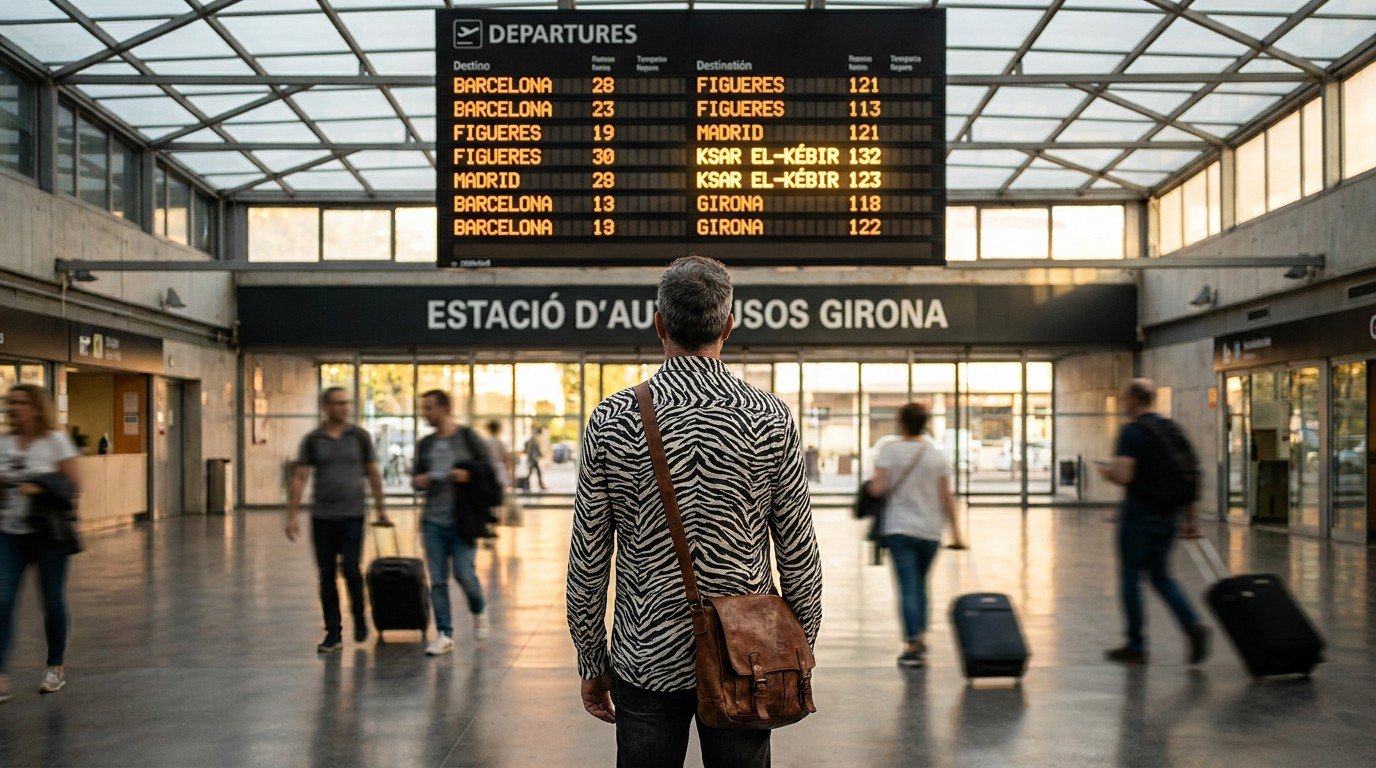
I scanned the departures board.
Barcelona. Figueres. Madrid.
And then, among the familiar Catalan names, a sequence of letters that stopped my breath.
KSAR EL-KÉBIR.
My hometown. The small, dusty city where I was born, where my grandmother kneaded clay by the Loukkos River. A place most Moroccans couldn’t place on a map — glowing on a departures board in northern Catalonia.
Twice weekly. A route invisible to tourists, unknown to guidebooks. It carried workers visiting families, students returning with degrees, grandmothers with packages of spices, young men with dreams that couldn’t be contained by borders.
I stood frozen. Travelers brushed past me. The board refreshed. Ksar El-Kébir remained.
In that moment, my philosophy of Rooted Nomadism stopped being a metaphor. I had imagined myself as a tree — roots in Morocco, branches reaching toward Europe. The ghost bus revealed I was a river. My essence wasn’t defined by stasis but by flow, carrying sediment and stories between two banks. The Mediterranean was not a barrier. It was a network. And I was a node in a system I had never been able to see.
I bought my ticket to the Costa Brava with shaking hands. The sea there crashed against cliffs carved by the same geological forces that shaped the Rif Mountains. The wild thyme crushed underfoot smelled identical. I was not in a foreign country. I was on the far shore of my own extended homeland.
V. Sants Station Is a Cathedral. Its God Is Movement.
Late June 2012. I gave myself three hours at Barcelona-Sants on the way back to Avignon.
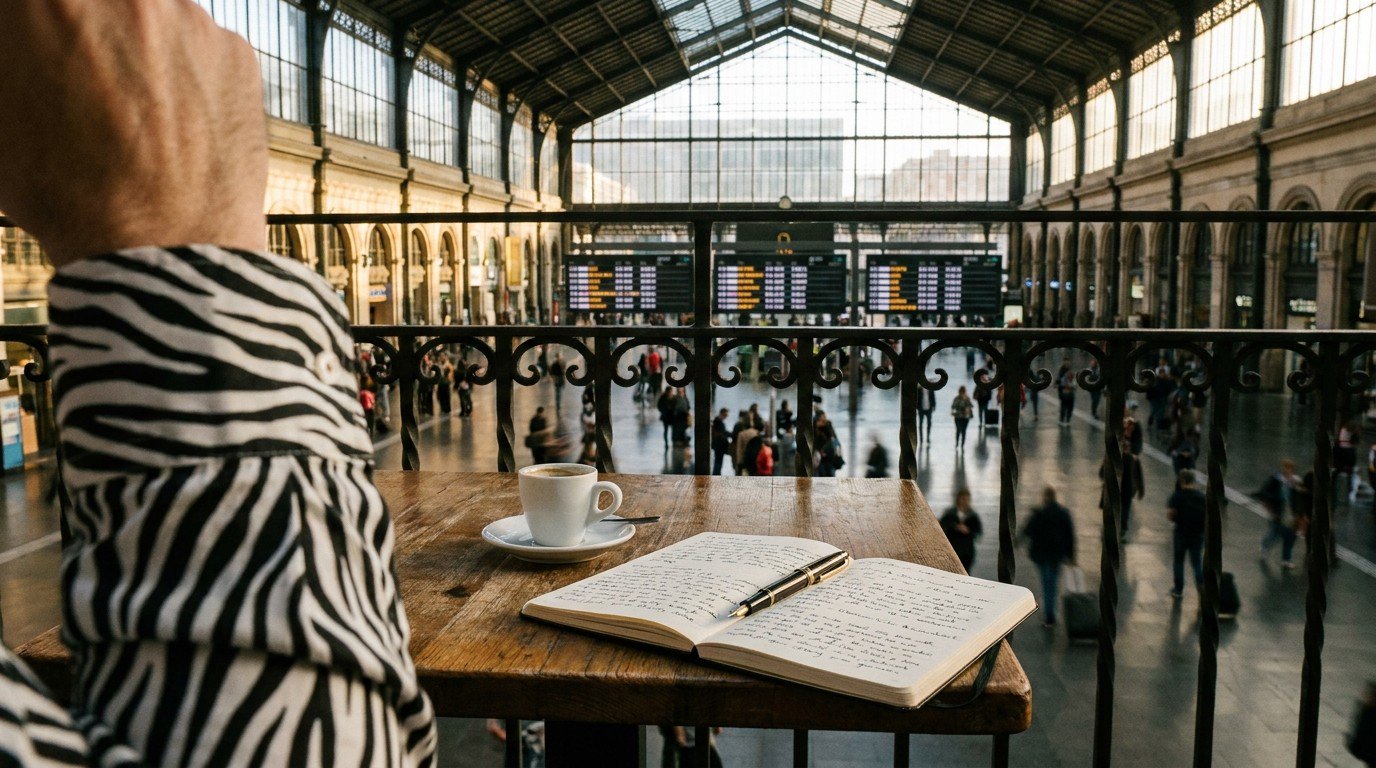
Fourteen tracks hum beneath the terminal. A soaring glass roof lets in the Catalan light. An integrated hotel rises from the station’s flank — not an afterthought, but a recognition: some journeys require sleep between their segments.
I found a café on an upper terrace overlooking the departure hall. Ordered a café solo. Watched the river of humanity flow below me: German backpackers with sunburned shoulders, Spanish executives on phone calls, a young Moroccan family shepherding children and oversized suitcases. Fourteen tracks. A dozen languages. One continuous ballet of arrival and departure.
Most travelers treat stations as voids — spaces to be crossed at maximum speed, eyes on the phone, mind already at the destination. They are wrong. The station is not an interruption of life. The station is life.
I thought of the Gothic cathedral I had visited months earlier — built for a God fixed in one place, prayers rising from the same stones for centuries. Sants was a different kind of sacred space. Its God was movement. Its liturgy was the departure announcement. Its congregation was a rotating assembly of souls in transit, each carrying their own inner landscape like a snail carries its shell.
I opened my notebook and wrote: The true nomad doesn’t flee stillness. The true nomad has learned to carry stillness within movement. The train station is the cathedral of those who belong everywhere by belonging deeply to themselves.
At three o’clock, I boarded the bus to Avignon. No longer a wanderer. A man heading toward his destiny.
VI. The Return: Same Table, Different Man
Ten years. Five cities. One philosophy built from the sediment of every threshold I had crossed.
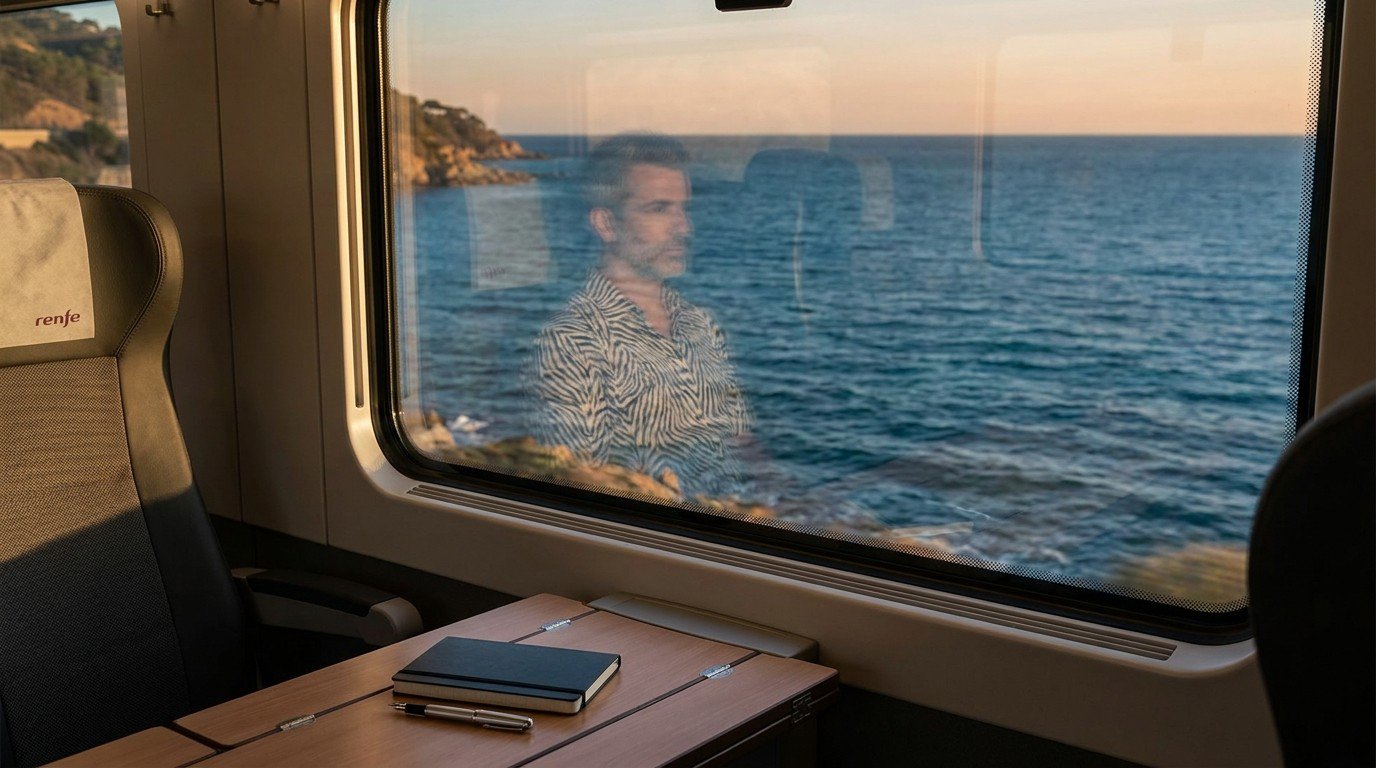
September 2022. The maritime border between Morocco and Spain had reopened. I flew into Barcelona — not because it was my destination, but because it was the right threshold. I took a train south along the coast. The same route I had traced a decade earlier, in reverse. The Mediterranean on my left. Limestone hills. Wild olives clinging to arid slopes.
Before boarding, I sat once more at Café Zurich. Same marble table. Same café solo. Same Estrella. The square had not changed. The fountains still flowed. The horse statues still reared. The pigeons still patrolled. But I was not the man who had sat here in 2012, clutching a smudged business card and a satchel full of clay.
The city had tested me — not with heat, like Seville, but with indifference. Barcelona had never asked me to stay. It had never asked me to leave. It had simply opened a door and waited. In that waiting, I had learned something Seville’s forge could not teach: you do not need a city to want you. You only need a city that lets you become what you are.
VII. The Door That Never Closes
Barcelona is not a destination. It is a threshold.
Málaga wraps around you like a coat. Valencia refuses to be a detour. Seville tests whether you can survive its kiln. Barcelona does none of these. It opens a door. It waits. It teaches you — not by instruction, but by absence — that the most important journeys are the ones you make after you leave.
The Barcelona Relocation Codex is built on this understanding. It does not romanticise the city. It maps the micro-barrios where rents are still tethered to reality. It scores every street for acoustic risk — because a charming alley in El Born becomes a sleepless nightmare during festival season. It sequences the bureaucracy so you don’t hemorrhage cash during your first three months. Barcelona’s bureaucracy alone cost me three months and €2,400 in wrong turns. The Codex saves you both. It traces the invisible threads — the markets, the barbershops, the diaspora cafés where Darija and Catalan trade jokes — that make Barcelona a Mediterranean hub, not just a European capital.
Barcelona won’t hold you. It will teach you how to hold yourself.
👉 Get the Barcelona Relocation Codex — $39
❓ Frequently Asked Questions
Why Barcelona? What does it offer that Málaga, Valencia, or Seville don't?
Is the ghost bus to Ksar El-Kébir real?
Can you actually live in Barcelona as a digital nomad without burning through savings?
What's the song for Barcelona?
How many Codex guides are there?
🗺️ The Mediterranean Codex Continues
- Málaga — The Lighthouse That Taught Me How to Stay
- Valencia — The Detour That Refused to Be One
- Seville — The Mountains Between Us Remember
📖 The Full Journey: Algorithmic Sardines
The café on Plaça Catalunya. The Miró pavement. The clay that dismantled the impostor syndrome. The ghost bus. The cathedral of transit. These are five thresholds in a much longer journey — from the olive groves of Ksar El‑Kébir to the digital shores of Málaga, from a Panasonic shortwave radio to a trade show in Catalonia, from a love broken by visa papers to a philosophy forged in five Spanish cities. Algorithmic Sardines is the memoir.
👉 Get Algorithmic Sardines — Instant PDF
“May you find your soil sooner than I did.” — Salah Nomad Rooted in Pedregalejo since 2021
Comments