

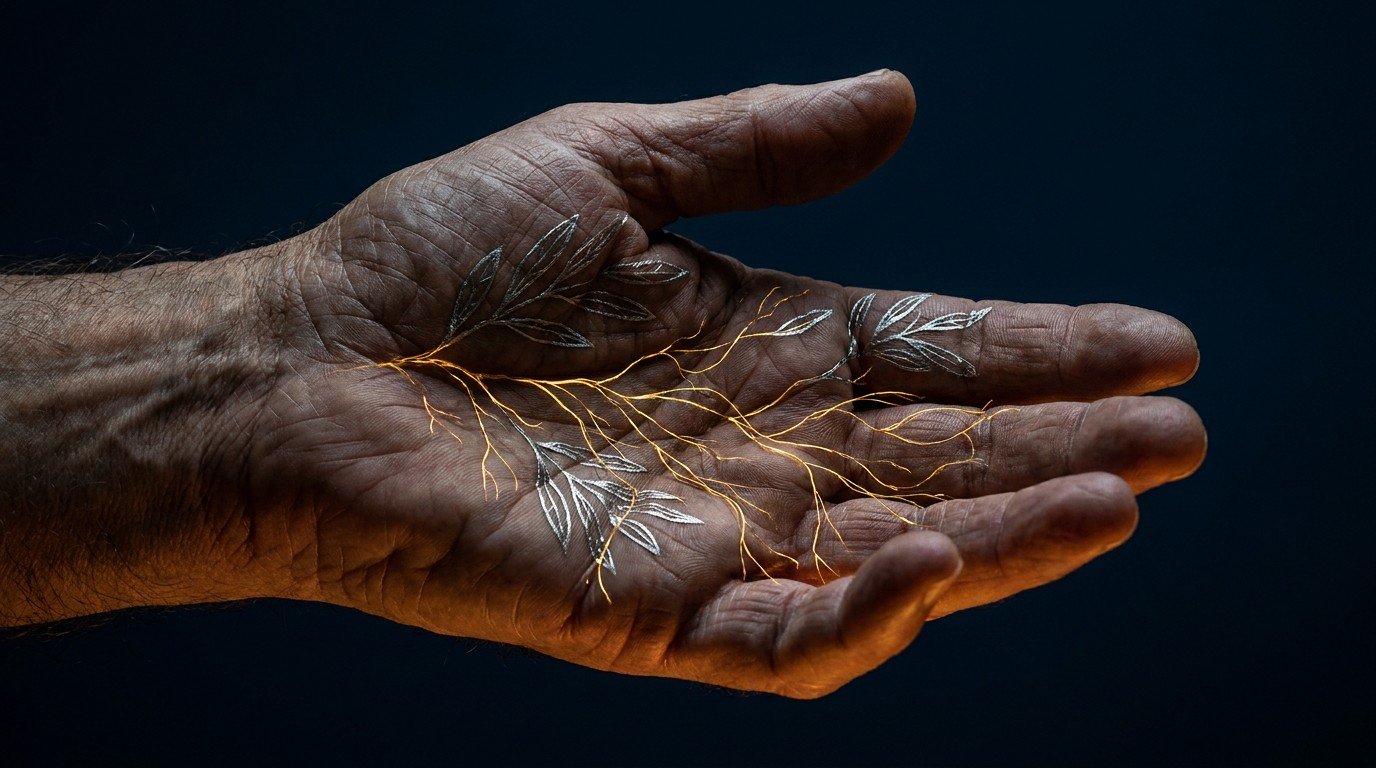
🎬 The Cinematic Exploration
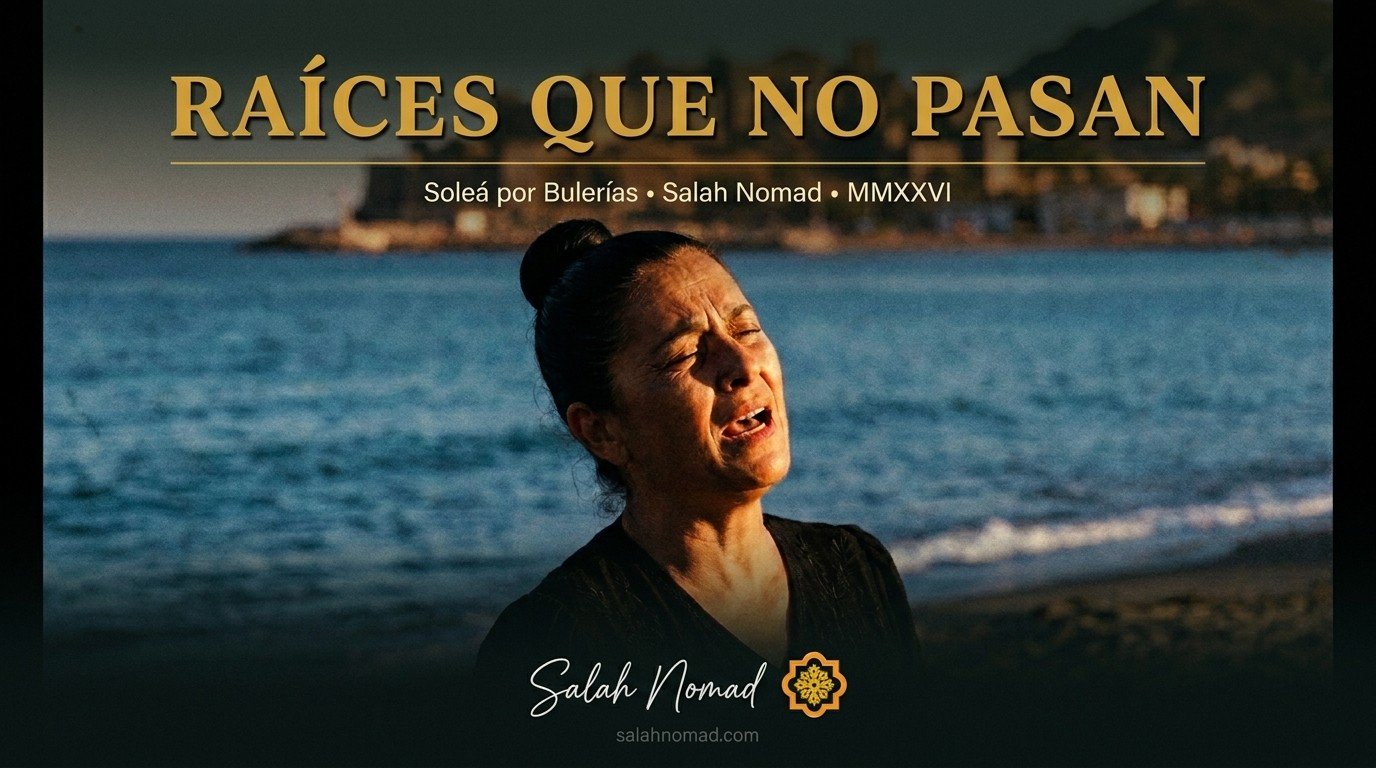
This story was too deep for words alone. I created this soleá por bulerías to let you hear the silence — the weight of a terrace without notifications, the voice of a Morisco who asks for nothing, the roots that ache when everything falls silent. Watch before reading to feel the compás, or after to understand the words. The night, like the song, is yours.
I. What Does the Night Sound Like for a Rooted Nomad?
A few days ago, I released a flamenco rumba called Nómada de la Bahía. It was the day — the terrace open to the bay, the notifications from Ronda and Tarifa, the joy of belonging without being tied down. It celebrated everything I’ve come to call Rooted Nomadism: roots that do not weigh, but embrace. A suitcase made of clouds. A home that is a terrace.
But the day has its shadow.
When the laptop closes, when the notifications stop, when the terrace empties and the wind is the only visitor — what remains? This is the question that gave birth to Raíces Que No Pesan. Not a rumba. A soleá por bulerías. Slower. Deeper. More dangerous.
I wrote it between Málaga and Alcazarquivir — between the city where I anchored four years ago and the city where my story began. It is the second song of the Rooted Nomad, and it does not celebrate. It confesses.
I learned about roots long before I wrote a song about them. In the Jbala mountains of northern Morocco, beneath a wild olive tree — a Bari‑ya — an old farmer named Hamid pressed a finger to my chest and gave me a word that has never left me: Assal. Your origin. Your root. Your essence. He didn’t speak of roots that weigh or roots that liberate. He simply pointed to the tree and said, “It survives because it knows how to wait for the rain.” That word, that tree, that waiting — they are the foundation of what I now call Rooted Nomadism. By day, the terrace celebrates the rain. By night, the roots remember the drought.
“The rooted nomad celebrates the light. But she does not fear the dark. She knows that roots, even the lightest ones, have a memory.”
II. How Does the Soleá Unfold? The Three Movements of the Night
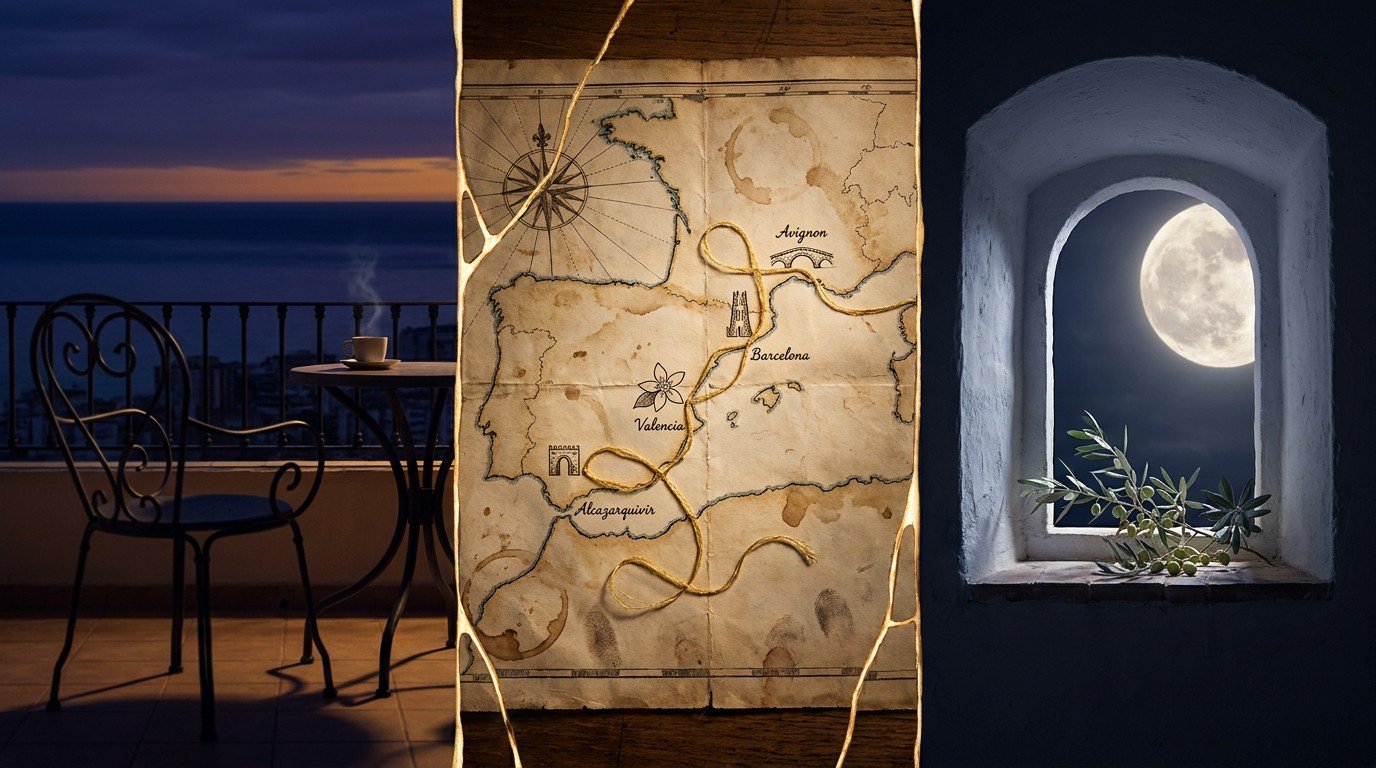
Every cante has its structure. This soleá unfolds in three movements that mirror the nocturnal journey of the rooted nomad.
🌑 Why Does the Terrace Fall Silent?
The song opens not with a declaration, but with an absence. El silencio de mi terraza — the silence of my terrace. There is no light to keep the singer awake, only the wind that embraces her, and a chair that does not speak.
This is the terrace after the laptop closes. The same terrace that, in the rumba, was a home open to the sky. Now it is a place of waiting. The notifications have ceased. The bay no longer sends messages. The wind, once a companion, is now a presence without words. The chair, once occupied, is empty.
The rooted nomad, in the night, faces the silence she has been running from.
🗺️ Why Do the Ports Return?
The second movement is a procession. Alcazarquivir watches her. Avignon bids her farewell with a quejío in its throat. Valencia turns its back on her. Barcelona does not wait.
These are the ports of a life in motion — the cities she passed through, the shores she left behind. In the rumba, the days were for Ronda and Tarifa, the movement was forward, the wind was in her sails. Here, in the soleá, the past returns uninvited. The ports are not destinations. They are memories that judge, that release, that reject, that do not care.
The Algorithmic Sardine, which navigated by following nutrient currents, now drifts through a sea of memory. The movement is not forward. It is inward.
I have been a sardine for fifteen years. That is not a metaphor — it is a migration log. The sardine begins its life in the cold Atlantic, crosses the Strait of Gibraltar, and nourishes both shores without asking for a visa. It follows the invisible algorithms of current and temperature. I followed something similar: the scent of Ghassoul, the crackle of a Panasonic shortwave radio, the need to carry stories between Meknès and Málaga. But every sardine carries the memory of the Atlantic in its cells. When the wind stops, that memory rises. The ports I name — Alcazarquivir, Avignon, Valencia, Barcelona — are not accusations. They are the taste of salt from different seas.
🕊️ How Does the Morisco Find Peace?
The third movement is an interior one. El morisco que llevo dentro — the Morisco I carry inside. He seeks neither land nor glory. He wants only a corner in the chest where his story can rest.
This is the moment of reconciliation. The Morisco is the historical figure of Muslim Spain, forced to convert or leave. But in the song, he is not a figure of history. He is an inner presence — the exile who carries his land inside his chest, the ancestor of the rooted nomad. He does not demand territory. He does not ask for recognition. He asks for rest.
The night, which began with silence, ends with peace. The roots that ache when the wind stops are the same roots that hold the Morisco’s story. They do not weigh. But they burn.
When my mother Zohra died in the winter of 2009, and my father followed soon after — diagnosed, in the Moroccan way, as having “died of grief” — the roots I thought were solid turned out to be something else. They did not break. They stretched. They became invisible threads that wove a tapestry between the living and the dead. The Morisco I carry inside is not a figure from a history book. He is the grief that has become soil. He is the silence of my mother’s lullabies, my father’s laughter, the radio static of my childhood. He asks for no land because he already has one: the chest of a nomad.
III. What Are the Full Lyrics of Raíces Que No Pesan?
📜 Original (Español)
El silencio de mi terraza no hay luz que me desvela, solo el viento que me abraza y una silla que no me habla.
Alcazarquivir me miraba con ojos de tierra y agua, Avignon me despedía con quejío en la garganta. Valencia me dio la espalda, Barcelona no esperaba.
Raíces que no pesan, pero duelen cuando callan. Raíces que no pesan, pero tiran de la memoria.
El morisco que llevo dentro no busca tierra ni gloria, solo un rincón en mi pecho pa’ que descanse su historia.
¡Ay, raíces que no pesan! ¡Ay, memoria que me quema! ¡Ay, ole, ay, ole, ay! ¡Ay, sin tierra y sin cadenas!
Salah Nomad.
📜 English Translation
The silence of my terrace has no light to keep me awake, only the wind that embraces me and a chair that does not speak.
Alcazarquivir watched me with eyes of earth and water, Avignon bid me farewell with a quejío in its throat. Valencia turned its back on me, Barcelona did not wait.
Roots that do not weigh, but ache when all falls silent. Roots that do not weigh, but pull at memory.
The Morisco I carry inside seeks neither land nor glory, only a corner in my chest where his story can rest.
Ay, roots that do not weigh! Ay, memory that burns me! Ay, ole, ay, ole, ay! Ay, without land and without chains!
Salah Nomad.
IV. What Are the Four Pillars of the Night?

These four pillars are the nocturnal reflection of the frameworks I’ve been building for over a decade. In the daylight of Nómada de la Bahía, they were tools for relocation and creation. In the night of Raíces Que No Pesan, they become something else: a survival kit for the soul. The Zellige Blueprint teaches us to find order in shattered tiles. The Algorithmic Sardine reminds us that migration must follow meaning, not escape. The Zebra Shirt Interface — that black-and-white fusion I wore in Avignon — proves that authenticity is the only signal that cuts through the noise. And the Invisible Tent, my pact with artificial intelligence, insists that the machine can be a sextant, but the heart must remain the navigator. At night, these pillars do not hold up a manifesto. They hold up a candle.
| Pillar | Concept | In the Song |
|---|---|---|
| Resilience through fragmentation | Zellige Blueprint | The silence is not empty. It is made of fragments — a chair, a wind, a terrace. Each is a tessera of the night, arranged in the compás of a soleá. |
| Purposeful navigation | Algorithmic Sardine | The ports of the past are not random. Alcazarquivir, Avignon, Valencia, Barcelona — they trace a map of exile and return, a migration that continues inward. |
| Authentic identity | Zebra Shirt Interface | The Morisco does not hide. He lives in the chest, unapologetic, visible only to the singer. His presence is the signal — the truth that the night reveals. |
| Human‑centered technology | Invisible Tent | Suno AI generated the cantaora’s voice. But the quejío, the palmas, the silence — those are human. AI was the instrument. The soul was not generated. |
❓ Frequently Asked Questions About the Song
Why a soleá por bulerías? Why not another rumba?
What does 'Raíces Que No Pesan' mean, and how does it connect to the first song?
Who is the Morisco in the song?
Is the voice real or AI-generated?
Will there be a third song?
🧭 Where Do You Go From Here? The Night Is Part of the Journey
The Mediterranean Codex exists because I believe that freedom without roots is just drift. You can move anywhere — but if you want to belong, you need a system. And sometimes, you need a song. And sometimes, you need its shadow.
Start with the logistics:
👉 Get the Málaga Relocation Checklist ($29) – the mosaic that saves you the €2,000 “new here” tax.
Then find your soil:
👉 Explore the Neighborhood Guide (free) – match your archetype to a barrio.
And when the sea gets rough:
👉 Read the Safe Harbor 2026 dispatch – for urgent, verified intelligence.
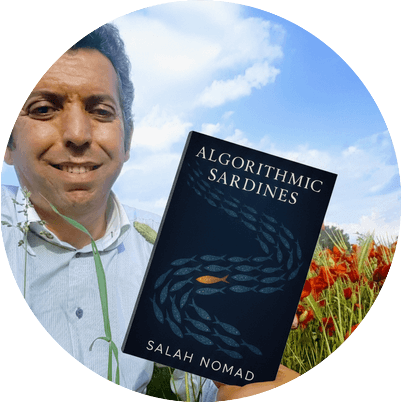
If this nocturnal journey has stirred something in you, the full map — from the olive groves of the Jbala to the fiber optic shores of Málaga — is laid out in my book, Algorithmic Sardines. It is the logbook behind the lyrics.
Reflective: What is the silence you are avoiding? What would it say if you let it speak?
Active:
- Day 1: Listen to the song with your eyes closed, at night. No screen. Just the voice, the guitar, the silence between phrases.
- Day 2: Read the lyrics while listening. Where does the Spanish differ from the English? Those gaps are where the Morisco lives.
- Day 3: Write down the name of a port you left behind. Just the name. Sit with it for five minutes. That is the beginning of belonging.
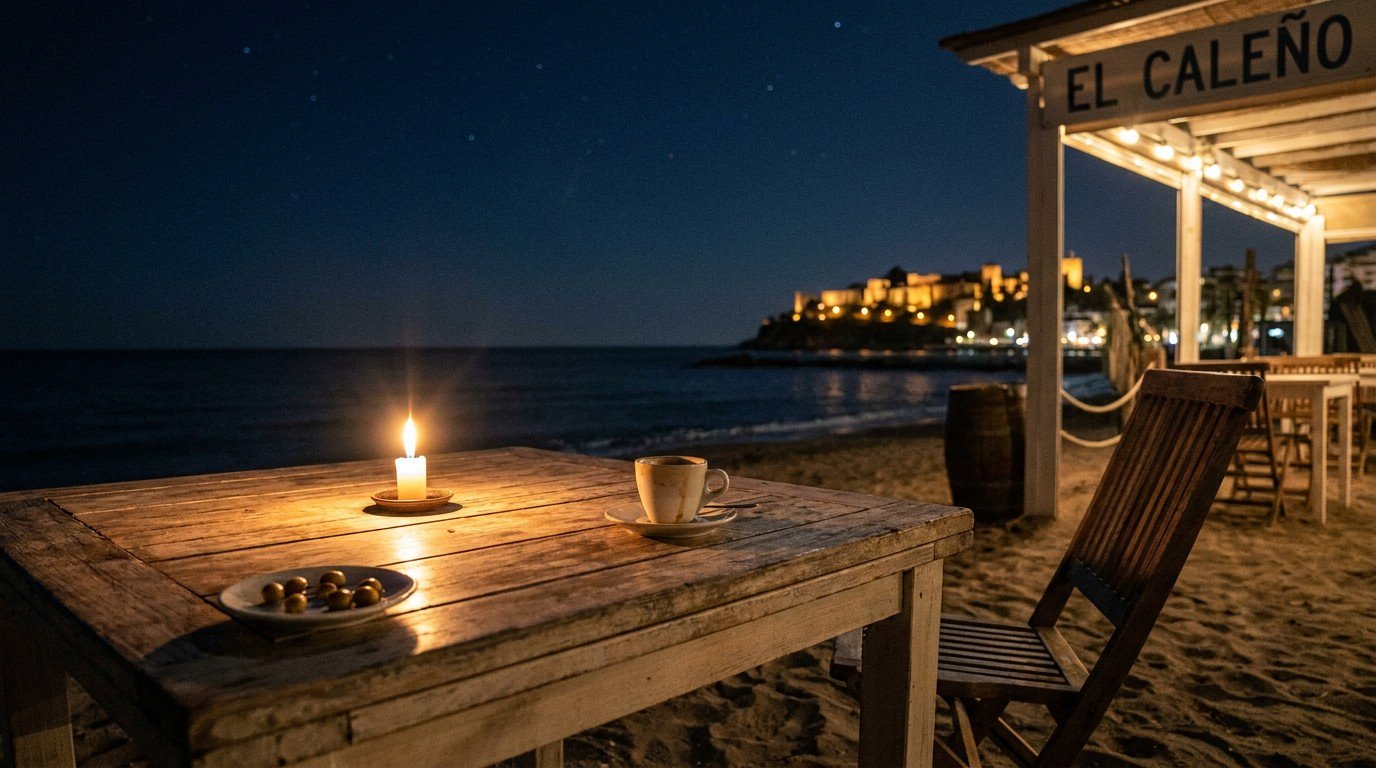
The invitation: If you’re in Málaga, find me at El Caleño after sunset. I’ll be the one with the zebra shirt, a candle on the table, and a silence that speaks.
🌟 Continuing Your Rooted Journey
“Málaga is my port. The night is my silence. Welcome to the Codex.” — Salah Nomad Rooted in Pedregalejo since 2021

Comments