

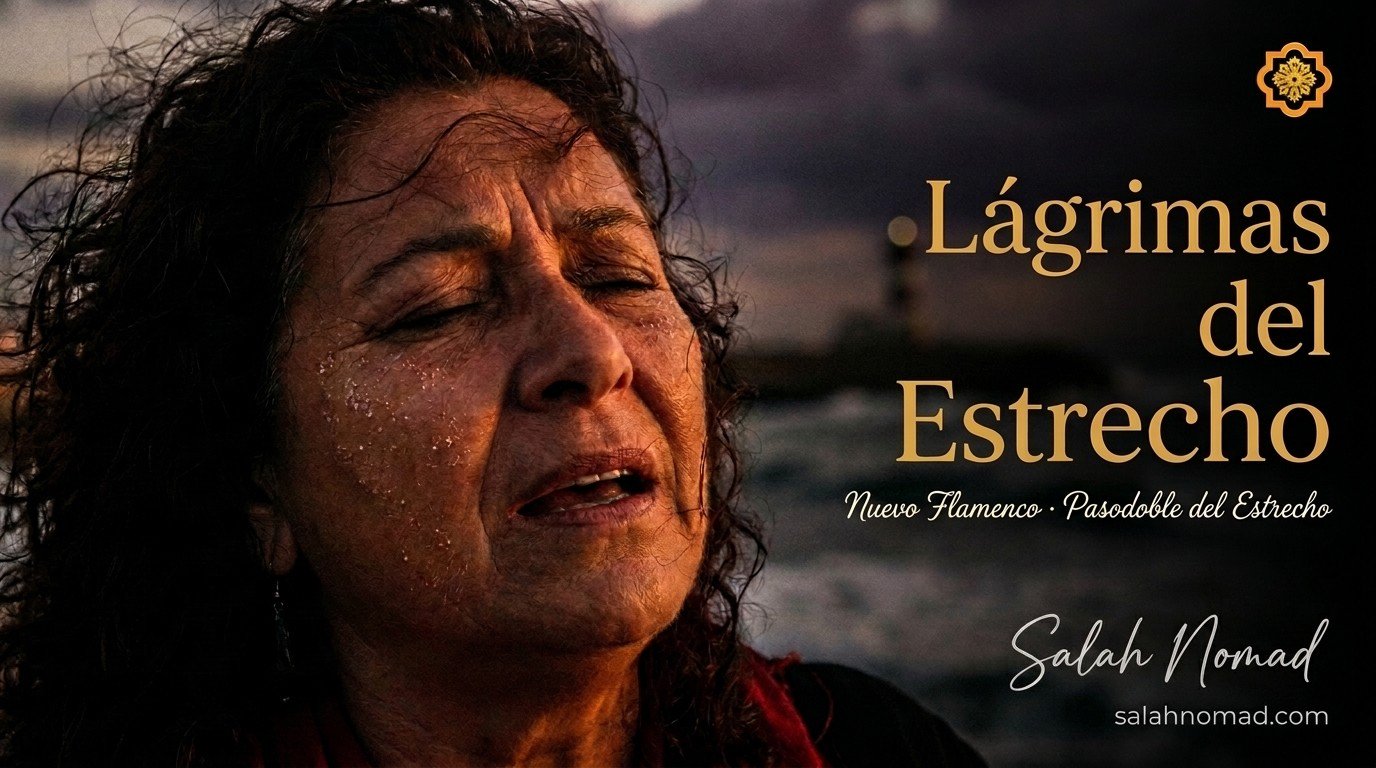
🎬 The Cinematic Exploration
This story needed the sound of a bullring. The pasodoble — the march of dignity, the cry before the charge. Watch before reading to feel the staccato of the guitar, the explosion of the brass, the voice that carries the weight of two shores. Or read first, and let the words guide you into the music. The strait, like the song, is yours.

I. What Is the Sound of a Love Broken by Borders?
I thought the cycle was complete. Five songs. Day, night, dawn, the witness of the Bari-ya, the origin of the clay. A closed architecture.
But a cycle has no closure if it has no wound.
Before the philosophy, before the Rooted Nomad, before the book — there was a woman. She lived on the other side of the sea, and I met her through a screen when screens still felt like magic. We built something in the space between two countries — fragile, fierce, and ultimately broken by a border made of paper.
Her name is not mine to give away. Her story is not mine to tell in full. That belongs to the pages of my book, Algorithmic Sardines, where I have written everything — the night we crossed from strangers to something more, the dream we built together, and the morning the visa wall tore it down.
What I can give you is her voice — or what I imagine her voice became, after the silence. Lágrimas del Estrecho is that voice. It is the woman on the rooftop, searching the radio waves for a voice that never came back — and finding, in the static, her own freedom.
“The rooted nomad knows that love does not ask for a visa. It crosses the strait in both directions, and it leaves salt on the skin of everyone it touches.”
II. Why the Pasodoble? The Music of Dignity

Every song in this project chose its palo for a reason.
- Nómada de la Bahía was a rumba — the joy of the terrace, the notifications from the bay.
- Raíces Que No Pesan was a soleá — the night of memory, the Morisco asking for rest.
- El Regreso was a bulería — the dawn of return, the chair finally inhabited.
- Bari-ya was punk flamenco — the fury of the witness, roots striking the earth.
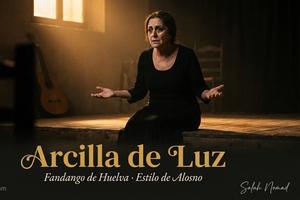
- Arcilla de Luz was a fandango — the clay of origin, the grandmother’s song.
But the strait demanded something else. Something theatrical. Something that marches toward destiny with its head held high.
I chose the pasodoble, and specifically the style of España Cañí — the most famous pasodoble ever written, composed by Pascual Marquina Narro.
This is the music of the bullring. Of the moment when the matador faces the bull. Of staccato guitar chords, triumphant brass, and the roar of the crowd. It is not a lament. It is a march.
Because her story is not a tragedy. It is a victory. She did not crumble. She did not beg. She taught me — and she learned for herself — that no border, no paper, no visa can defeat the heart that stops asking for permission.
The cantaora’s voice carries this dual truth: the salt of the tears, and the steel of the dignity.
III. How Does the Pasodoble Unfold? The Three Movements of the Strait
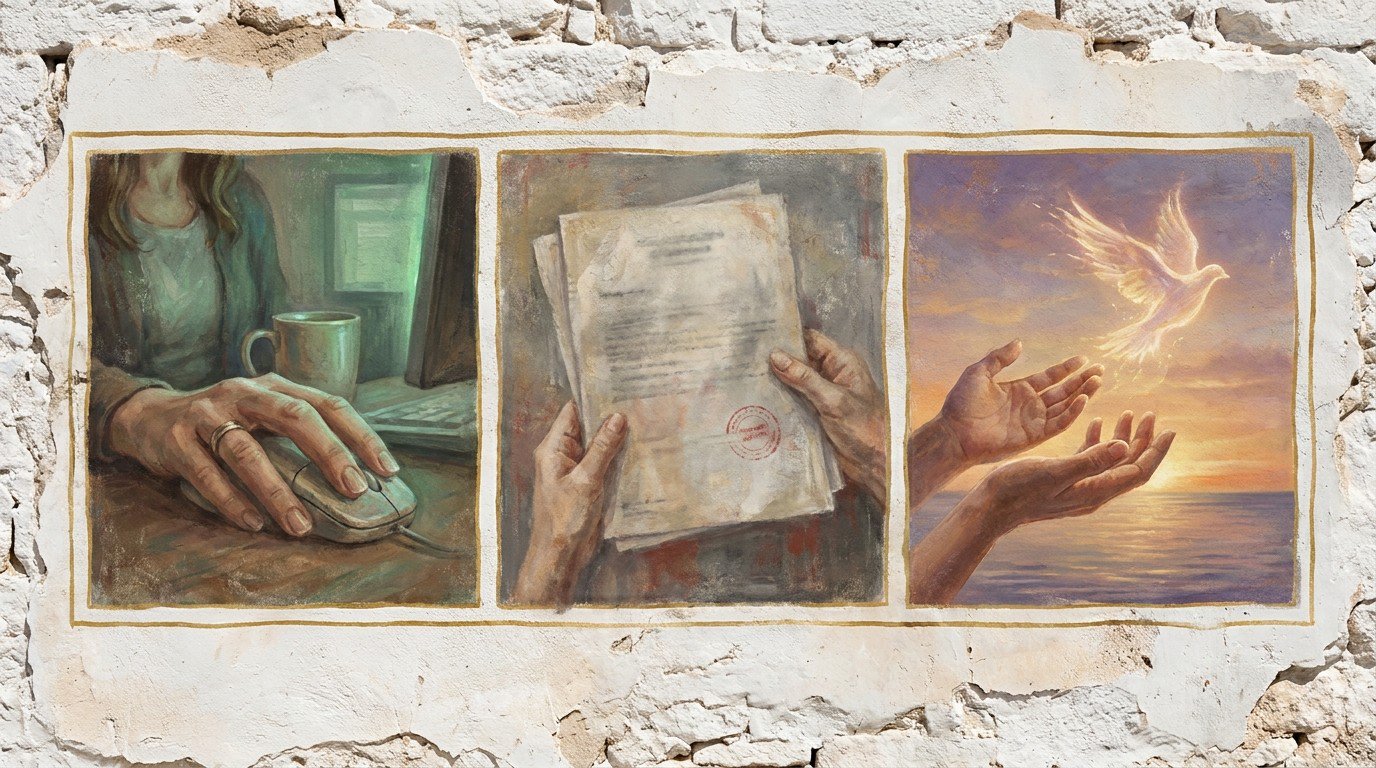
Even in the strict rhythm of the pasodoble, every cante has its internal architecture. This song breathes in three movements.
📻 Why Does the Radio Stay Silent?
The song opens with a memory of connection. Two people meeting through a glowing screen, building a fragile bridge out of words. A voice that traveled through cables before it ever touched the air. The light that cannot be seen — the digital signal, the radio wave, the Panasonic shortwave that connected me to the world long before I ever crossed a border.
The first movement is the connection. The invisible bridge that made love possible before the visa made it impossible.
📜 Why Do the Papers Tear?
The second movement is the wall. The papers. The stamps. The bureaucratic verdict that says no. The border that is not a line on a map but a stack of forms, a decision made in an office, a silence that falls when the envelope is opened.
The pasodoble’s brass accents — the triumphant trumpet hits — are not celebrating here. They are announcing the verdict. The fatal destiny. The moment when the matador faces the bull, and the papers seal the fate.
🕊️ Why Does the Silence Become Freedom?
The third movement is the liberation. Ya no pido permiso — I no longer ask for permission.
This is the line that transforms the song from a lament into a victory march. The woman on the rooftop stops waiting for the radio to speak. She stops looking at the sea for a boat that will never come. She takes the lesson that was given to her — You do not need their permission — and she makes it her own.
The final chorus explodes with the full brass and the fastest palmas. The voice tears open on the word quiebra (break). And then — sudden silence. Only the whispered signature: Salah Nomad.
The strait remains. The tears remain. But the freedom remains too.
IV. What Are the Full Lyrics of Lágrimas del Estrecho?
📜 Original (Español)
[Intro: Dramatic España Cañí style, aggressive staccato guitar chords, triumphant trumpet hits, heavy handclaps] (¡Esa! ¡Arsa y toma!) ¡Ay, ay, ay! ¡Lerele, lerele, lerele!
[Verse 1] Te encontré sin conocerte en una luz que no se ve, era tu voz un puente débil entre mi alma y tu querer. (¡Toma que toma!)
[Verse 2] Me prometiste mil mañanas con una fuerza que aún me quema, pero el muro de tus papeles nos robó la primavera. (¡Arsa!)
[Chorus] ¡Ay, lágrimas del estrecho! ¡Ay, sal que quema mi alma! Que te has ido tan lejos y yo me quedo sin calma, con tu recuerdo en el pecho como un puñal que me clava.
[Verse 3] Cada noche en la azotea busco tu voz en la radio, pero solo oigo la marea y este silencio que me ha matao. (¡Dale!)
[Bridge] ¡Ay! ¡Ay! ¡Ay! ¡Arsa! Tus dedos sobre mi clavícula eran brújula en mi piel, y aunque el mar nos separe, yo no pido permiso ya. (¡Olé!)
[Chorus] ¡Ay, lágrimas del estrecho! ¡Ay, fuego de mi condena! Aprendí de tu fuerza que no hay frontera que me venza, y aunque te hayas ido lejos, ¡mi corazón no se quiebra!
[Outro] Solo queda el estrecho… y mi libertad. [Spoken, whisper] Salah Nomad.
📜 English Translation
[Intro: Dramatic España Cañí style, aggressive staccato guitar chords, triumphant trumpet hits, heavy handclaps] (Esa! Arsa y toma!) Ay, ay, ay! Lerele, lerele, lerele!
[Verse 1] I found you without knowing you in a light that cannot be seen, your voice was a fragile bridge between my soul and your love. (Toma que toma!)
[Verse 2] You promised me a thousand mornings with a strength that still burns me, but the wall of your papers stole our spring. (Arsa!)
[Chorus] Ay, tears of the strait! Ay, salt that burns my soul! You have gone so far and I am left without calm, with your memory in my chest like a dagger that stabs me.
[Verse 3] Every night on the rooftop I search for your voice on the radio, but I only hear the tide and this silence that has killed me. (Dale!)
[Bridge] Ay! Ay! Ay! Arsa! Your fingers on my clavicle were a compass on my skin, and though the sea separates us, I no longer ask for permission. (Olé!)
[Chorus] Ay, tears of the strait! Ay, fire of my sentence! I learned from your strength that no border can defeat me, and though you have gone far, my heart does not break!
[Outro] Only the strait remains… and my freedom. [Spoken, whisper] Salah Nomad.
V. What Are the Four Pillars of the Strait?

Like every song in the Rooted Nomadism project, this one rests on four pillars — but these are the pillars of the border, not the journey.
| Pillar | Concept | In the Song |
|---|---|---|
| The Radio | Connection | The Panasonic shortwave that connects two shores before the body can cross. The invisible light of a screen, the voice that travels through cables. |
| The Papers | Separation | The visa, the bureaucratic wall. The paper that steals the spring and leaves only salt. |
| The Carnation | Love | The red carnation — the flower of Spain, the symbol of passion. It wilts on the rooftop, but its color remains. |
| The Salt | Transformation | The salt of the strait, the salt of the tears. It burns the skin, but it also preserves. It is the taste of the lesson: I no longer ask for permission. |
❓ Frequently Asked Questions About the Song
Why a pasodoble? Why España Cañí?
Who is the woman behind the song?
Is this a true story?
How was the voice of the cantaora created?
Will there be more songs?
🧭 Where Do You Go From Here? The Strait Is Just the Beginning
The Mediterranean Codex exists because I believe that freedom without roots is just drift. You can move anywhere — but if you want to belong, you need a system. And sometimes, you need a song. And sometimes, you need the tears that remind you why you stopped asking for permission.
Listen to the full cycle, and then return to the strait. It will still be there — between the two shores, in the salt on your skin, in the voice that never came back.
📖 If this song stirred something in you, the complete story — every detail, every hour, every word — is waiting in my book Algorithmic Sardines.
👉 Get Algorithmic Sardines here
🎬 Watch the full film (4:00) and share it with someone who knows the weight of a border.
👉 Lágrimas del Estrecho on YouTube

Reflective: What is your visa? What is the border — literal or symbolic — that separated you from someone you loved, and what did you learn in the silence?
Active:
- Day 1: Listen to the full cycle, from Nómada de la Bahía to Arcilla de Luz. Do not listen to Lágrimas del Estrecho yet. Feel the architecture of the journey.
- Day 2: Find a body of water. The sea, a river, a lake. Stand at its edge. Close your eyes. Think of someone you loved who is no longer on your shore.
- Day 3: Listen to Lágrimas del Estrecho alone, with your eyes closed. Let the pasodoble march through you. When the final whispered ‘Salah Nomad’ fades, ask yourself: What permission have I been waiting for that I no longer need?
The invitation: If you are at the Strait of Gibraltar, stand on the shore and face the other side. If you are in Málaga, find me at El Caleño at dusk. I will be the one with the silent radio, a dried carnation, and the salt of two seas on my skin.
🌟 Continuing Your Rooted Journey
- Nómada de la Bahía: The Flamenco Rumba of the Rooted Nomad
- Raíces Que No Pesan: The Nocturnal Side of Rooted Nomadism
- El Regreso: The Dawn of Rooted Nomadism
- Bari-ya: The Wild Olive Tree Speaks
- Arcilla de Luz: The Clay That Dances
- The Olive Tree and the Algorithm: The Mediterranean Codex Manifesto
- Rooted Nomadism: The Complete Philosophy
- Algorithmic Sardines: The Book
“The strait does not separate. It connects. And that is its way of teaching us to stop asking for permission.” — Salah Nomad Rooted in Pedregalejo since 2021
Comments