

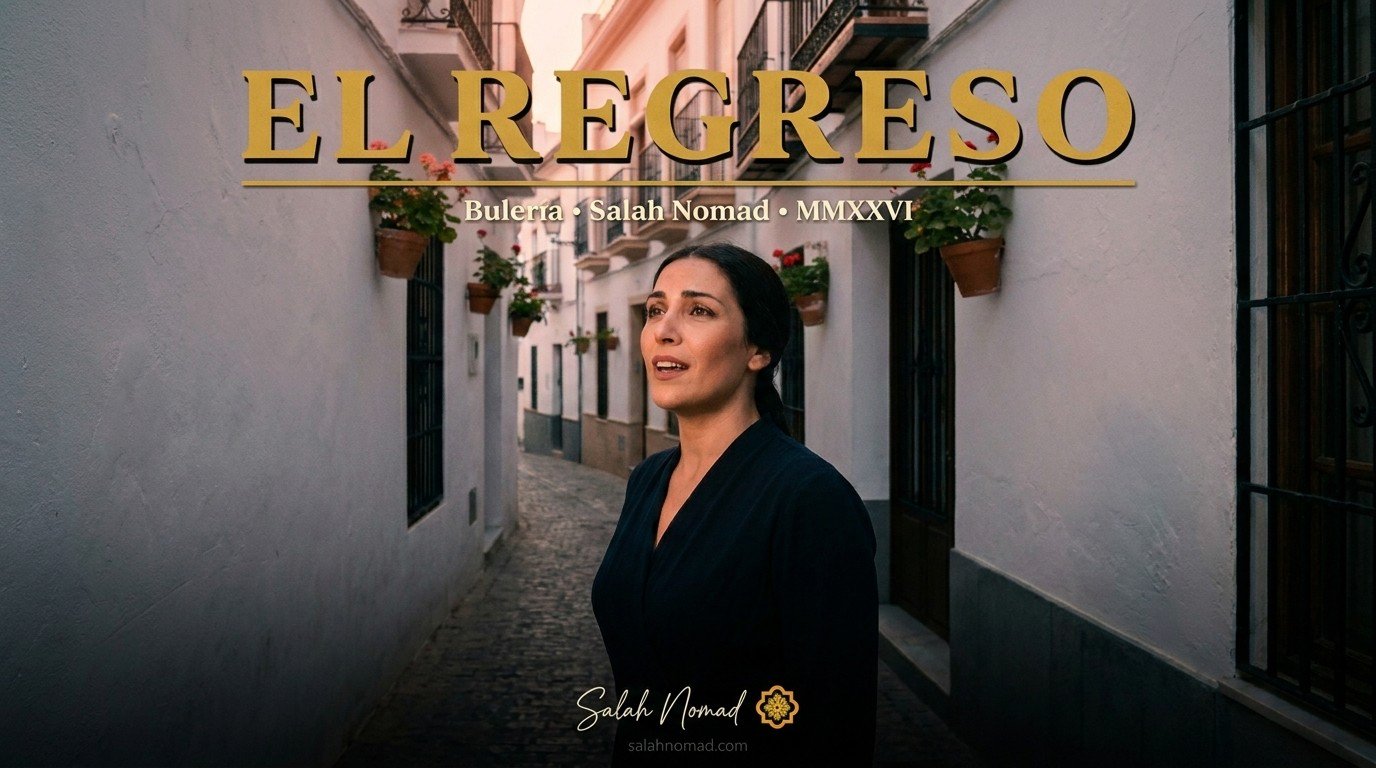
🎬 The Cinematic Exploration
This story needed to end where it began — on a Málaga terrace, at dawn. After the rumba of the day and the soleá of the night, I wrote this bulería to let you hear the return. Not a comeback. Not a destination. The quiet, unshakeable knowledge that you never really left. Watch before reading to feel the compás, or after to understand the words. The dawn, like the song, is yours.
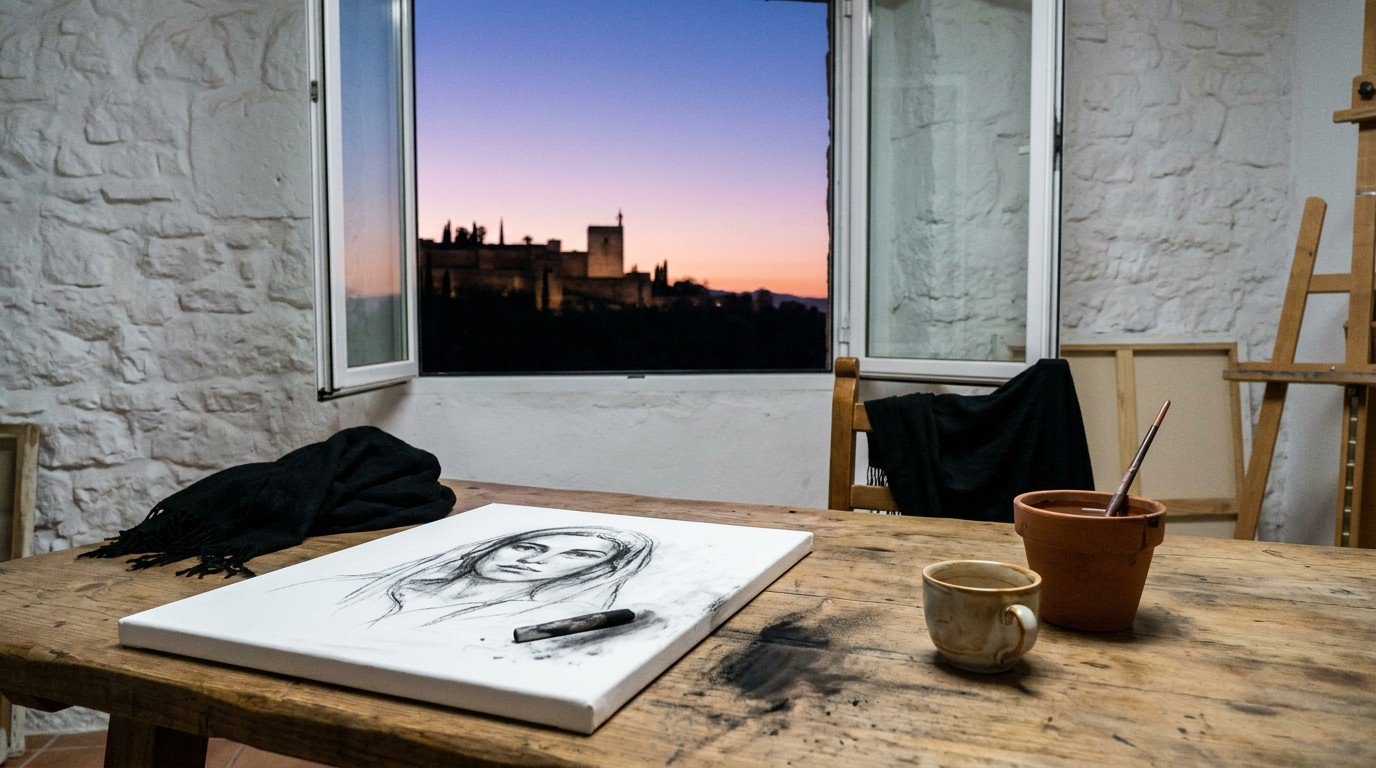
I. What Does It Mean to Return Without Coming Back?
I began this journey with a rumba. Nómada de la Bahía was the day — the terrace open to the bay, the notifications from Ronda and Tarifa, the joy of belonging without being tied down. Roots that embraced. A suitcase made of clouds. A home that was a terrace.
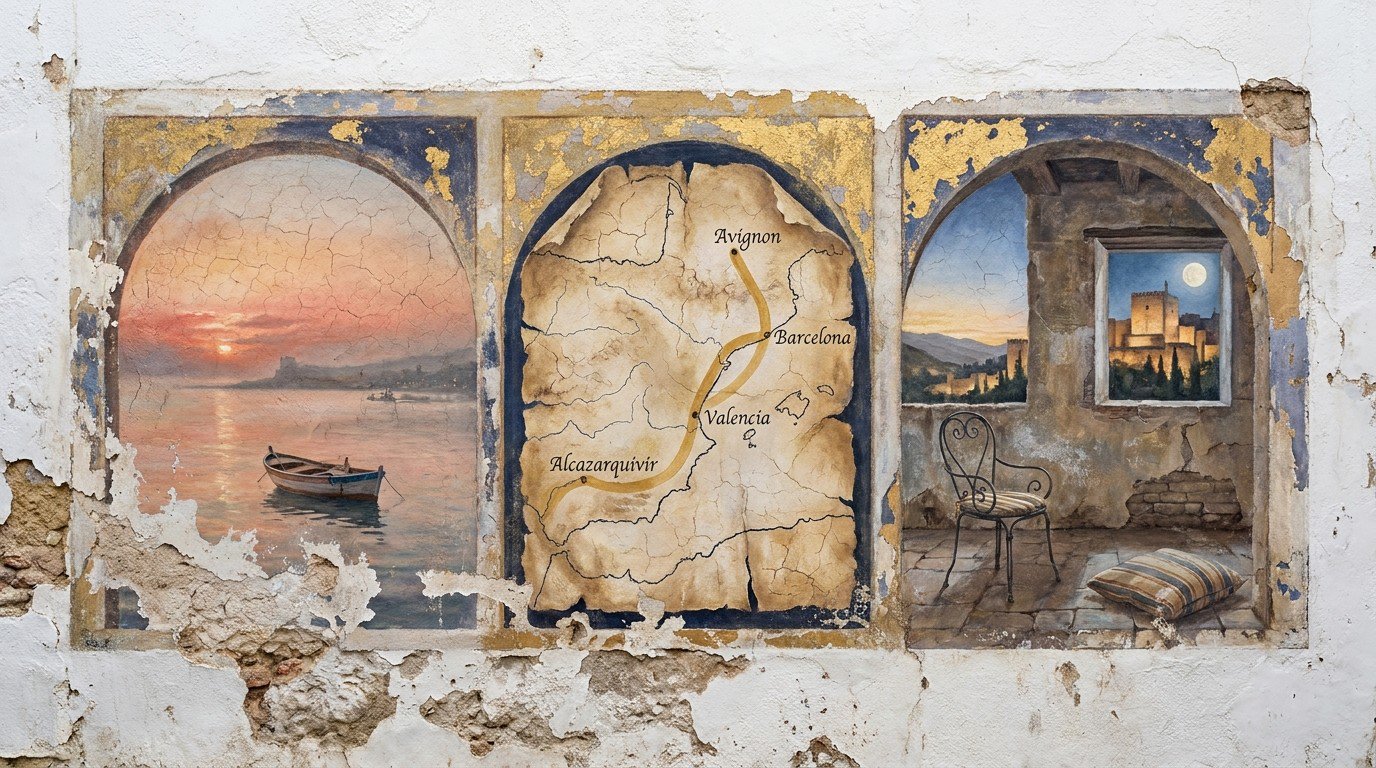
Then came the night. Raíces Que No Pesan was a soleá por bulerías about what memory does when the wind stops. The terrace fell silent. The ports returned — Alcazarquivir, Avignon, Valencia, Barcelona — not as destinations, but as memories that ached. The Morisco inside asked for a corner to rest his story. The roots did not weigh, but they burned.
Now, the dawn.
El Regreso is a bulería. Not the bulería of a loud fiesta, but the bulería of the juerga’s end — when the bodies are tired but alive, when everything has been danced and cried and sung, and what remains is the quiet pulse of a heart that knows it has survived. This is the sound of the rooted nomad coming home — not to a place, but to a presence.
“The rooted nomad has travelled through the day and the night. At dawn, she does not arrive. She simply opens her eyes and recognizes the terrace.”

II. How Does the Bulería Unfold? The Three Movements of the Dawn
Every cante has its structure. This bulería unfolds in three movements that mirror the final stage of the rooted nomad’s journey.
🧳 Why Is the Return Silent?
The song opens not with a declaration of arrival, but with a quiet re‑entry. He vuelto a la bahía sin ruido, sin equipaje — I have returned to the bay without noise, without luggage. The nomad who once carried a suitcase of clouds now carries only what she knows, and a notebook without a message.
This is the opposite of the departure in Nómada de la Bahía. There, the cantaora declared she came from where there are no borders. Here, she returns to the bay — the same bay that once sent her notifications — but she asks for nothing. The notebook is blank, ready to be written, not filled with old plans.
The silence of the return is not the silence of the abandoned terrace. It is the silence of someone who no longer needs to explain herself.
🕊️ Why Do the Ports No Longer Accuse?
The second movement revisits the ports of the past. Alcazarquivir, Avignon, Valencia, Barcelona. But the verbs have changed. In Raíces, Alcazarquivir miraba (watched, imperfect — an ongoing, heavy gaze). Avignon despedía (bid farewell, with a quejío in its throat). Valencia dio la espalda (turned its back). Barcelona no esperaba (did not wait).
In El Regreso, Alcazarquivir me mira — present tense, a simple, peaceful gaze. Avignon ya no suspira — no longer sighs. Valencia no me abandona — does not abandon. Barcelona no me olvida — does not forget.
The ports have not disappeared. They have been transformed. The same cities, the same names, but the wound has become a scar, and the scar has become a map. The Algorithmic Sardine no longer flees or grieves. It swims calmly through the same waters, now familiar, now loved.
☕ How Does the Terrace Become a Home?
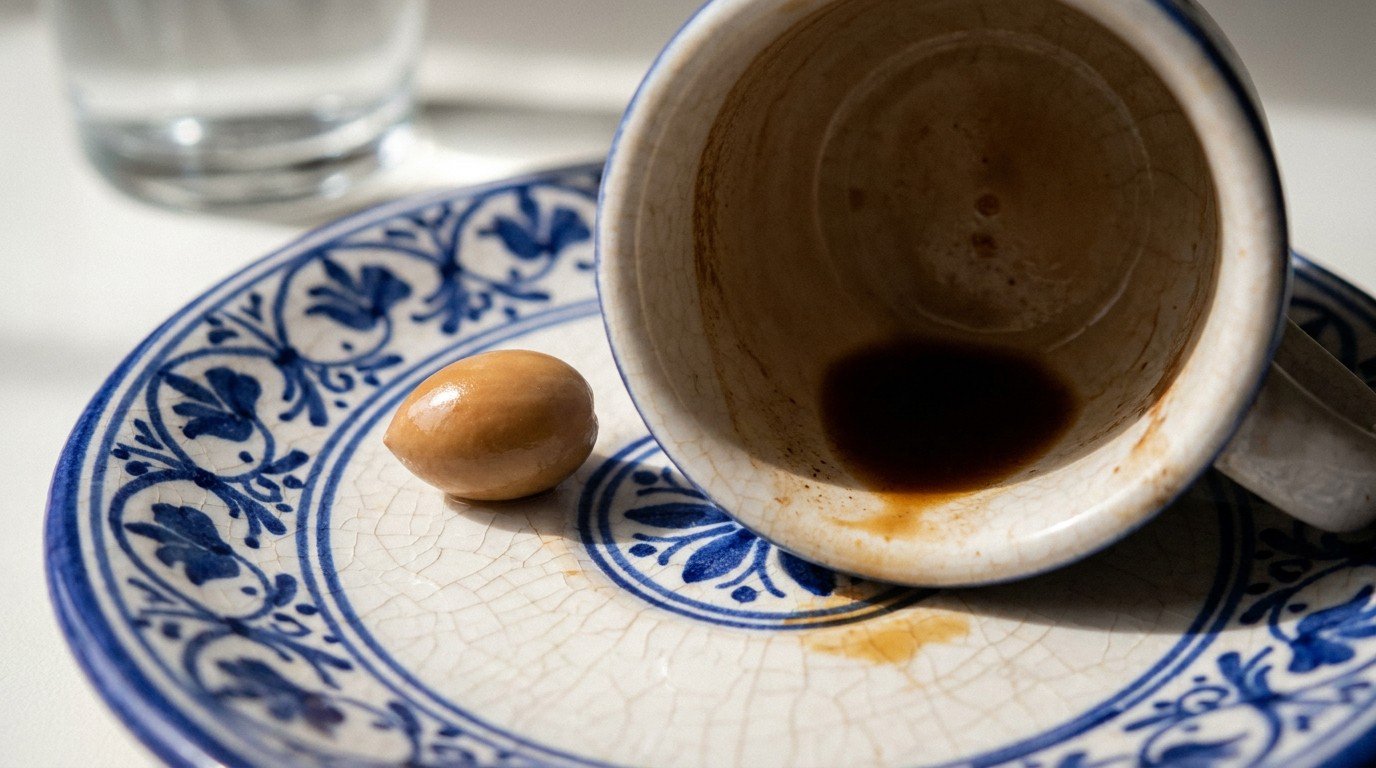
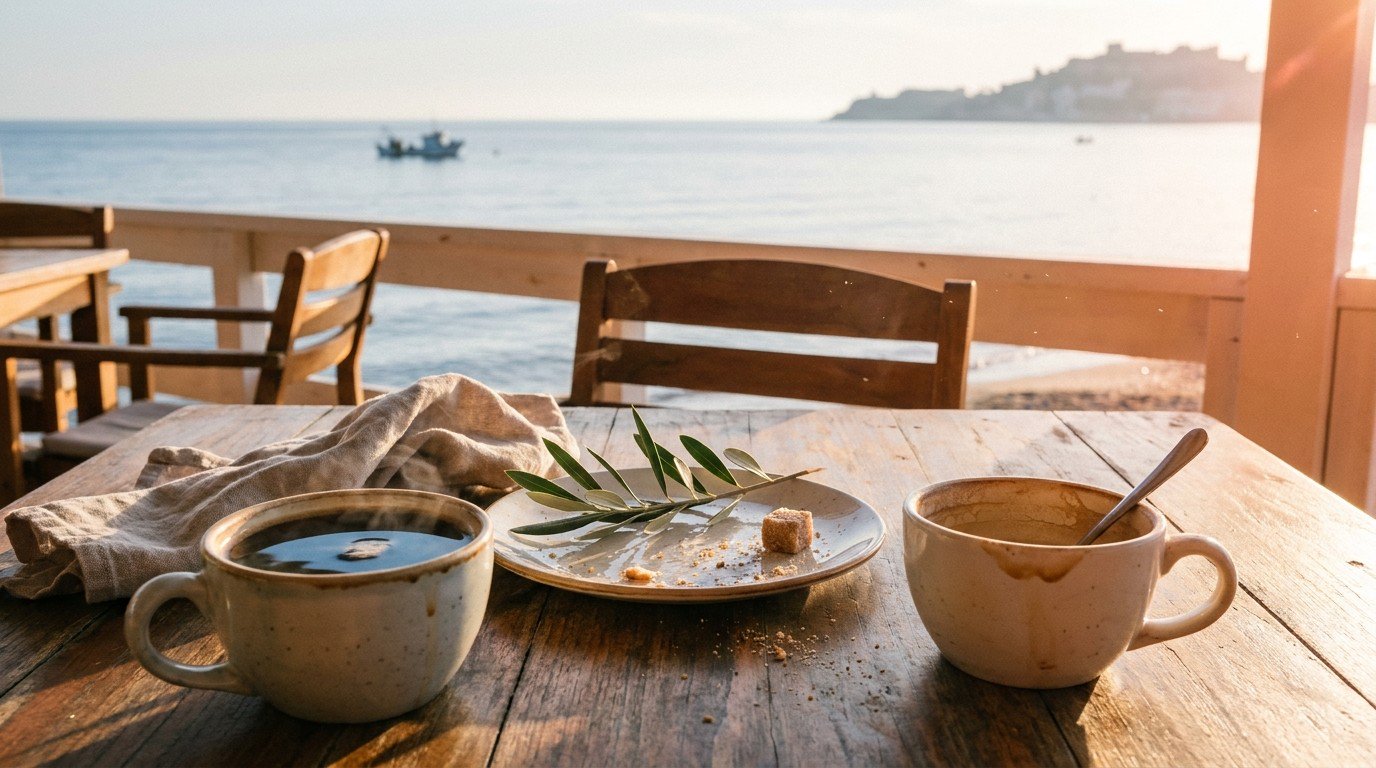
The third movement is the simplest and the most profound. Amanece en mi terraza, hay café, hay luz, hay calma — Dawn breaks on my terrace, there is coffee, there is light, there is calm. The chair that was empty in Raíces is now inhabited — not by a visitor, but by the singer’s own soul. La habita toda mi alma.
This is the completion of the triptych’s central metaphor. The terrace was a stage in the rumba, a waiting room in the soleá, and now a home in the bulería. The rooted nomad does not need to leave the terrace to find the world. The world comes to her, with the smell of coffee and the first light of day.
The final line of the book Algorithmic Sardines comes back to me now: “One more algorithmic sardine, swimming home.” I wrote that sentence on a Málaga morning, pressing an olive pit into the soil. This song is that pit, now a tree.
III. What Are the Full Lyrics of El Regreso?
📜 Original (Español)
He vuelto a la bahía sin ruido, sin equipaje, solo con lo que sabía y un cuaderno sin mensaje.
Alcazarquivir me mira, Avignon ya no suspira, Valencia no me abandona, Barcelona no me olvida.
El regreso no es volver, es saber que nunca he ido. Las raíces que sembré hoy me sirven de latido. ¡Ay, ole, ay, ole!
Er morisco que llevé hoy descansa en mi costado, ya no pide, ya no sé si fue él quien me ha enseñado.
Amanece en mi terraza, hay café, hay luz, hay calma, la silla ya no está vacía, la habita toda mi alma.
El regreso no es volver, es saber que nunca he ido. Las raíces que sembré hoy me sirven de latido. ¡Ay, ole, ay, ole!
Amanece en mi terraza… Salah Nomad.
📜 English Translation
I have returned to the bay without noise, without luggage, only with what I knew and a notebook without message.
Alcazarquivir looks at me, Avignon no longer sighs, Valencia does not abandon me, Barcelona does not forget me.
The return is not coming back, it is knowing I never left. The roots I sowed today serve as my heartbeat. Ay, ole, ay, ole!
The Morisco I carried today rests at my side, he no longer asks, I no longer know if it was he who taught me.
Dawn breaks on my terrace, there is coffee, there is light, there is calm, the chair is no longer empty, all my soul inhabits it.
The return is not coming back, it is knowing I never left. The roots I sowed today serve as my heartbeat. Ay, ole, ay, ole!
Dawn breaks on my terrace… Salah Nomad.
IV. What Are the Four Pillars of the Dawn?

Like the Mediterranean Codex, this song rests on four pillars — the same pillars that supported the rumba and the soleá, but now illuminated by the first light of day.
| Pillar | Concept | In the Song |
|---|---|---|
| Resilience through fragmentation | Zellige Blueprint | The broken tile is repaired with gold. The ports, once wounds, are now a map. The chair, once empty, is now inhabited. Fragmentation is not the end — it is the beginning of a new pattern. |
| Purposeful navigation | Algorithmic Sardine | The sardine no longer migrates by necessity. It swims by choice, tracing a route that has become familiar. The return is not a retreat — it is the completion of a cycle. |
| Authentic identity | Zebra Shirt Interface | The Morisco smiles. He no longer hides or asks. His presence is no longer a signal of pain, but a quiet emblem of belonging. The stripes have become a home. |
| Human‑centered creation | Invisible Workshop | A new instrument gave shape to the cantaora’s voice. But the quejío, the palmas, the silence — those are ancient. The instrument was new; the soul was not generated. |
❓ Frequently Asked Questions About the Song
Why a bulería for the dawn? Why not a rumba or a soleá?
What does 'El Regreso' mean, and how is it different from 'coming back'?
Who is the Morisco who smiles?
Is this the end of the Rooted Nomadism Music project?
How was the voice of the cantaora created?
🧭 Where Do You Go From Here? The Dawn Is Just the Beginning
The Mediterranean Codex exists because I believe that freedom without roots is just drift. You can move anywhere — but if you want to belong, you need a system. And sometimes, you need a song. And sometimes, you need three.
Start with the logistics:
👉 Get the Málaga Relocation Checklist ($29) – the mosaic that saves you the €2,000 “new here” tax.
Then find your soil:
👉 Explore the Neighborhood Guide (free) – match your archetype to a barrio.
And when the sea gets rough:
👉 Read the Safe Harbor 2026 dispatch – for urgent, verified intelligence.
If this triptych has stirred something in you, the full map — from the olive groves of the Jbala to the fiber optic shores of Málaga — is laid out in my book, Algorithmic Sardines. It is the logbook behind the lyrics.
Reflective: Which of the three songs stays with you longest? Why that one?
Active:
- Day 1: Listen to Nómada de la Bahía at noon, on a terrace or near a window. Feel the rumba of the day.
- Day 2: Listen to Raíces Que No Pesan at midnight, with your eyes closed. Sit with the silence of the night.
- Day 3: Listen to El Regreso at dawn, as the first light enters your room. Let the bulería be your heartbeat.
The invitation: If you’re in Málaga, find me at El Caleño at sunrise. I’ll be the one with the zebra shirt, a cup of coffee, and a notebook without a message.
🌟 Continuing Your Rooted Journey
“Málaga is my port. The dawn is my return. Welcome to the Codex.” — Salah Nomad Rooted in Pedregalejo since 2021




Comments