

🎬 The Cinematic Exploration
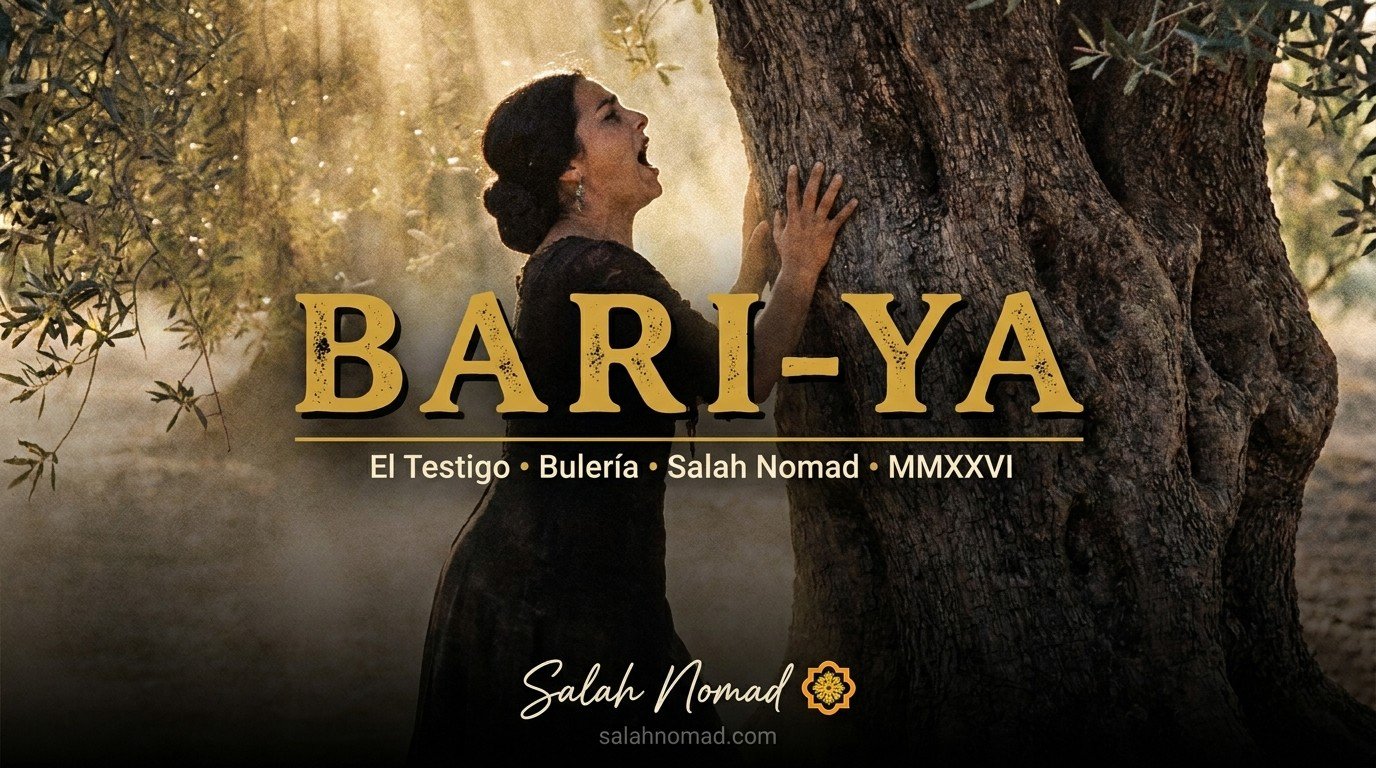
This story needed a foundation, not a sequel. After the day, the night, and the dawn, I wrote this punk flamenco bulería to let you hear the witness — the Bari-ya, the wild olive tree that was always there, watching. It does not celebrate, it does not mourn. It remembers. Watch before reading to feel the drumming roots, or after to understand the words. The tree, like the song, is yours now.
I. Why Does the Wild Olive Tree Speak Now?
I have spent the last few weeks giving voice to the nomad, the Morisco, and the cantaora. The triptych — Nómada de la Bahía, Raíces Que No Pesan, El Regreso — told the story of a journey from the day to the night to the dawn. Roots that embraced, roots that ached, roots that became a heartbeat.
But there was always something — someone — missing.
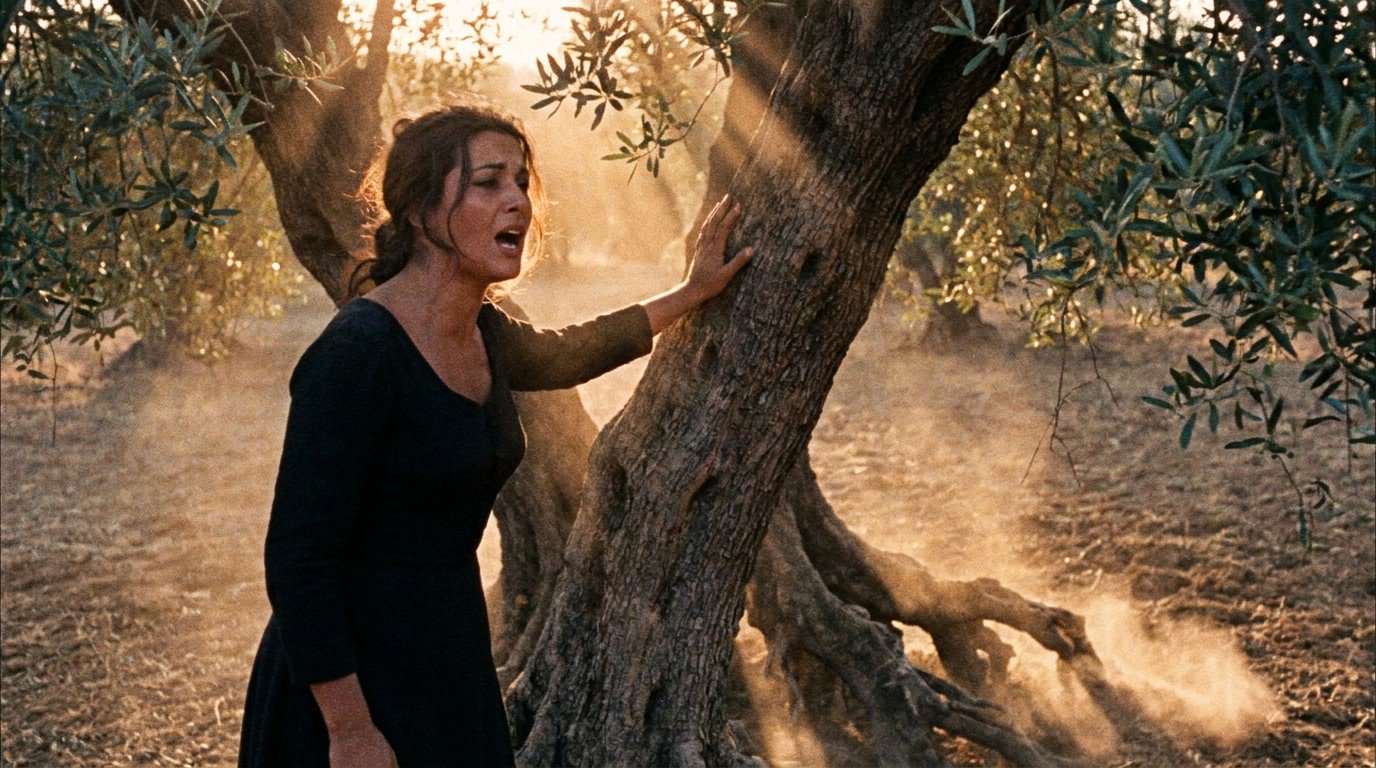
In the Jbala mountains of northern Morocco, where I was born, there is a word for the wild olive tree. Bari-ya. It is not the cultivated tree of the orchard, pruned and tamed. It is the one that grows on the edge of the village, on stony ground, without being planted. It survives drought, neglect, and the passage of centuries. And it remembers.
When I was six years old, an old farmer named Hamid pressed a finger to my chest under a Bari-ya and gave me a word I have carried ever since: Assal. Your origin. Your essence. Your inherited good — the patrimony you receive and must pass on.
The Bari-ya was there that day. It heard the word before I did. It has been hearing words — prayers, farewells, cries of grief, songs of joy — for five hundred years.
Now it speaks.
“The rooted nomad has sung. The Morisco has smiled. The cantaora has fallen silent. Now the earth itself speaks — not to explain, but to witness.”
II. How Does the Bari-ya Sing? Punk Flamenco and the Drumming Roots
Every voice in this project has its own flamenco palo. The nomad danced a rumba. The Morisco cried a soleá. The cantaora of the dawn sang a bulería.
The Bari-ya needed something else. Something that does not ask permission. Something that breaks strings and splits wood.
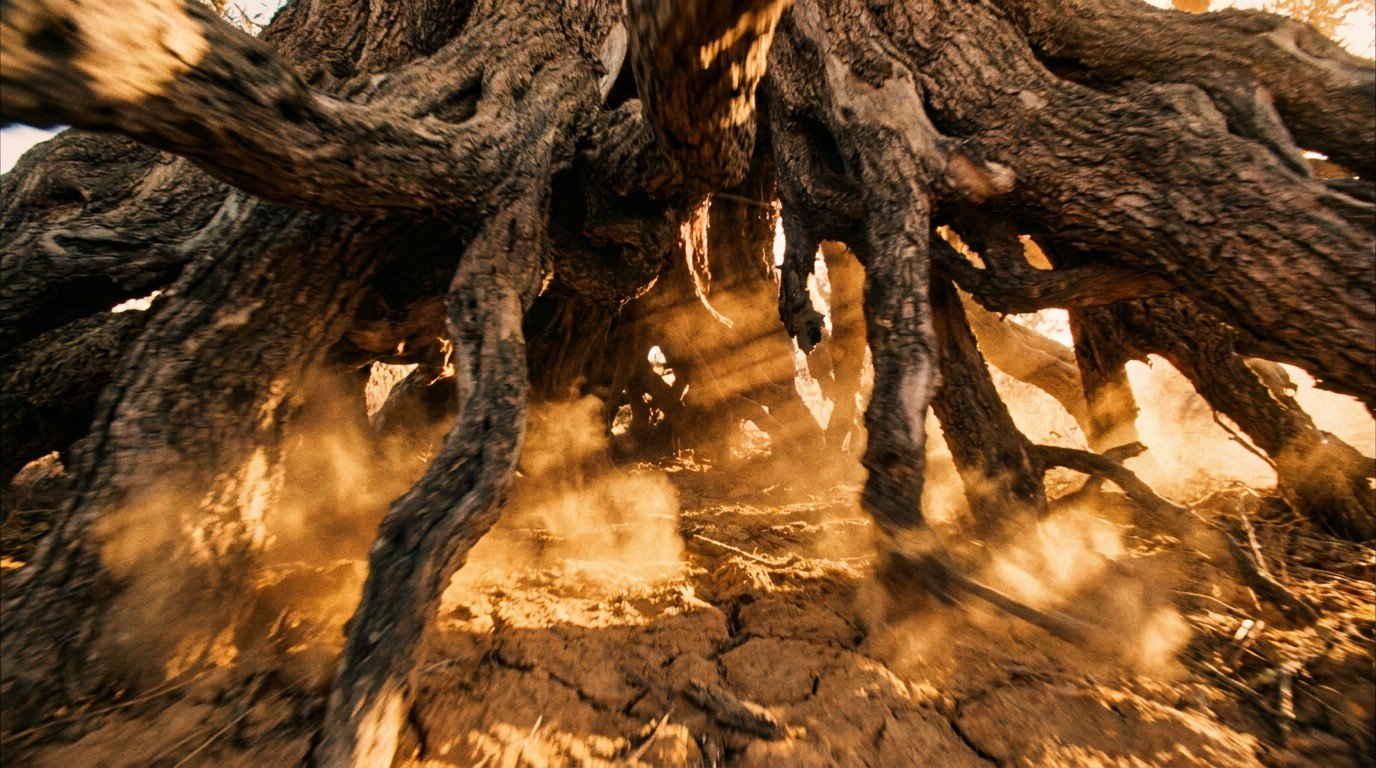
I chose punk flamenco — a bulería at 220 BPM, with violent guitar strumming, machine-gun cajón, and palmas like gunshots. The cantaora does not sing sweetly. She shouts, she chants, she enters a dialogue with the drumming roots of the tree itself.
This is not the flamenco of the tablao. This is the flamenco of the earth, the sound of roots striking dry soil after five centuries of silence. The tree does not mourn. The tree does not pray. It remembers — and it dances.
The lyrics move quickly, in short, punchy phrases under three seconds each. The bridge accelerates. The outro slows, just enough to let the word Assal land like a stone dropped into still water.
| Element | In the Triptych | In Bari-ya |
|---|---|---|
| Voice | Female cantaora (warm, husky, morning-husk) | Female cantaora (shouting, chanting, raw) |
| Guitar | Rasgueo, arpeggios | Violent strumming, short sharp strokes, strings breaking |
| Percussion | Cajón, palmas | Machine-gun cajón, staccato palmas like gunshots |
| Tempo | 108–120 BPM | 220 BPM |
| Duration | 2:09–2:57 | 2:02 |
| Palo | Rumba, Soleá, Bulería | Punk Flamenco Bulería |
| Emotion | Joy, grief, peace | Fierce memory, wild joy, testimony |
III. What Does the Bari-ya Remember?

The song is short — only five sections — but each one corresponds to a moment the Bari-ya witnessed.
🧳 The Departure
Te vi salir con tu radio beige, tu pasaporte de papel, buscando raíces sin equipaje.
The Bari-ya saw the nomad leave with her beige radio — the Panasonic that connected her to the world — and a paper passport. She was searching for roots without luggage, carrying nothing but her voice and her heritage. The tree stayed behind, as it always does.
🌑 The Night Return
Te vi volver de noche rota, buscando el olor de tu madre. Er morisco a mi sombra se sentó, sin pedir nada, solo estar.
The nomad returned broken, in the dark, searching for her mother’s scent. The Bari-ya gave her shade without asking. And the Morisco — the exile inside her — came to sit in that same shade, asking for nothing. He did not want land or glory. He just wanted to stay. The tree became his refuge, the only place where history stopped demanding.
🌅 The Dawn
Te vi amanecer con café y luz, silencio que ya no pesaba. Apoyaste la mano en mi tronco, no hacía falta hablar.
On the morning of the return — the dawn of El Regreso — the nomad placed her hand on the Bari-ya’s trunk. She said nothing. Nothing was needed. The silence no longer weighed. The tree had witnessed everything, and it asked for nothing. It simply stood there, as it had for five hundred years, and offered its bark as a place to rest.
🌳 The Tree Itself
Mis hojas han visto toas las albas, mis ramas conocen toos los vientos. No rezo, no lloro, no canto, solo recuerdo.
In the bridge, the Bari-ya speaks for itself. It does not pray, it does not cry, it does not sing. It only remembers. Its leaves have seen every dawn, its branches know every wind. This is not a lament. It is a statement of fact, delivered at 220 BPM, with the pride of something that has survived.
🕊️ The Word
Mi nombre no importa, niño. Es lo que tocas cuando pones la mano en la tierra que te invoca. Assal… Assal… Assal…
The song ends with the tree renouncing its own name. It does not matter what it is called. What matters is what the hand touches when it touches the earth — the inherited good, the patrimony, the Assal. The word is sung three times: the first as a statement, the second as a call, the third as a gift.
And then, as in all the songs of this project, a final whisper: Salah Nomad. Not the tree’s voice. The pilgrim’s signature.
IV. What Are the Full Lyrics of Bari-ya?
📜 Original (Español Andaluz)
Soy er Bari-ya, er que no viaja, er que se queda.
Te vi salir con tu radio beige, tu pasaporte de papel, buscando raíces sin equipaje.
Te vi volver de noche rota, buscando el olor de tu madre. Er morisco a mi sombra se sentó, sin pedir nada, solo estar.
Te vi amanecer con café y luz, silencio que ya no pesaba. Apoyaste la mano en mi tronco, no hacía falta hablar.
Mis hojas han visto toas las albas, mis ramas conocen toos los vientos. No rezo, no lloro, no canto, solo recuerdo.
Mi nombre no importa, niño. Es lo que tocas cuando pones la mano en la tierra que te invoca.
Assal… Assal… Assal…
Salah Nomad.
📜 English Translation
I am the Bari-ya, the one who does not travel, the one who stays.
I saw you leave with your beige radio, your paper passport, searching for roots without luggage.
I saw you return broken at night, searching for your mother’s scent. The Morisco sat in my shade, asking for nothing, just to stay.
I saw you dawn with coffee and light, a silence that no longer weighed. You placed your hand on my trunk, there was no need to speak.
My leaves have seen every dawn, my branches know every wind. I do not pray, I do not cry, I do not sing, I only remember.
My name does not matter, child. It is what you touch when you place your hand on the earth that calls you.
Assal… Assal… Assal…
Salah Nomad.
V. What Are the Four Pillars of the Witness?

Like all the songs in the Rooted Nomadism project, Bari-ya rests on four pillars — but these are not the pillars of a manifesto. They are the pillars of a witness.
| Pillar | Concept | In the Song |
|---|---|---|
| The Broken String | Resilience through violence | The punk flamenco guitar does not play — it strikes, it breaks, it continues. The Bari-ya has survived not by being gentle, but by being tough. Its roots split rocks. Its branches resist storms. Its song is not a caress — it is a blow. |
| The Dry Earth | Memory through stillness | The Bari-ya does not travel. It stays in the same soil for five hundred years. Its knowledge comes not from movement, but from attention. It has seen more by standing still than any nomad has seen by wandering. |
| The Olive Oil | Healing through presence | The tree gives shade, oil, wood — but it does not ask. The Morisco came to sit in its shade, and the tree asked for nothing. Presence, not intervention, is the oldest form of healing. |
| The Sardine Skeleton | Migration through return | The sardine migrates, the tree stays. But both are part of the same ecosystem. The sardine’s skeleton, caught in the roots after a flood, is a reminder that movement and stillness are not opposites. They are partners in the same dance. |
❓ Frequently Asked Questions About Bari-ya
What is a Bari-ya?
Why punk flamenco for an olive tree?
What does 'Assal' mean?
How does Bari-ya connect to the three other songs?
Will there be more songs after Bari-ya?
🧭 Where Do You Go From Here? The Witness Is Just the Beginning
The Mediterranean Codex exists because I believe that freedom without roots is just drift. You can move anywhere — but if you want to belong, you need a system. And sometimes, you need a song. And sometimes, you need the voice of the earth that was there before all the songs.
Listen to the full triptych, and then return to the Bari-ya. The tree will still be there. It always is.
[Image not found: images/bari-ya-caleno.jpg]
Reflective: What is your Assal? What have you inherited — land, memory, a word, a skill, a debt, a promise — that you will pass on?
Active:
- Day 1: Listen to the full triptych, in order: Nómada, Raíces, El Regreso. Do not listen to Bari-ya yet.
- Day 2: Find a tree near you. It does not have to be an olive tree. Sit under it for ten minutes. Touch the bark. Ask it what it remembers.
- Day 3: Listen to Bari-ya, alone, with your eyes closed. Let the drumming roots be your heartbeat. When the final Assal fades, write down the name of the thing you have inherited that you will never sell.
The invitation: If you are in the Jbala mountains, find the Bari-ya above the Loukkos River. If you are in Málaga, find me at El Caleño at sunrise. I will be the one with dirt under my nails and the word Assal on my lips.
🌟 Continuing Your Rooted Journey
“The tree does not travel. It remembers. And that is its way of dancing.” — Salah Nomad Rooted in Pedregalejo since 2021

Comments