

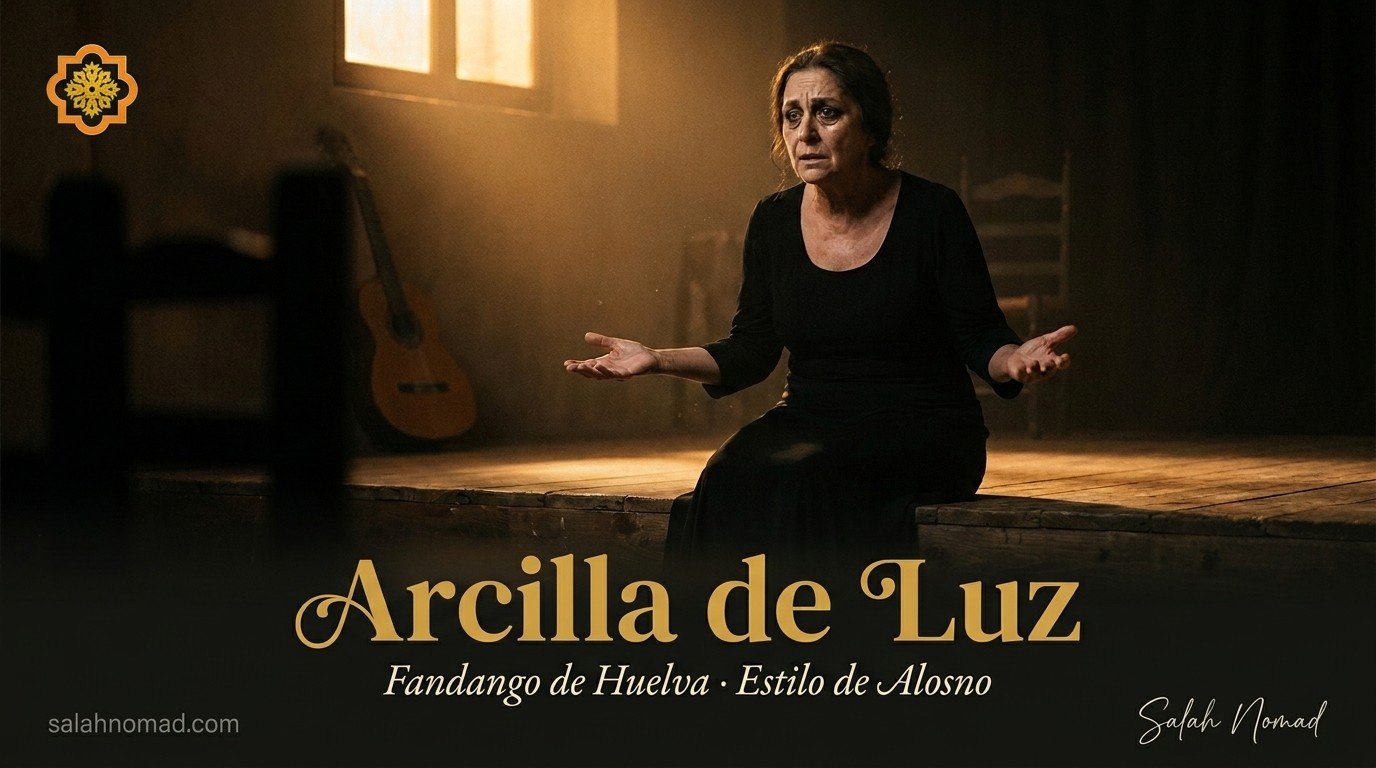
🎬 The Cinematic Exploration
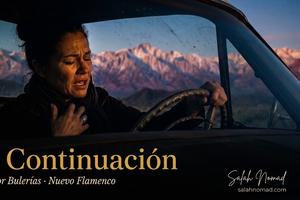
This story needed no drums, no dance, no compás. Only the voice — broken, lived, afillá — and the guitar answering from the shadows. Watch before reading to feel the weight of the clay, or after to understand the words. The earth, like the song, waits.
I. Why Does the Clay Sing Now?
I thought the cycle was complete. Four songs. Day, night, dawn, and the witness — the Bari-ya, the wild olive tree that had seen everything and finally spoke its furious punk flamenco truth.
But a cycle has no end if it has no beginning.
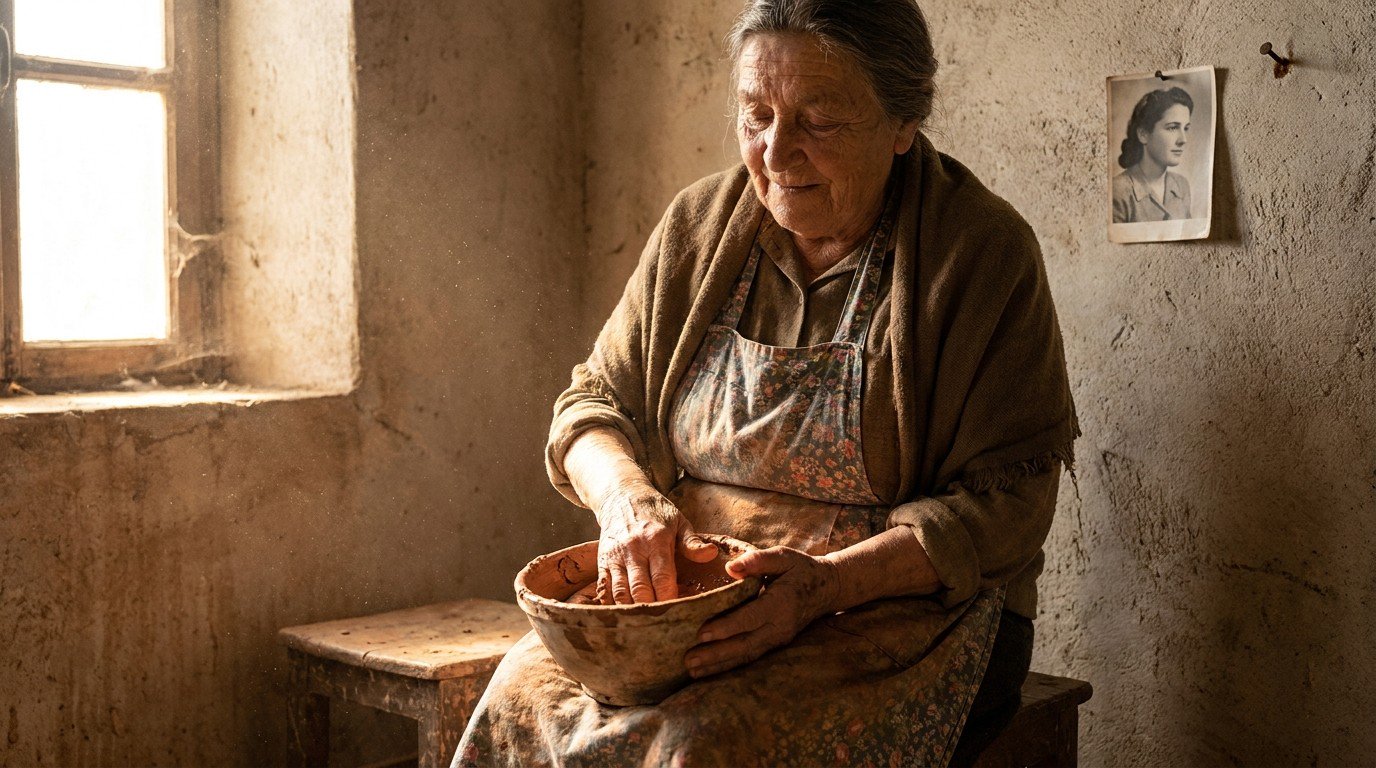
Before the olive tree, there was the earth. Before the nomad, there was the mother. Before the first departure — with the beige radio, the paper passport, the suitcase of clouds — there was a woman grinding clay under the sun of Alcazarquivir, humming a song she had learned from her own mother.
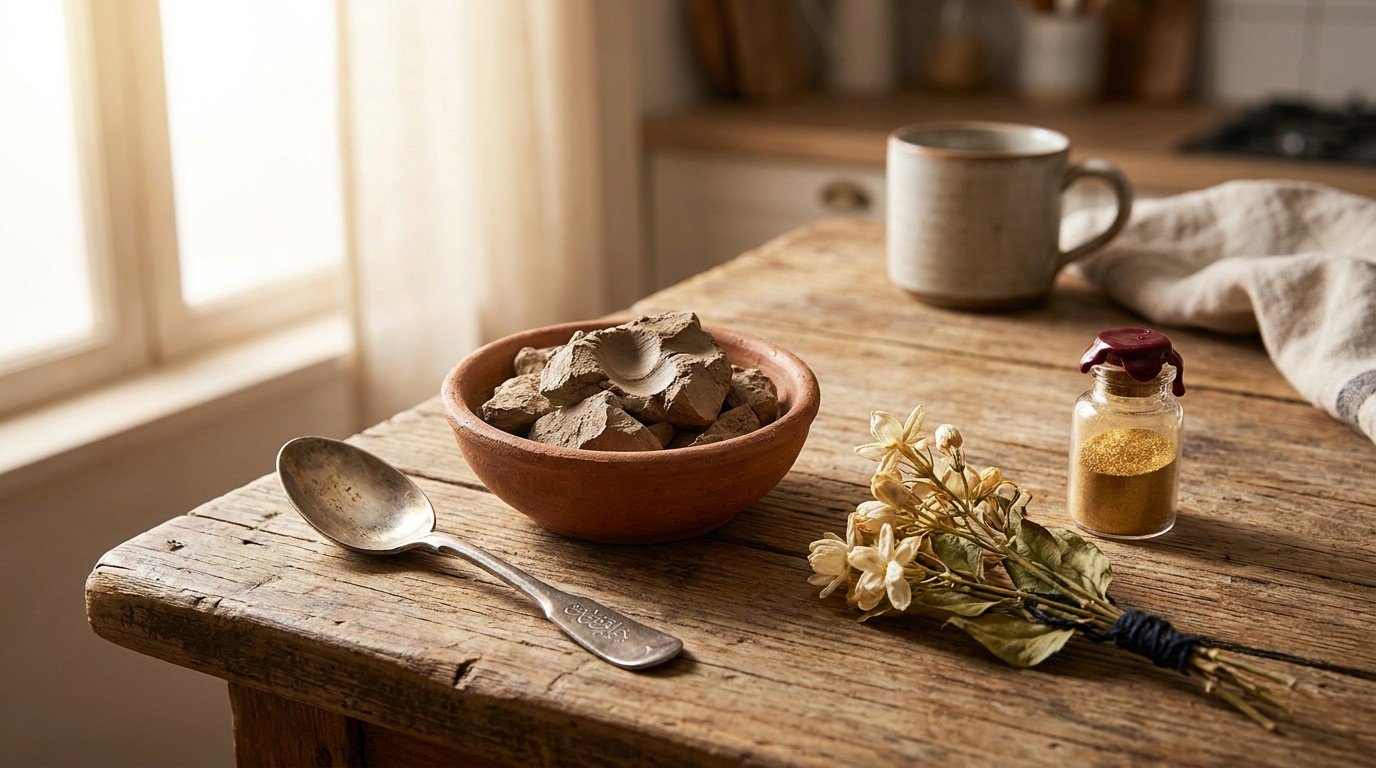
That clay was ghassoul. Volcanic, Jurassic, pulled from the mountains of northern Morocco. My grandmother prepared it on the terrace. My mother, Zohra, used it in the hammam. I built my first business exporting it to Europe. It is the mineral thread that connects three generations of hands.
The Bari-ya gave voice to the land that stays. But the clay — the clay is the land that shapes. It shaped the first bowl, the first wall, the first skin washed before prayer. It shaped me.
Arcilla de Luz is not a sequel. It is the prequel. It is the womb before the root, the dust before the tree, the voice before the word.
“The rooted nomad knows that every journey begins in a pair of hands — the hands that shaped the clay, the hands that washed the child, the hands that waved goodbye and never stopped waving.”
II. Why the Fandango de Huelva? The Freedom of the Voice
Every song in this project chose its palo for a reason.
- Nómada de la Bahía was a rumba — the joy of the terrace, the notifications from the bay.
- Raíces Que No Pesan was a soleá — the night of memory, the Morisco asking for rest.
- El Regreso was a bulería — the dawn of return, the chair finally inhabited.
- Bari-ya was punk flamenco — the fury of the witness, roots striking the earth.
But the clay cannot be confined to a compás. It does not dance in 12-beat cycles. It settles. It dries. It cracks. It waits for water. It remembers in silence.
So I turned to the fandango de Huelva, and more specifically the estilo de Alosno — the style of Paco Toronjo.
This is not the fandango of the fiesta. It is the fandango of the cantaor alone with his guitar, free from the tyranny of rhythm. No palmas. No castanets. No cajón. The voice is sovereign. It stretches syllables across centuries. It cracks open on the high notes and rumbles on the low ones. It is, in the flamenco tradition, a voice afillá — naturally broken, lived-in, carrying the weight of decades.
La Paquera de Jerez had this voice. El Tío Luis el de la Juliana had this voice. Paco Toronjo, the master of Alosno, had this voice.
Now the clay has it too.
III. How Does the Fandango Unfold? The Three Movements of the Clay
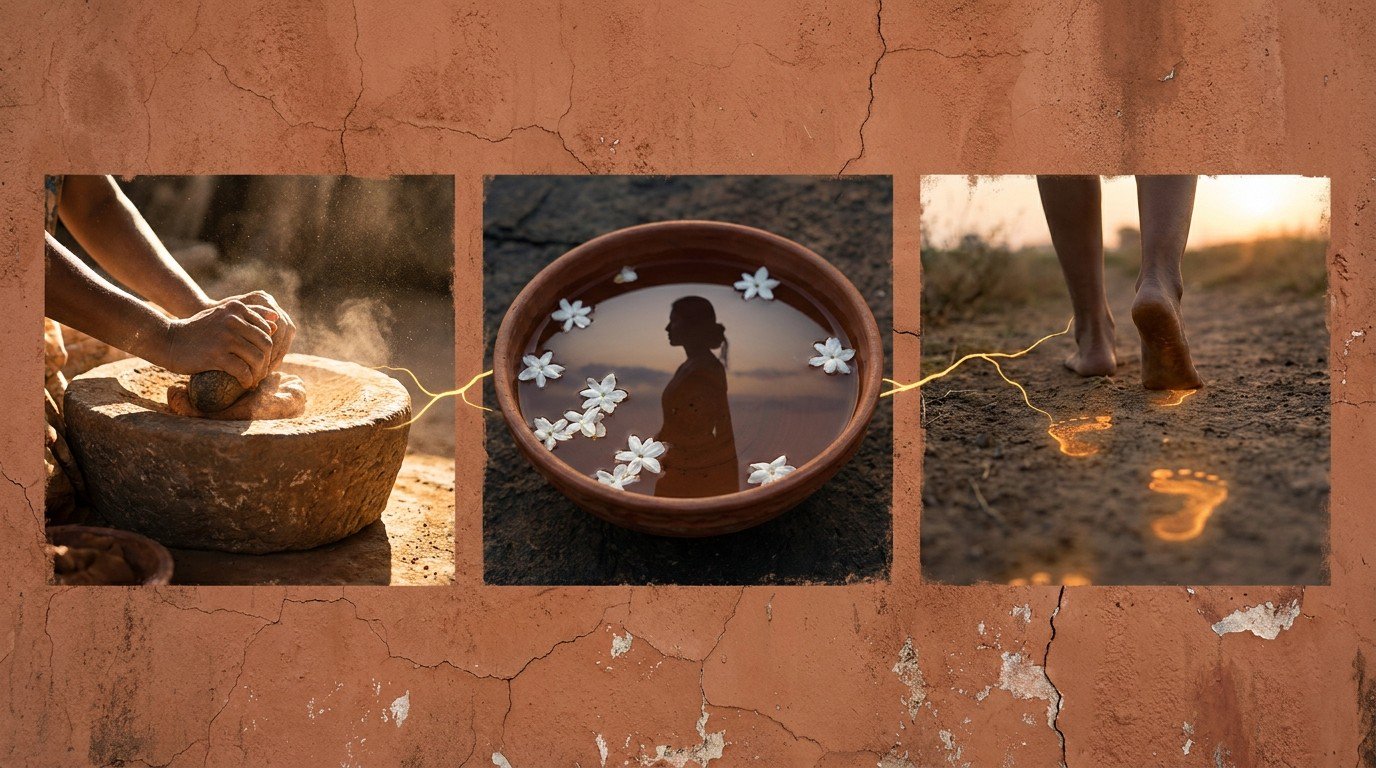
Even free of compás, every cante has its internal architecture. This fandango breathes in three movements.
🌞 Why Does the Clay Remember the Sun?
The song opens with the memory of light. La tierra que me vio dormir bajo el sol de Alcazarquivir — the earth that saw me sleep under the sun of Alcazarquivir.
This is not metaphor. The ghassoul mine at El Kssabi bakes under the same Jurassic sun that baked it millions of years ago. My grandmother ground the clay on the terrace in that same sun. The clay holds the heat. It holds the light. It becomes arcilla de luz — clay of light.
The first movement is the origin. Before the journey, before the radio, before the passport — there was the sun on the clay, and a child sleeping.
👐 Why Are the Hands Empty?
The second movement is the offering. The grandmother grinds the clay into song — molía la canción — and the river becomes her procession. The hands that prepared the ghassoul are the same hands that blessed the child, that waved goodbye, that never stopped waving.
But now the hands are empty. The guitar replaces the grinding stone. The strings begin to break — las cuerdas van a estallar — because no instrument can hold the weight of three generations.
This is the moment of transmission. The clay passes from the grandmother’s hands to the cantaora’s voice. The earth becomes sound.
💃 Why Does the Dust Rise?
The third movement is the dance — but not the dance of the juerga. It is the dance of the earth itself. Baila, arcilla, baila, canta. The clay dances because it has no choice. Every particle of dust that rises from the tablao is a particle of the grandmother’s terrace, the mother’s hammam, the mine at El Kssabi.
And when the nomad finally leaves — con mi radio y mi dolor — he carries clay in the soles of his shoes. Not a souvenir. An amulet. The earth that will not let him forget where he began.
IV. What Are the Full Lyrics of Arcilla de Luz?
📜 Original (Español)
(¡Ay, ay, arcilla de luz!)
La tierra que me vio dormir se vuelve polvo al devenir, bajo el sol de Alcazarquivir la arcilla empieza a latir.
Arcilla de luz, tierra de amor, barro que baila con mi dolor, arcilla de luz, fuego y sudor, la noche canta con mi clamor.
Mi abuela molía la canción, el río era su procesión, y hoy mis tacones, redención, marcan el paso de mi pasión.
Guitarra que grita y se va a romper, castañuelas que empiezan a arder, bailaora que gira sin ver, la tierra sube por tu ser.
Ay, que el barro no se detiene, ay, que la tierra me sostiene, desde la cuna hasta que viene el compás que mi sangre tiene.
Cuando me vaya de madrugá, con mi radio y mi soledá, llevo arcilla en la voluntad y un taconeo de eternidad.
(¡Olé, olé, que viva la tierra!)
Arcilla de luz, tierra de amor, polvo que baila con mi fervor, arcilla de luz, fuego interior, la noche canta con mi clamor.
Salah Nomad.
📜 English Translation
(Ay, ay, clay of light!)
The earth that saw me sleep becomes dust as it becomes, under the sun of Alcazarquivir the clay begins to beat.
Clay of light, earth of love, mud that dances with my pain, clay of light, fire and sweat, the night sings with my cry.
My grandmother ground the song, the river was her procession, and today my heels, redemption, mark the step of my passion.
Guitar that screams and is about to break, castanets that begin to burn, bailaora who spins without seeing, the earth rises through your being.
Ay, the mud does not stop, ay, the earth sustains me, from the cradle until it comes — the compás that my blood carries.
When I leave at dawn, with my radio and my solitude, I carry clay in my will and a footstep of eternity.
(Olé, olé, long live the earth!)
Clay of light, earth of love, dust that dances with my fervor, clay of light, inner fire, the night sings with my cry.
Salah Nomad.
V. What Are the Four Pillars of the Clay?
Like every song in the Rooted Nomadism project, this one rests on four pillars — but these are the pillars of the origin, not the journey.
| Pillar | Concept | In the Song |
|---|---|---|
| The Earth | Origin | The clay is not a metaphor. It is the Jurassic mud of El Kssabi, the ghassoul my grandmother ground, the dust that rises from the tablao. It is the literal substance of the first home. |
| The Instrument | Transmission | The guitar that screams and breaks is the heir of the grinding stone. The grandmother’s song passes into the wood, the strings, the air. When the guitar breaks, the transmission is complete. |
| The Voice | Memory | The afillá voice — broken, raspy, lived — is the only instrument that can carry three generations without shattering. It does not perform pain. It is made of pain, like the clay is made of time. |
| The Light | Legacy | Arcilla de luz — clay of light. The sun of Alcazarquivir that baked the clay millions of years ago is the same sun that bakes the terrace today. The light is what turns dust into legacy. |
❓ Frequently Asked Questions About the Song
Why a fandango de Huelva? Why not another rumba or soleá?
What does 'afillá' mean?
Why clay? Why not the olive tree, like in Bari-ya?
How was the voice of the cantaora created?
Is this the end of the Rooted Nomadism Music project?
🧭 Where Do You Go From Here? The Clay Is Just the Beginning
The Mediterranean Codex exists because I believe that freedom without roots is just drift. You can move anywhere — but if you want to belong, you need a system. And sometimes, you need a song. And sometimes, you need the earth that came before all songs.
Listen to the full cycle, and then return to the clay. It will still be there — on the terrace of Alcazarquivir, in the soles of your shoes, in the dust that rises when you dance.
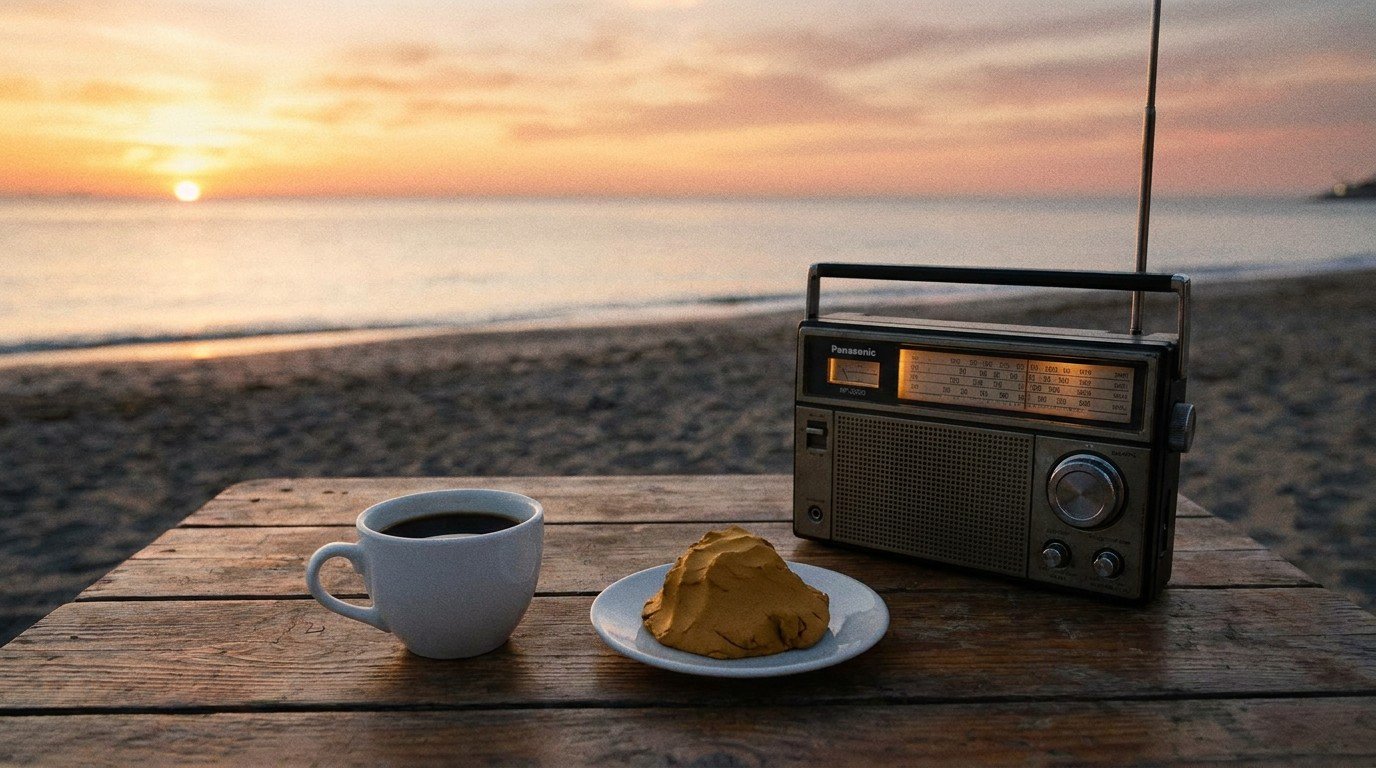
Reflective: What is your clay? What is the substance — literal or metaphorical — that your grandmother shaped, that your mother passed on, that you carry in the soles of your shoes?
Active:
- Day 1: Listen to the full cycle, from Nómada de la Bahía to Bari-ya. Do not listen to Arcilla de Luz yet. Feel the architecture of the journey.
- Day 2: Find some earth. Actual earth. Soil, clay, dust — whatever is under your feet. Hold it in your hand. Close your eyes. Ask it what it remembers.
- Day 3: Listen to Arcilla de Luz alone, at dawn or dusk, with your eyes closed. Let the afillá voice carry you back to the first terrace, the first sun, the first hands that shaped you.
The invitation: If you are in the Jbala mountains, find the ghassoul mine at El Kssabi. If you are in Málaga, find me at El Caleño at sunrise. I will be the one with clay under my nails and my grandmother’s song in my throat.
🌟 Continuing Your Rooted Journey
- Nómada de la Bahía: The Flamenco Rumba of the Rooted Nomad
- Raíces Que No Pesan: The Nocturnal Side of Rooted Nomadism
- El Regreso: The Dawn of Rooted Nomadism
- Bari-ya: The Wild Olive Tree Speaks
- The Olive Tree and the Algorithm: The Mediterranean Codex Manifesto
- Rooted Nomadism: The Complete Philosophy
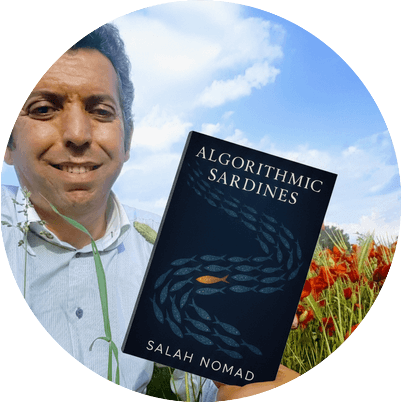
- Algorithmic Sardines: The Book
“The clay does not travel. It shapes. And that is its way of loving.” — Salah Nomad Rooted in Pedregalejo since 2021

Comments